Crime & Safety
NYPD's Secret DNA Database Challenged In Lawsuit
Cops illegally collected and stored DNA from thousands of New Yorkers, including children, never charged with a crime, a new lawsuit claims.


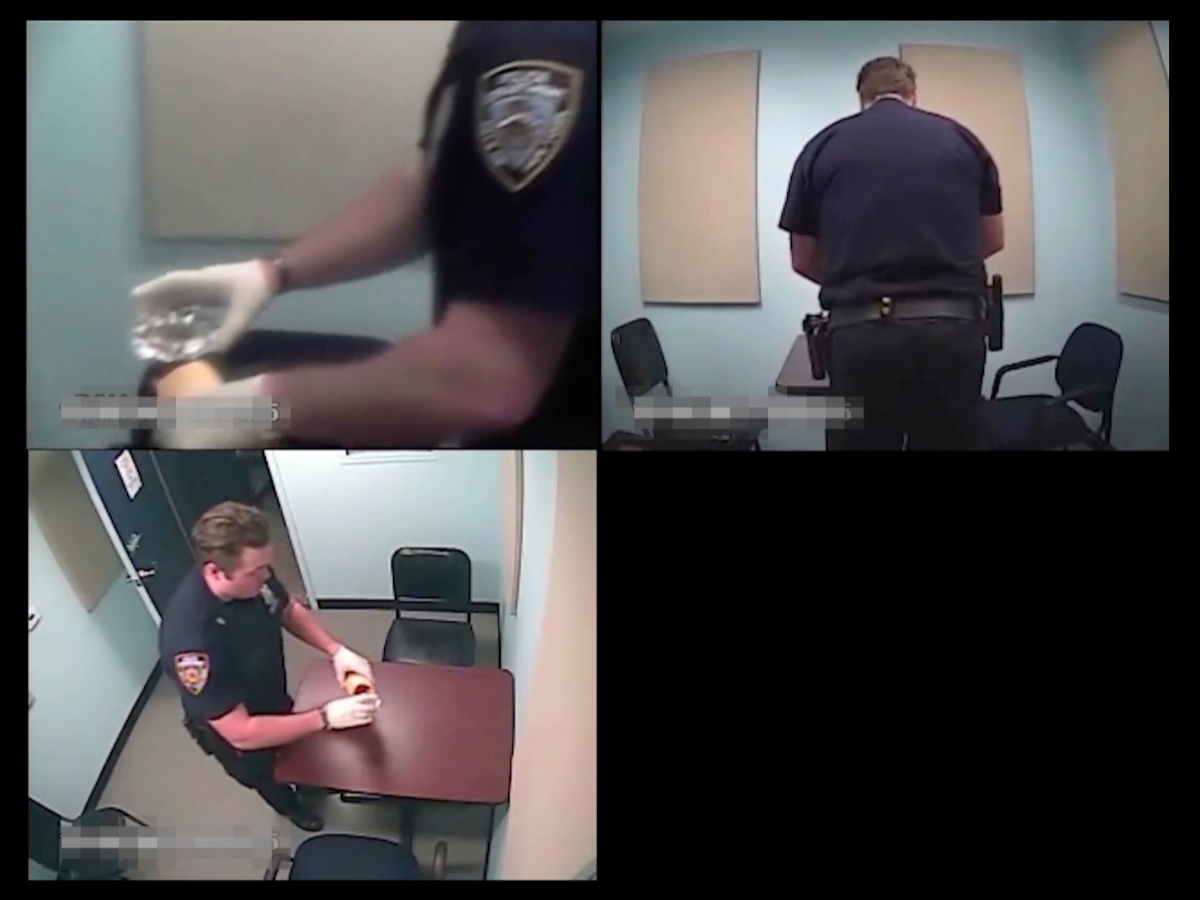
NEW YORK CITY — A cup of water proved to be irresistible to Shakira Leslie after 12 hours in NYPD custody — but little did she know the drink was a ruse to obtain her DNA, according to a new lawsuit.
Leslie never ended up facing a criminal charge, yet her DNA — and thousands of others' also obtained without a warrant or permission — remains in a secret NYPD database that a federal civil rights lawsuit filed Monday argues is illegal.
The class action complaint leveled by The Legal Aid Society on behalf of Leslie challenges the NYPD detectives' practice of secretly obtaining DNA samples by offering people in interrogation rooms drinks and cigarettes. Samples from those items are then added to a database of 32,000 people and "perpetually compared to past and future crime scene evidence," the lawsuit states.
Find out what's happening in New York Cityfor free with the latest updates from Patch.
“Thousands of New Yorkers, most of whom are Black and brown, and many of whom have never been convicted of any crime, are illegally in the City’s rogue DNA database, which treats people as suspects in every crime involving DNA,” said Phil Desgranges, an attorney with The Legal Aid Society, which filed the lawsuit, in a statement.
“This database operates virtually unchecked, and despite promises from the City to reduce its size, the database has continued to grow at the expense of communities of color. We simply cannot trust the NYPD to police itself, and we look forward to judicial review of these destructive practices to bring our clients the justice they deserve.”
Find out what's happening in New York Cityfor free with the latest updates from Patch.
The NYPD's DNA database has long been a source of controversy.
Legal Aid attorneys in 2019 raised alarms over the database and lawmakers vowed to scrutinize it. The pressure prompted NYPD officials in 2020 to announce reforms to reduce its size.
But the index has only grown and now contains 31,826 profiles, the lawsuit states.
Thousands of those profiles, such as Leslie's, were obtained by secretive tactics, according to the lawsuit. Children are among the people who had their DNA secretly collected, the lawsuit states.
"In one example, detectives handed a 12-year-old boy a McDonald’s soda and, after the boy drank from it and was escorted out the room, they secretly removed the straw for DNA testing and placed the boy’s DNA in an index of people suspected of criminal activity," the
NYPD videos published by The Legal Aid Society show cops collecting DNA samples from water bottles and cigarette butts.
NYPD Surreptitious DNA Collection from The Legal Aid Society on Vimeo.
One such sample came from Shamill Burgos, who with Leslie brought the lawsuit against the NYPD, Office of the Chief Medical Examiner and city. Burgos smoked a cigarette and drank a cup of water that officers offered him while he was detained in a 2019 arrest, the lawsuit states.
Prosecutors dismissed all charges against Burgos, but his DNA remains in the database, according to the complaint. He's now in the U. S. military and stationed in Louisiana, the lawsuit states.
"Mr. Burgos is worried and scared by the City treating him as a permanent suspect in all crimes, especially when he no longer lives in New York," the complaint states.
The lawsuit argues the database operates without independent oversight, ignores state laws that limit DNA indexing and "hoard the DNA of arrestees and suspects," documents state. The NYPD thus violates New Yorkers' protections against unreasonable searches and seizures,
"Without any independent oversight, the NYPD and OCME have additionally deployed a new and invasive investigatory technique using DNA samples to investigate a suspect’s entire family," the complaint states.
"Because of a history of institutional racism and disparities in arrest rates in New York City, Black and Latinx people make up the vast majority of arrestees who are subject to the City’s DNA taking and indexing practice. And, with the City’s new genealogical investigative
technique, the parents, grandparents, siblings, children, and even the distant relatives of suspects and arrestees can be swept into the City’s genetic investigations."
Sgt. Edward Riley, an NYPD spokesperson, told Patch the lawsuit will be reviewed "once it is filed."
"The NYPD’s investigations and tactics, including the collection of DNA, are guided by what is authorized by the law, the wealth of case law from the courts, and the best practices of the law enforcement community," he said in a statement. "Behind every time the NYPD collects DNA from a suspect in a criminal investigation, there is a crime victim who is suffering and seeking justice. The driving motivation for the NYPD to collect DNA is to legally identify the correct perpetrator, build the strongest case possible for investigators and our partners in the various prosecutor’s offices, and bring closure to victims and their families."
df207a9f-9cc8-44e5-ae3f-3464161c013b by Matt Troutman on Scribd
Get more local news delivered straight to your inbox. Sign up for free Patch newsletters and alerts.