Health & Fitness
Omicron Coronavirus Variant At 'Full Force' In NYC, Mayor Says
The city has seen a "very substantial" recent rise in COVID-19 cases, Mayor Bill de Blasio said, outlining a six-prong plan to fight back.


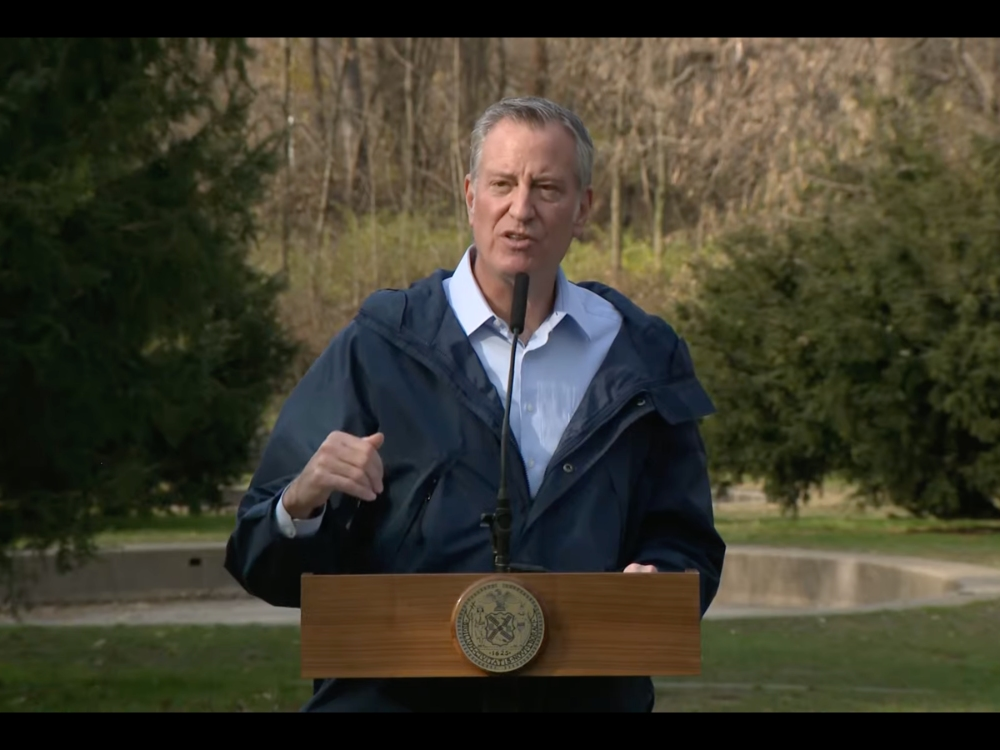
NEW YORK CITY — An explosion of COVID-19 cases citywide prompted Mayor Bill de Blasio to enact a spate of measures to slow the virus's spread.
De Blasio and health officials held a quickly scheduled briefing Thursday to address the surge. The delta variant remains the dominant coronavirus strain in the city, but the highly contagious omicron variant appears to be spreading beyond the 13 percent share estimated by Centers for Disease Control and Prevention officials, they said.
“We have seen a very substantial increase in cases in the last few days,” de Blasio said.
Find out what's happening in New York Cityfor free with the latest updates from Patch.
“It is clear that the omicron variant is here in New York City in full force,” he said.
Daily cases have tripled in the past month, said health Commissioner Dave Chokshi. The daily positivity rate is 5.7 percent, the highest it has been in months, he said.
Find out what's happening in New York Cityfor free with the latest updates from Patch.
“We believe that is attributable primarily to the rise of omicron,” he said.
Omicron is here in NYC and spreading quickly. We’re seeing a surge of #COVID19 cases ahead of the holidays – the 7-day average for new cases has tripled in the last month. All boroughs remain in high transmission. 🧵
— Commissioner Dave A. Chokshi, MD (@NYCHealthCommr) December 16, 2021
The stark news conference followed a similarly grim presentation by Gov. Kathy Hochul.
She said even if the omicron variant causes less-severe infections than its delta cousin — as some research has signaled — it can still overwhelm hospitals across the state.
"You may only have 1 percent of people infected hospitalized versus 10 percent from delta, but if you have a million more people infected, because it’s spread so much more quickly, that means you’ll have overflowing hospitals at this rate,” she said.
De Blasio outlined what he called a six-prong approach to combat the surge. Those are:
- An updated health commissioner health advisory, which urges New Yorkers to wear masks indoors, get vaccinated and receive boosters.
- Increase COVID-19 testing capacity through more mobile sites and additional brick-and-mortar locations.
- Distribute 1 million KN95 masks through community groups.
- Distribute 500,000 rapid at-home COVID-19 tests through local community organizations.
- "Double down" on boosters to encourage more New Yorkers to get those doses as soon as possible.
- Double down on inspections for compliance on the city's mandates, such as its proof-of-vaccination rule for indoor public spaces.
Testing has been a particular headache for many New Yorkers. They've had to wait hours in lines at testing locations through the city.
Ted Long, who heads the city's Test & Trace Corps, said all city-run sites will now be open seven days a week. He said the city will take steps to cut down on waits.
“If you come to one of our Test & Trace Corps brick-and-mortar sites and there’s a line, we’re going to arm that site with rapid home tests so you can have the option of taking the test at home,” he said.
The city will open five more "brick-and-mortar" sites, Long said.
De Blasio, to use his words, doubled down on Long's statement.
“We are creating new sites, new fixed sites for testing," he said, "and we will be expanding hours and capacity at many of our existing sites."
Get more local news delivered straight to your inbox. Sign up for free Patch newsletters and alerts.