Politics & Government
Rent Guidelines Board Votes to Freeze Rent on 1-Year Leases, Raise Rent 2 Percent for 2-Year Leases
The Rent Guidelines Board struck a compromise, freezing 1-year rents and raising 2-year rents.


New York, NY — The Rent Guidelines Board voted Monday night to freeze rents on one-year leases and raise rents by 2 percent on two-year leases for rent-stabilized apartments and lofts.
Seven members of the board voted in favor of the proposal and two abstained. The two abstaining votes came from the two board members representing landlords. The new rent rates will apply for all leases signed starting Oct. 1, 2016 and ending Sept. 31, 2017.
Want more New York City news? Sign up for Patch’s free daily newsletter and breaking news alerts
During the RGB hearing, proposals to both raise and roll back rents across the board failed. In the end, compromise won, but supporters on both sides still felt they lost.
Find out what's happening in New York Cityfor free with the latest updates from Patch.
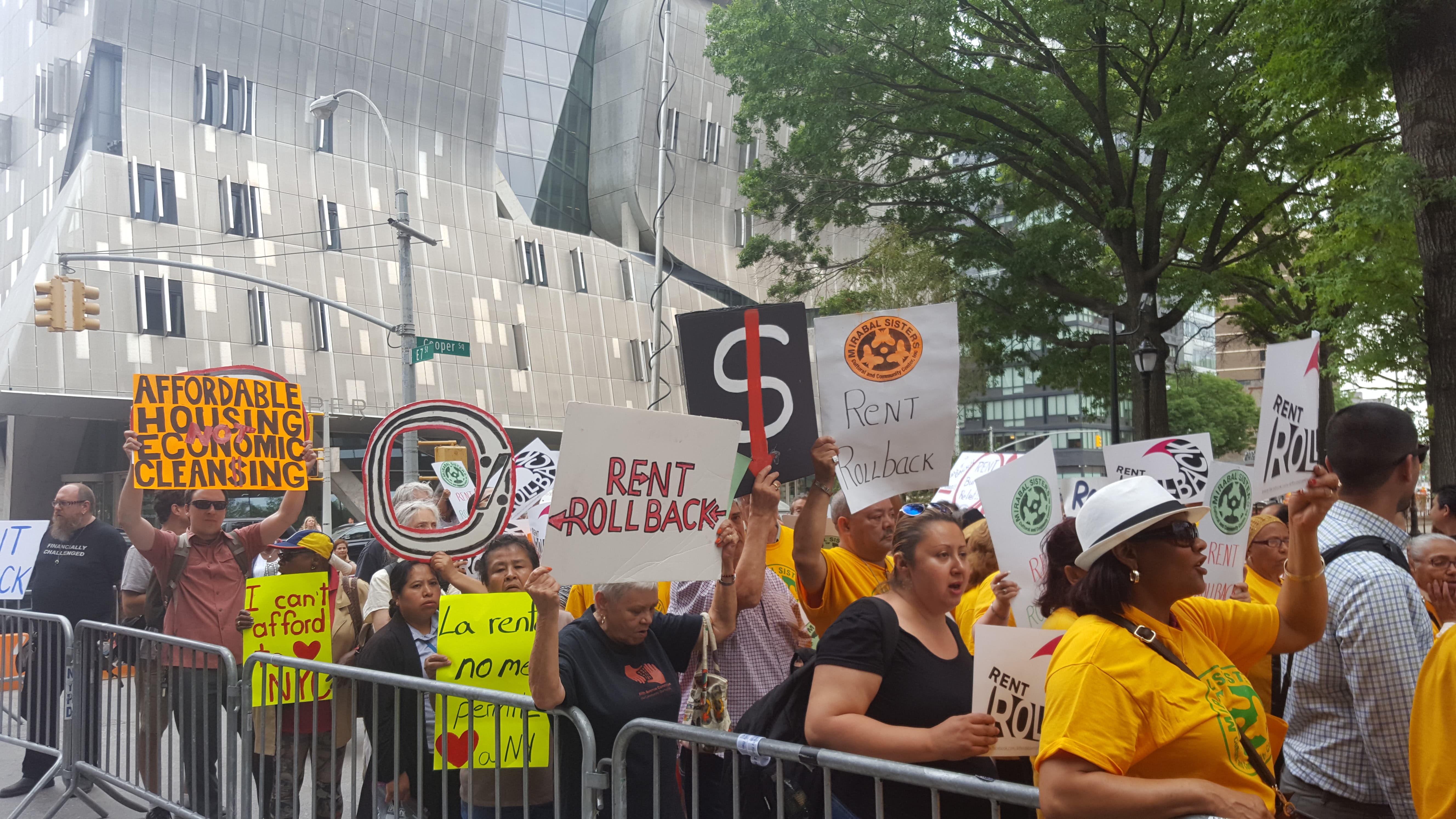
Supporters for a rent rollback far outnumbered anyone else at the meeting. An hour before the vote, a group of picketers formed outside the Cooper Union Grand Hall and chanted for a rent rollback in both English and Spanish.
Dan Kass, founder of JustFix.nyc, a startup that aims to help tenants build cases against exploitative housing, went to the meeting to fight for a rent rollback.
Find out what's happening in New York Cityfor free with the latest updates from Patch.
"Last year was this unprecedented rent freeze for the first time in the 40-year history of the RGB. Since that decision last year, things have only gotten more and more difficult for tenants living in New York. So it only continues to make more and more sense that something drastic needs to be done to further support and protect the working-class folks that live here," Kass told Patch.
And the cheering didn't stop once people started to move inside. If anything, the sound level intensified as groups of protesters in yellow, orange, red and green T-shirts funneled into the rows of the Grand Hall.
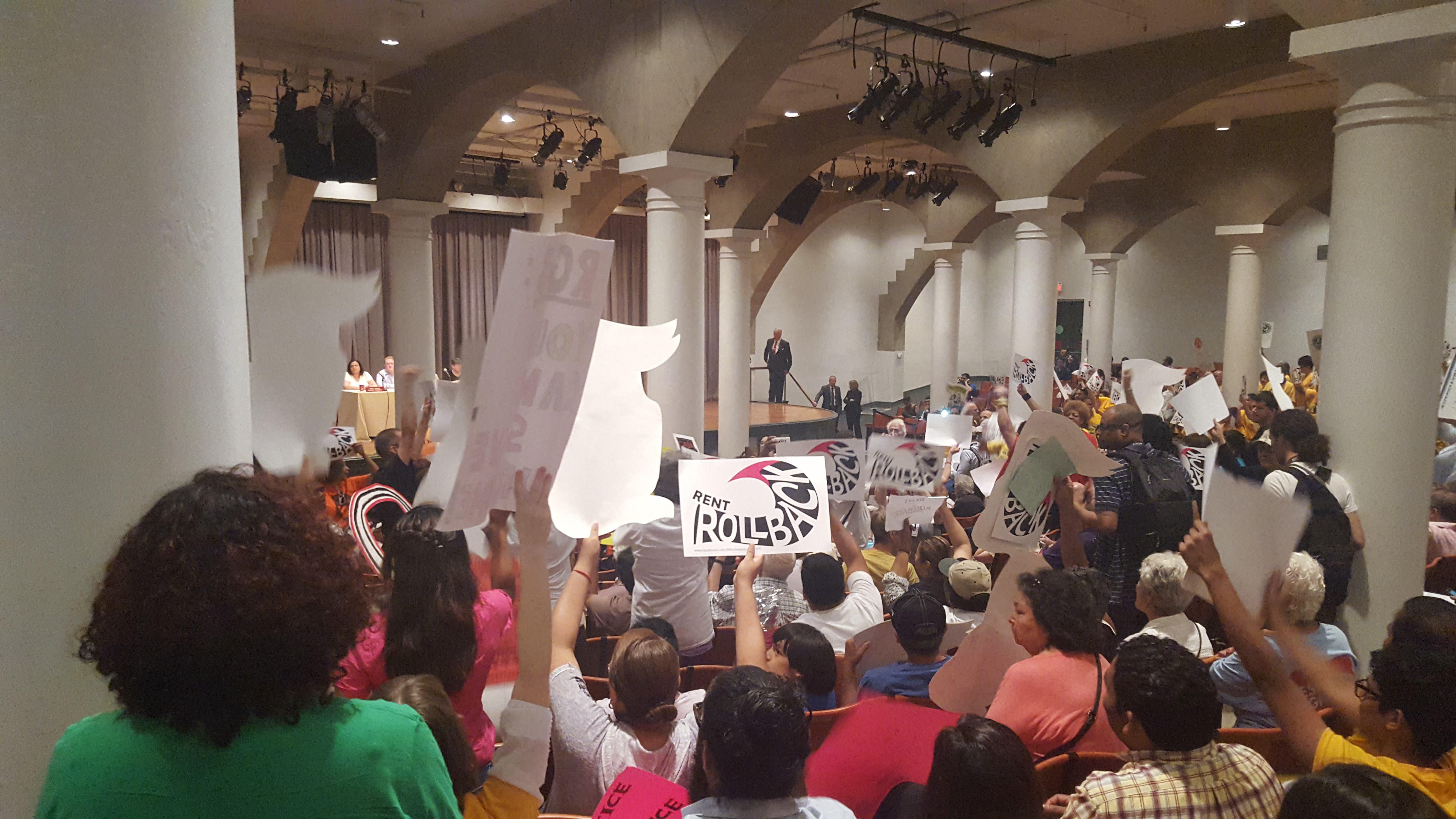
The two landlord representatives on the RBG made the first proposal of the meeting. The proposal called for a raise of 3 percent for one-year leases and 5 percent for two-year leases.
As landlord representative Scott Walsh uttered his recommendation to the board, the sound of his voice was quickly overwhelmed by chants of "rent rollback." The proposal failed by a vote of 7-2.
The second proposal, from tenant representatives, to reduce rents for one-year leases by 4 percent and to reduce rents for two-year leases by 2 percent, also failed by a vote of 7-2.
Finally, a third and final proposal was brought forth to freeze rents on 1-year leases and raise rent on 2-year leases by 2 percent.
"Two percent is too much," shouted protesters as RGB chair Kathleen Roberts thanked them for their passion.
When Roberts finished speaking, the board voted. Five voted in favor and four — tenant representatives Harvey Epstein and Sheila Garcia and landlord representatives Scott Walsh and Mary Serafy — abstained. It was clear that the five "public members" of the board were going to dictate the outcome of the vote.
Eventually, Epstein and Garcia switched their votes. Both voiced support for the rent freeze on 1-year leases, scrutinized the raise on 2-year leases and then voted in favor of the proposal anyway.
Directly after approving the proposal, the board motioned to adjourn the meeting.
Disappointed tenants exited the building as a drizzle began to build. Protesters formed circles in front of the Cooper Union building, their signs now damp, before eventually dissipating.
Among them was Redoneva Andrews, of Flatbush, who felt like the RGB's resolution ignored the plight of the tenants. The mother of five was worried for her future, telling Patch that her landlord put an eviction notice on her door.
"I’m disappointed. I’m hurt. This doesn’t do anything for us," Andrews told Patch. "The struggle is on, it’s from paycheck to paycheck, and a lot of us are going to be homeless and we don’t even realize it. We don’t even see it coming."
But landlords weren't jumping for joy at the outcome of the vote either. Jack Freund, a spokesman for the Rent Stabilization Association, said that a rent freeze would only hurt housing conditions.
"When owners get rent increases they pour the money back into these buildings to provide decent, affordable living conditions for their tenants. Without that rent revenue coming in they're not going to be able to pay increased property taxes. So if you want deteriorating housing, then you do a zero rent increase. If you want owners to pay their taxes and improve their buildings then you need a rent increase," Freund said.
The Rent Guidelines Board used statistics from reports commissioned by the board to draw up its final resolution.
One study titled, "2016 Price Index Of Operating Costs," used several different factors such as real estate taxes and insurance costs to determine a Price Index of Operating Costs. According to the study, the cost of operating rent-stabilized apartments has decreased 1.2 percent in 2016. The overall cost of operating these properties has gone down despite a rent freeze and rising real estate taxes and insurance costs. What could explain the decrease is the nearly 40 percent drop in the cost of fuel.
The same study calculated that the price of operating rent-stabilized buildings will increase a projected 5.5 percent next year.
There were approximately 840,000 rent-stabilized apartments in New York as of 2014, according to a March study from ProPublica. But there may be even fewer now. A study conducted by the Rent Guidelines Board showed an estimated net loss of 8,009 rent stabilized units in 2015.
[Photos: Brendan Krisel]
Get more local news delivered straight to your inbox. Sign up for free Patch newsletters and alerts.