Home & Garden
DEC to Co-Lead Pilgrim Pipeline Review with Thruway Authority
Rockland leaders had opposed Thruway officials' plans to go it alone; Riverkeeper is still concerned.


The Department of Environmental Conservation (DEC) has requested, and the New York State Thruway Authority has agreed, that DEC and Thruway will serve as co-lead agencies for the environmental review of the Pilgrim Transportation of New York, Inc.’s application currently pending before the Thruway Authority.
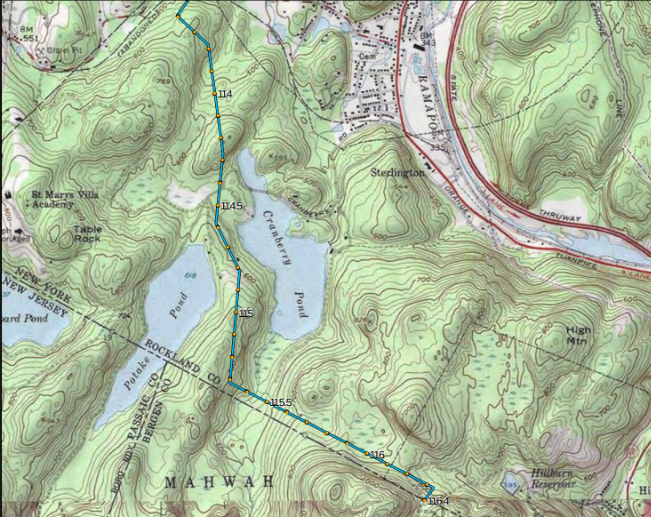
The Pilgrim Pipeline would be the first crude oil pipeline constructed in New York. The proposed 178-mile pipeline project would consist of two separate, parallel underground lines running between supply and distribution terminals in Albany and Linden, New Jersey. Much of its route would be along the Thruway right-of-way, for which the company would give the Thruway Authority money.
The addition of the DEC was hailed by political leaders and environmental activists, who had opposed the Thruway officials’ suggestion that they handle the environmental review themselves.
Find out what's happening in New Cityfor free with the latest updates from Patch.
Rockland County Executive Ed Day had written DEC Commissioner Basil Seggos to object. The pipeline route through Rockland includes miles of pristine acres in the heart of the Ramapo River watershed, he said, as well as private property. Also, he pointed out, the DEC is already tasked with evaluating the hazards of crude oil transport through the state.
As co-lead agencies, DEC and Thruway will ensure that a transparent comprehensive environmental review process is completed prior to any final State or Thruway approvals, state officials said.
Find out what's happening in New Cityfor free with the latest updates from Patch.
Pilgrim Transportation Company Vice President George Bochis also issued a statement:
We look forward to working with both the NYSTA and the DEC as the environmental review process of the pipeline begins under SEQRA. We are confident that this review will demonstrate that the Pilgrim Pipeline will transport essential energy products in a manner that is not only safer, but also more environmentally friendly and economically efficient, than current modes of transportation utilized in the State.
We also look forward to continuing to foster an open dialogue with municipal officials and citizens along the proposed route to provide information and answer questions.
Conor Bambrick, air and energy director for Environmental Advocates of New York, said:
The climate, health, and environmental risks posed by this pipeline necessitate a lead role by DEC. Governor Cuomo and his administration recognized the importance of getting it right, and we thank them for responding to the public’s concerns.
Now, before a decision on whether to proceed can occur, there are several bars that developers will have to meet under the State Environmental Quality Review Act (SEQRA).
Governor Cuomo has committed to achieving very aggressive climate pollution reduction goals. Reducing carbon pollution 80 percent by 2050 means that in just 34 years there will be no more fossil fuels burned in New York. As the state’s environmental watchdog, the DEC will be responsible for approving or denying this project based on a variety of factors, including whether New York can meet its climate goals with the ongoing development of a fossil fuel infrastructure. We expect that – as the federal Department of State’s assessment of the Keystone XL pipeline showed – new fossil fuels and climate action are incompatible.”
With the DEC’s co-lead status, the public can expect their scope of work on this project to include, among other measures:
· Climate change test
· Assessment of impacts on environmental justice communities
· Water pollution controls
· Wetlands protection
But environmental advocates at Riverkeeper expressed concern that the Thruway Authority still had review power.
Riverkeeper is disappointed by the New York State Department of Environmental Conservation’s decision to share environmental review responsibilities with the NYS Thruway Authority for the proposed Pilgrim Pipeline project. We believe that a joint lead agency status is unprecedented and fails to address the concerns the many municipalities in the region that specifically expressed their opposition to the Thruway Authority’s participation in the environmental review process. Furthermore, this decision undermines the effort to conduct an environmental review that adequately protects the environment and critical resources such as drinking water.
“While we’re pleased that the DEC acknowledges the ‘potential for significant adverse environmental impacts associated with the construction and operation of the pipeline’ and the 232 regulated stream crossings the project is proposed to cross, we are disappointed that it did not take the strong recommendation of more than two dozen towns and counties — up and down the Hudson River Valley — to be the sole lead agency,” said Kate Hudson, Riverkeeper’s Director of Cross-Watershed Initiatives. “We’re concerned about the possible consequences of having two state agencies share responsibility. It could become problematic should disagreements arise between the agencies. Riverkeeper will work to ensure a transparent and unbiased review, and we will all work to make sure the public’s voice is heard.”
To view DEC’s letter to Thruway: http://www.dec.ny.gov/docs/administration_pdf/pilgrimthruwayltr15.pdf
To view Thruway’s letter to DEC: http://www.dec.ny.gov/docs/administration_pdf/pilgrimltrtodec15.pdf
Get more local news delivered straight to your inbox. Sign up for free Patch newsletters and alerts.