Schools
Parents Threaten to Sue State over East Ramapo if Corrections Aren't Immediate
There have already been 3 evaluations revealing that students are deprived of a sound basic education, their lawyers allege.


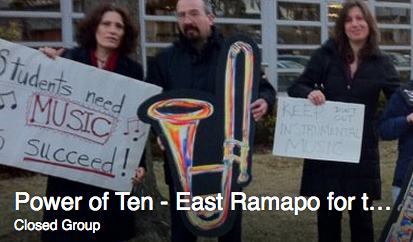
Parents of several students in East Ramapo schools have notified New York State Education Commissioner MaryEllen Elia and Regents’ Chancellor Merryl Tisch that if the state does not act in the coming weeks, they will sue with the help of the Education Law Center.
One of the parents, David Curry, said on The Power of Ten Facebook page:
“In short, with the help of the Education Law Center, we have put Commissioner Elia and Chancellor Tisch on notice that we’re not content to wait until December for the monitor to release another report that won’t be read until after the holidays, and then will undergo weeks or months of analysis and discussion, all while our children continue to suffer.”
Find out what's happening in New Cityfor free with the latest updates from Patch.
The district, which includes parts of the communities of New City, Pearl River, Nanuet, Spring Valley, Suffern, New Hempstead, Chestnut Ridge, Monsey and Wesley Hills, has 9,000 students in its schools. However, another 24,000 school-age children live there, and go to private schools—mostly yeshivas.
In August, Elia and Tisch visited Rockland County to announce that they had appointed a team of monitors led by former New York City Schools Chancellor Dennis Walcott to oversee the district and in particular, the Board of Education.
Find out what's happening in New Cityfor free with the latest updates from Patch.
SEE: Reactions to New East Ramapo Monitor: Caution, Suspicion, Hope
But the parents’ group says action is needed immediately so that meaningful and necessary improvements are made in this school year.
In a letter to state education officials, attorneys David Sciarra, Wendy Lecker and Brad Elias said, “It is well documented that East Ramapo students are being denied a sound basic education. In fact, SED itself has conducted three evaluations of East Ramapo in the past year, which, taken together, demonstrate that the Board has consistently failed to provide an education that meets constitutional standards.”
The first evaluation they’re referring to is the report by Hank Greenberg, East Ramapo: A School District in Crisis, in Nov. 2014.
“The district’s finances teeter on the edge of disaster,” he said.
The second is the February report that found a glaring lack of programs for English Language Learners. ELL students make up 30 percent of the district.
The third is the Focus report on student achievement, which found among other things that the school board failed to address inadequate staffing levels; did not address student development; did not address academic growth through Common Core standards; repeatedly refused to develop a financial plan to sustain improvement in student outcomes (East Ramapo’s test scores are abysmal); had allocated funds according to personal views; and did not provide ELL students sufficient access to learning-support programs.
The Education Law Center also highlighted in the letter the bizarre response of the district to a petition to the state this summer by David Curry.
Curry asked SED to have elementary art and music programs reinstated in the district, alleging that classroom teachers had not been given any training in how to do it themselves. State officials asked the East Ramapo board, which answered that it did not have knowledge or information sufficient to respond. While Elia shot back that it was its duty to find out, the board has still not answered, the lawyers said.
Citing legal precedents, the lawyers argued in their letter that it’s well-documented that East Ramapo students are being denied a sound basic education.
They enumerated eight corrective measures that should be taken immediately, including analysing and reallocating the money spent on special education and transportation that benefit only private-school students; reducing money spent on legal fees fighting the parents; implementing ELL services that include a path to graduation; restoring funding for art and music, high-school electives, full-day kindergarten and field trip transportation; reducing the time the trustees spend in executive session; and creating a fiscal recovery plan.
Get more local news delivered straight to your inbox. Sign up for free Patch newsletters and alerts.