Politics & Government
Rockland County Exec Proposes 2019 Budget Within Tax Cap
Rockland lawmakers have scheduled a public hearing date.


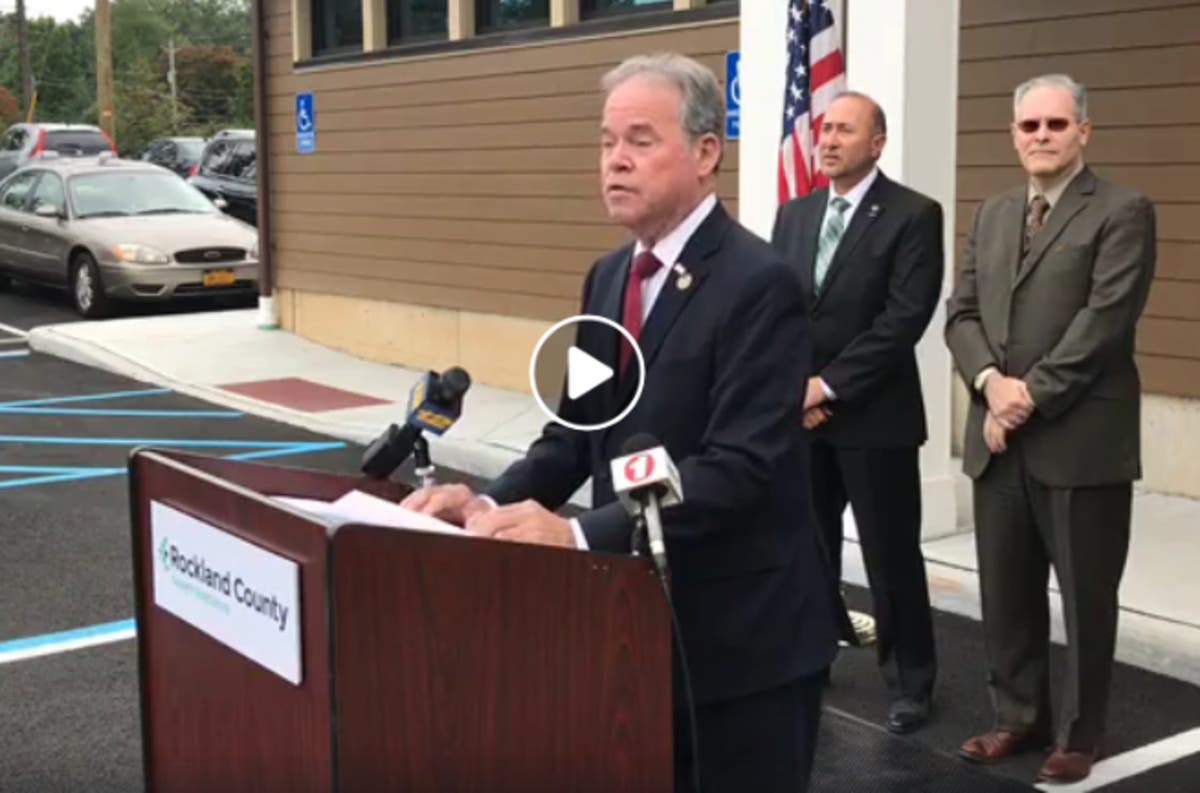
NEW CITY, NY — Rockland County Executive Ed Day unveiled the proposed 2019 budget Monday, describing it as a spending plan that stays under the New York State property tax cap while fully funding not-for-profits, investing in law enforcement and reviving the Office for People with Disabilities.
By the numbers:
- The proposed 2019 budget has a net total of $709,050,000.
- Tax increase of 2.9 percent, under the state property tax cap.
- Proposed tax increase of $3 monthly or $37 annually.
- Zero layoffs, 28 vacant positions eliminated, total workforce of 1,708.
An overview of the County Executive’s budget proposal has been scheduled by the Rockland County Legislature for 7 p.m. Wednesday in the board’s Chambers in New City. County Finance Commissioner Stephen Degroat is expected to make the presentation.
Find out what's happening in New Cityfor free with the latest updates from Patch.
“We anticipate conducting a thorough analysis of the plan and have already scheduled multiple review sessions.” Legislature Chairman Toney L. Earl said. “I look forward to working with the Administration to ensure we have the best plan possible for our residents.”
On Monday, Day detailed the proposed $709,050,000 spending plan at the Sheriff’s Backup Communications Center in New City with Rockland County Sheriff Louis Falco, emphasizing a renewed focus on the needs of law enforcement and public safety.
Find out what's happening in New Cityfor free with the latest updates from Patch.
The entire budget announcement can be watched here.
Included as new projects in the 2019 Proposed Capital Budget for the Sheriff’s Department are a new Mobile Command Vehicle, new Mobile Data Terminals, upgraded BCI Operating and Forensic Equipment, an Elevator Upgrade and Building Improvements, and Improvements to the Jail Security Control Systems. These projects are priorities that will be put out to bond when the county is financially able to do so.
“When I took office, the Comptroller’s Office listed Rockland as the most fiscally stressed county in the state. But just last week New York State Comptroller Thomas DiNapoli released the 2017 Fiscal Stress Monitoring System report which showed Rockland County as now having “Moderate Stress;” an incredible turnaround. The number of municipalities that are now under “significant stress” has more than doubled on the Comptroller’s latest report. This makes Rockland’s achievements and improvements even more remarkable,” said Day. “It also clearly shows that we still face serious challenges. Our financial health is improving, but our problems have not disappeared. The success of the past four years does not carry over to a new proposed budget plan.”
In a statement, Day said the county had to contend with a $13 million budget gap:
- The NY State Health Insurance Plan increased their premiums by 7.1% - nearly $5 million more to pay for the Empire Plan.
- Salary costs for contractual increases such an incremental longevity steps and cost of living increases went up over $3 million and compound annually.
- Our debt service, the payments we make on our bonds, went up nearly $3 million due to increasing interest rates and our commitment to rebuild and revitalize Rockland County’s infrastructure.
- The costs for the state’s mandated programs have increased by nearly $1.7 million. Programs such as Early Intervention, Pre-K and several social service programs.
These four issues alone would translate to a roughly 10 percent county property tax increase. This is on top of other mandated costs like Medicaid which costs $66 million a year or roughly the equivalent of 55 percent of our property tax levy.
The budget calls for a 2.9 percent tax increase, which is lower than the state mandated property tax cap. For the average Rockland residential property owner, taxes will increase just over $3 a month or about $37 a year. Revenues, including sales tax, are estimated conservatively and realistically.
“As part of our regular re-evaluation of the needs of our residents, I am extremely proud to announce that we are bringing back a department that was eliminated by the previous administration during the financial crisis. We are restoring the Office for People with Disabilities (OPWD),” said Day.
The charge of the OPWD will be to advocate on behalf of people with disabilities and to ensure they achieve access to all the rights and responsibilities they desire to exercise. They will advise and assist the County Executive’s office, the County Legislature and County agencies in developing policies designed to meet the needs of people with disabilities. OPWD will work hand in glove with our partner community based organizations and the County Disability Advisory Council.
This proposed budget contains a new feature in the Department of Finance’s Real Property Tax Division, in which deeds are reviewed and compared to the official County tax map. This new program is critical for our residents, town assessors and County Clerk to eliminate defective and erroneous materials. The tax maps need to reflect the deed information as accurately as possible to ensure that the land a taxpayer owns is the parcel the taxpayer is assessed and billed for.
Day said, “one example of many as to why this new program is important, back in 2017, the County held a Tax Foreclosure Auction where a land owner almost lost his backyard because only one of the two tax parcels he purchased was properly identified to the Town Assessor. This new program would have identified that it was two lots instead of one and the Town Assessor would have had the proper information. That was an error. This new program will eliminate both errors and anything done by design, which as we know has happened in the past.”
The plan is to utilize the department’s deed reading expertise to clearly identify the parties and parcels affected in the documents which ultimately will assist the assessment information county-wide. This, in turn, will benefit the entire Rockland assessment community as well as assist the County Clerk’s office. This is a plan backed by the Rockland County Clerk and the Town Assessors within the county. This new service is projected to bring in an estimated $1.2 million annually.
Day said, “It will only go into effect with the implementation of a new Local Law, I call on the Rockland County Legislature to ensure the integrity of this budget and quickly pass this new Local Law for the good of our residents, our communities and our environment.”
Over the course of these past several years, Rockland County began the transition of migrating non-profit contract agencies under the jurisdiction of County departments for oversight, accountability and possible state and federal reimbursement. These non-profit organizations provide a valued service to county residents and the clients they serve. This proposed budget funds those agencies at the same level as the 2018 Adopted Budget.
The budget also calls for funds to be set aside for contract negotiations.
“We must continue working to strengthen the foundation of our local economy. I promise that I will make the tough decisions necessary to keep Rockland County on a strong fiscal track. I look forward to working with the County Legislature to pass this budget that delivers essential services to our residents and sets the stage for a bright future for all of Rockland.”
The proposed budget will be available on the County website.
County legislators said they will also focus on the audit of the county’s 2017 fiscal year and personnel changes, including any job eliminations or new positions.
The Legislature has tentatively set Nov. 19 as the public hearing date and Dec. 4 as the budget vote date.
Key Budget Dates
By Oct. 1: The County Executive must submit the proposed budget to the County Legislature for review.
By Nov. 20: The County Legislature must hold a public hearing on the proposed budget.
By Dec. 7: The full Legislature must adopt the budget and/or submit changes to the County Executive. If the Legislature takes no action, the budget is deemed adopted. If the Legislature amends the proposed budget, it goes to the County Executive for review; he has five working days after receipt of the amended version to veto. (He has line item veto power.)
By Dec. 20: The County Legislature must override or the amended version with any vetoes becomes the budget. It takes a two-thirds vote per veto item to override that veto (Two-thirds is 12 votes).
PHOTO/ from budget announcement streamed on Facebook
Get more local news delivered straight to your inbox. Sign up for free Patch newsletters and alerts.