Weather
Updated Forecast For Hurricanes Expected In 2019: HV Impact?
Here are the latest details plus some tips for emergency preparedness.


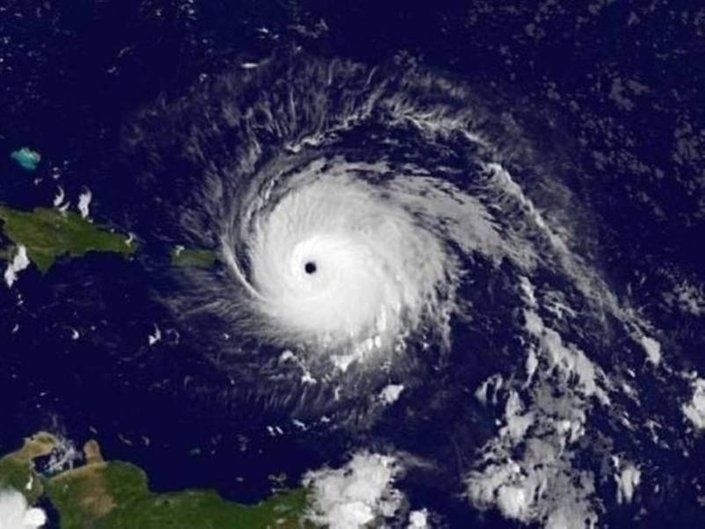
COLLEGE PARK, MD — The 2019 Atlantic hurricane season is upon us. Weather researchers have updated their hurricane forecasts for the rest of the summer, and both say they believe there will be more of the fierce storms than originally predicted.
Tropical Storm Dorian, for example, is on its way into the Caribbean.
Here are some tips that Hudson Valley residents should know in order to prepare for a potential hurricane, courtesy of Rockland County.
Find out what's happening in New Cityfor free with the latest updates from Patch.
“It’s important to be prepared for any eventuality,” said Emergency Services Director Christopher Kear, urge everyone to be prepared for the 2019 hurricane and coastal storm season by reviewing their emergency plans and stocking up on necessary supplies.
He offered precautionary advice:
Find out what's happening in New Cityfor free with the latest updates from Patch.
- Review and practice your household disaster plan with all family members. Know how to contact all family members at all times. Identify an out-of-town friend or family member to be the “emergency family contact” then make certain all family members have that number. Designate a family emergency meeting point; some familiar location where the family can meet in the event the home is inaccessible.
- Prepare a written emergency phone list of people and organizations that may need to be called. Include children’s schools, doctors, child/senior care providers and insurance agents.
- Ensure that enough non-perishable food, and water supplies are on hand. Make sure battery-operated radios and flashlights are available and have an ample supply of batteries and test them regularly. Have a first aid kit available and make sure there is an ample supply of medicines on hand for those who require them. Ensure your cell phone is kept charged and have a charging cable available.
- Check on friends and neighbors that may need help. Especially elderly and mobility impaired.
- Know the hurricane and storm risks in your area, be knowledgeable of storm surge history and elevation. Learn your community’s warning signals and evacuation plans and review safe routes inland and local sheltering plans.
- If you have a generator, please use it according to the manufacturer’s instructions and follow all applicable codes when hooking it up. Never run a generator indoors, close to windows or in an attached or detached garage. Also, please use care when refueling it and never fill a hot generator.
- Make arrangements on where to relocate pets during a storm and check for any shelters that are pet friendly.
- Store important documents – insurance policies, medical records, bank account numbers, Social Security cards, etc. – in a waterproof container and make copies. Also, have cash (in small bills), checkbook, credit and ATM cards readily available.
“While it has been several years since we have experienced a strong storm, our area has seen the devastating effects of hurricanes Floyd, Irene and Sandy in the past,” said Rockland County Executive Ed Day.
Plus, the National Oceanic and Atmospheric Administration now says that weather researchers believe there will be more hurricanes in 2019 than previously expected.
"Current and predicted oceanic and atmospheric conditions now indicate a higher likelihood — a 45 percent chance — of an above normal season — and a reduced likelihood — a 20 percent chance — of below normal activity," said Gerry Bell, Ph.D., lead seasonal hurricane forecaster at NOAA's Climate Prediction Center.
And weather researchers at Colorado State University, who once predicted a slightly below-average 2019 Atlantic hurricane season, now believe it will be "near normal."
Here are the chances of any major hurricanes – categrories 3, 4 or 5 – having any kind of impact on the coastline, including the Hudson Valley, according to CSU:
- Entire U.S. coastline - 53 percent (full-season average for last century is 52 percent)
- U.S. East Coast including Florida peninsula - 31 percent (full-season average for last century is 31 percent)
- Gulf Coast from the Florida panhandle westward to Brownsville, Texas - 31 percent (full-season average for last century is 30 percent)
While only two named storms have formed thus far this year, the peak months of hurricane season run from August through October.
NOAA earlier predicted nine to 15 named storms and two to four major hurricanes this year. The updated hurricane season outlook now predicts 10 to 17 named storms, of which five to nine are expected to become hurricanes. Two to four of those could become major hurricanes, according to NOAA.
"The total number of named storms and hurricanes has increased from the May outlook while the number of major hurricanes stays the same," Bell said. "However, some of those hurricanes and major hurricanes could be longer and stronger than was predicted in May because atmospheric wind patterns are expected to be more hospitable to storm formation."

Bell cautioned that the prediction does not distinguish between storms that make landfall and those that remain at sea.
"Whether or not a storm strikes land is determined by the weather patterns that are in place as the storm approaches, and those weather patterns are generally not predictable until about five to seven days in advance," Bell explained
The updated hurricane season outlook is based on the latest weather and climate models as well as observed atmospheric and oceanic conditions.
"The main reason is NOAA is announcing today that the El Nino which has been in place since January has now dissipated," Bell said. "El Nino usually suppresses hurricanes, but now that it's dissipated we're expecting conditions to be more favorable for storm development through the rest of the season."
Bell said related wind patterns often persist after El Nino fades. "These will at least partially offset the more enhancing conditions now in place, although not to the extent we had predicted in May," he said.

On average, the Atlantic hurricane season produces 12 named storms, of which six become hurricanes, including three major hurricanes.
Bell said he does not believe that global warming is to blame for the increased potential for hurricanes.
"The global ocean temperatures have been warming through the last century, certainly the Atlantic has," he explained. "It's really this whole set of atmospheric conditions that we see, and global warming does not produce that set of atmospheric conditions that we see. Global warming actually — for the Atlantic — produces increased wind shear, and that's why they think it could actually reduce the number of storms, but maybe result in fewer, stronger storms."
See also:
Get more local news delivered straight to your inbox. Sign up for free Patch newsletters and alerts.