Schools
New Hyde Park-Garden City Park Schools Update 5-Year Plan Goals
Assistant superintendent Michael Frank gives updates on goals relating to district finances.


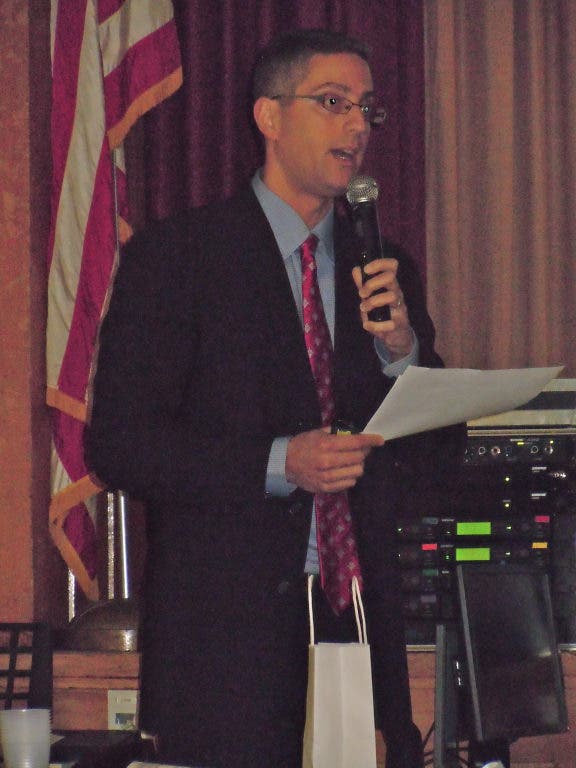
In 2007 the New Hyde Park-Garden City Park School District had set about determining a new set of goals for its 5-year plan. On Monday night during the board of education’s regular meeting at the Manor Oaks School, assistant superintendent for business Michael Frank provided an update to those same goals as the district readies its next plan which will take it to 2017.
There are five main goals for the district: keep the budget increases under control, keep the tax levy low, manage the cashflows, work with the board of education, the superintendent, the director of facilities in a collaborative effort to come up with projects that are necessary for the district’s buildings and begin to fund those projects without affecting goals 1 and 2. and work within the district as well as with other districts to find ways of obtaining similar services that are less costly.
In a Powerpoint presentation Frank reviewed each of the five goals, talking about each in detail and what the district has done in order to meet or be on track to meet those challenges.
Find out what's happening in New Hyde Parkfor free with the latest updates from Patch.
Regarding the budget, from 2000-07,the budget-to-budget increases averaged 8.46 percent every year, including several years where there were double digit increases; from 2007-12, the budget-to-budget increases averaged 3.3 percent.
Frank said that the significant drop was caused by the district starting the budget process “very early” and being able to “centralize it,” explaining that each “budget builder is responsible for their individual department and area. It is not incumbent upon me as assistant superintendent or Mr. Katulak as the superintendent to just sit down and make up numbers or to bring together the entire budget, we rely on everybody providing information and every piece of information that they provide has to be backed up with quotes or estimates showing that they have evidence that the true cost of a particular service or item in fact (links) with what they’re putting in their budget.”
Find out what's happening in New Hyde Parkfor free with the latest updates from Patch.
Members of the district’s accounting staff also attend meetings on tax cap, state aid, employee and teacher retirement systems, tax certioraris, and governmental accounting standards,
“It aids us in preparing our own financial statements and we don’t have to outsource that to other firms like a lot of other districts do,” Frank said, adding that he looks for efficiencies by trying to find a better rate and deliver similar services like custodial services and bus drivers.
An upgrade in the district’s credit rating also “has helped us reap a significant savings in terms of our refinance last year where instead of hundreds of thousands of dollars being saved in the refinance, we were able to save $1.5 million,” Frank said. “A lot of that had to do with getting the upgrade in the Moody’s.”
The district also worked with their insurance to implement things the company suggested to minimize district’s exposure and successfully negotiated with administrators unit where they agreed to a flat-dollar contribution to their health insurance.
Regarding the tax levy (what the district asks residents to pay), from 2000-07 the average increase was 8.68 percent, falling to an average 3.46 percent from 2007-12. The tax levy is one of the district’s sources of revenue besides state aid and while “there are some other small ones,” Frank said, “but they’re very insignificant in comparison tot the total.”
With the tax levy cap imposed by the state now in place, the district will need to find other sources of revenues, especially in the face of retirement system contributions and insurance rates continuing to climb as well as other forces which the district has no control over whatsoever.
“We try every year and we work with the senators and we meet additional legislators and we work with everybody to try and get these things under control but to date thus far we have not yet been successful,” he said. “Everybody tries, we all work together to get this accomplished; we have to continue doing it.”
There is also the matter of the shift of tax certioraris settlements – property tax refunds – from Nassau County to the school districts. The state is also projecting coming up a couple of hundred million dollars short of revenues, which could impact state aid for next year according to Frank.
“It’s kind of miraculous that we’ve been able to keep the levy-to-levy increase at a relatively low amount comparative to prior years without really affecting programs,” he said looking at the numbers.
The third goal is to manage the cashflows to avoid additional borrowing, something achieved through in-depth analysis as part of the district treasurer’s monthly report to the board.
“We use that cashflow analysis to help predict when we’re potentially going to have a shortfall,” Frank said of the documents provided by the district treasurer at every meeting. “We’re trying to save the taxpayers money from issuing by doing certain things, certain things such as if we see that we’re going to have a shortfall, we simply don’t pay the benefits that quickly; we’ll hold back on payments to the benefits, we don’t incur late charges, we don’t incur interest. So we’re just shifting when we’re timing the payments for it.”
The district can also have some inflows of cash by spending on certain vendors such as at BOCES, which is refunded in part by the state through additional aid that is returned back the following school year.
“If the timing of that cash coming in is correct and helps us in terms of our shortfall, we’ve managed some issued associated with cash shortfalls,” Frank said.
He also noted that since he has worked in the district, there has not been a need to tap into a “fail safe” of moneys budgeted for payment of interest on tax anticipation notes, “so we save that $40,000 even though we have it in the budget and we use that funding to come up with the applied fund balance in subsequent tax years to give back to the taxpayers so we don’t take it again in subsequent years.”
The fourth goal encourages the district to work collaboratively to come up with projects that are necessary for the district’s buildings and fund them without affecting the first two goals, “meaning it doesn’t have a major impact on budget, and/or a major impact on levy increases,” Frank said.
He continued by saying that “in addition to doing all these projects and accomplishing this goal of taking care of our buildings without impacting the budget, it actually does impact the tax levy, but it impacts it in a positive way: because the projects that we do are aidable so we get what’s called building aid, state building aid on these projects. That’s another revenue source that will start coming in and as that money comes in, it will reduce the necessity to go to the taxpayers.”
But while some projects are aidable, others are not. However, Frank said that “if you package them in the right way, you can make the nonaidable projects aidable.”
Goal five is to find ways of obtaining similar services that are less costly. A part-time purchasing agent for the district was proposed at one time, but tight budgets have prevented the position from being filled.
“We’ll still be looking for alternate ways to find and reach savings for the district,” Frank said.
As for the future, he said that the district will “try to continue to manage the district finances in a responsible manner that will enable us to provide the resources necessary to provide programs while continuing to be accountable to the taxpayers of the community.”
Get more local news delivered straight to your inbox. Sign up for free Patch newsletters and alerts.