Health & Fitness
Invasive Plants: Japanese Honeysuckle
Beautiful but invasive, Japanese honeysuckle is taking over woodlands and killing trees. It takes some effort, but you can get rid of this scourge -- here's how.
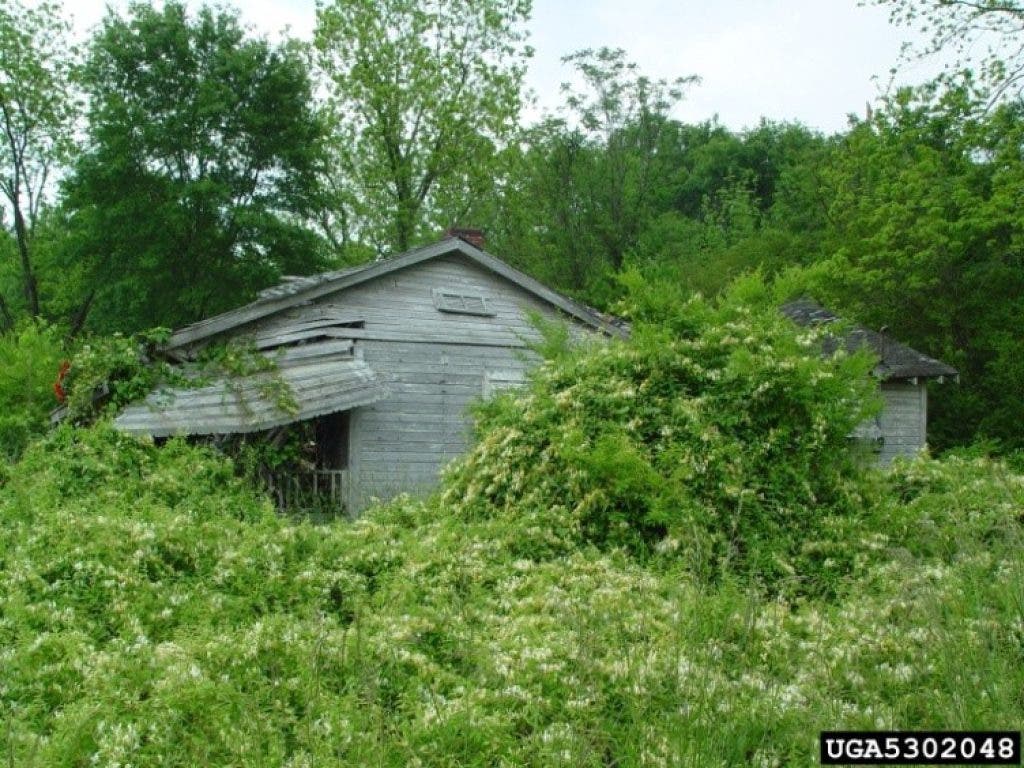

The smell of honeysuckle can be enticing or overwhelming—which makes it a lot like the honeysuckle plant itself.
Japanese honeysuckle (Lonicera japonica)—the vine with the white blossoms that give off that strong, sweet scent—is a plant with no enemies. Like many invasive plants, it was imported because of its beauty. Japanese honeysuckle liked its new home so well, that it quickly leapt over fences and covered open spaces, climbing over any trees and bushes in its path. With vines growing to 30 feet or more, honeysuckle can kill a tree within a few seasons by covering it so completely that it will wither from lack of light. At Almstead, we've had to remove trees that were killed by the weight of the vine.
Honeysuckle can spread either by seed or through runners. With vigilance, you can constrain Japanese honeysuckle from spreading by pruning out any new vines growing from the underground rhizomes. However, since its nectar and seeds are attractive to birds, the seeds will be dispersed despite your best efforts.
Find out what's happening in New Rochellefor free with the latest updates from Patch.
Although Japanese honeysuckle is on the list of invasive plants for many states, it continues to be sold at many garden centers. Fortunately, there are other choices. Native American honeysuckle (Lonicera sempervirens), also called trumpet honeysuckle or coral honeysuckle, is a beautiful vine that is much better behaved than its Japanese cousin. There are cultivars in a range of colors, including white, yellow, orange and crimson. It is also attractive to birds and butterflies. American honeysuckle has almost no scent, however.
It would be over-optimistic to think we can eradicate Japanese honeysuckle, but we can continue to reduce its grasp on our landscapes. Sprays containing glyphosate such as Roundup (or Rodeo for wetland areas) are effective, but repeated applications are usually necessary. Before applying a control, cut the plants low—or mow if it’s a large patch—then spray the cut stems. If you continue this treatment whenever you see new growth, the honeysuckle will eventually give up.