Business & Tech
Chase to Reform Credit Card Debt Collection, Pay $136MM in 47 States
The bank, which has hundreds of customers in Westchester, must fix its problematic practice of debt reselling, says NY AG Eric Schneiderman.


Written by LANNING TALIAFERRO (Patch Staff)
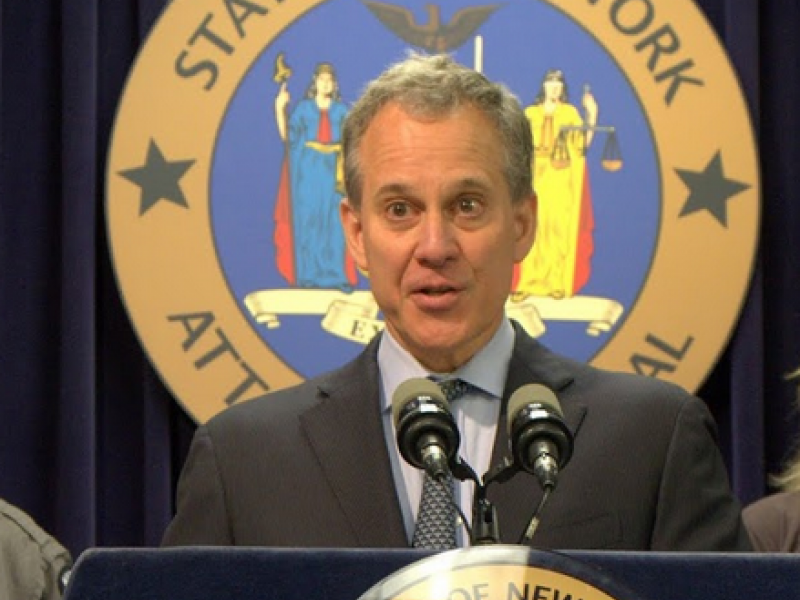
Chase Bank and its credit card subsidiary will reform its debt collection practices and pay restitution to customers and 47 states, New York Attorney General Eric Schneiderman announced today.
“Chase’s consumer credit card debt collection practices were harmful to families when it pursued collections cases based on false and outdated information,” Schneiderman said in a prepared statement. “In some cases the listed debt was the wrong amount, was associated with the wrong person, had previously been discharged, or was a time barred or very old ‘zombie’ debt.”
Find out what's happening in New Rochellefor free with the latest updates from Patch.
About 5,300 Chase customers in New York will get about $5.9 million in restitution. The state will get an additional $11 million.
The practices in contention stopped years ago, Chase officials said. “The 2015 consent order covers issues from several years ago for a small percentage of credit card credit card customers who defaulted on their credit card debt. The issues were discovered by Chase in internal reviews that began in 2010.”
Find out what's happening in New Rochellefor free with the latest updates from Patch.
There are more than 50 Chase branches in Rockland and Westchester counties.
Here’s the AG’s full statement:
Chase Bank USA N.A. and Chase Bankcard Services Inc. will reform its credit card debt collection practices through a $136 million joint state-federal settlement with Attorney General Eric Schneiderman, attorneys general in 47 states plus the District of Columbia, and the Consumer Financial Protection Bureau. The settlement is expected to net $5,950,000 in restitution to approximately 5,300 Chase customers impacted across New York State, and an additional $11,272,338 will be paid to New York State.
“There has to be one set of rules for everyone, no matter how rich or how powerful, and that includes the biggest multi-national financial institutions,” said Attorney General Schneiderman. “Chase’s consumer credit card debt collection practices were harmful to families when it pursued collections cases based on false and outdated information. In some cases the listed debt was the wrong amount, was associated with the wrong person, had previously been discharged, or was a time barred or very old ‘zombie’ debt.”
Agreement Requires Debt Collection Reforms
The agreement requires Chase to significantly reform its credit card debt collection practices in areas of declarations, collections litigation, debt sales and debt buying. Debt buying involves the sale of debt by creditors or other debt owners, often for pennies on the dollar, to buyers who then attempt to collect the debt at full value or sell it to other buyers.
Among other reforms, the agreement requires new safeguards to help ensure debt information is accurate and inaccurate data is corrected, provides additional information to consumers who owe debts, and bars Chase’s debt buyers from reselling consumer debts to other purchasers.
Resale Prohibition
The resale prohibition is significant. Previously, initial buyers of Chase’s consumer credit card debt could resell the debt, the subsequent buyer could flip the debt to another buyer, and the process could repeat itself many times over. If initial information about the debt was incorrect or was transmitted with errors to a subsequent debt buyer, that could result in long-term harm to the consumer and leave the consumer with the difficult or even impossible burden of successfully challenging or correcting errors.
Investigation Uncovered Unlawful Debt Collection Practices
According to the joint state-federal probe, Chase:
- Subjected consumers to collections activity for accounts that were not theirs, in amounts that were incorrect or uncollectable.
- Subjected consumers to inaccurate credit reporting and unlawful judgments that may affect consumers’ ability to obtain credit, employment, housing and insurance in the future.
- Sold certain accounts to debt buyers that were inaccurate, settled, discharged in bankruptcy, not owed by the consumer, or otherwise uncollectable.
- Filed lawsuits and obtained judgments against consumers using false and deceptive affidavits and other documents that were prepared without following required procedures, a practice commonly referred to as “robo-signing.” These practices misled consumers and courts and caused consumers to pay false or incorrect debt and incur legal expenses and court fees to defend against invalid or excessive claims.
- Made calculation errors when filing debt collection lawsuits that sometimes resulted in judgments against consumers for incorrect amounts.
Chase Suspended Credit Card Debt Sales & Collections Litigation
Chase suspended its consumer credit card debt sales in 2013 and collections litigation in 2011. In 2012 Chase maintained approximately 64.5 million open accounts with $124 billion in outstanding credit card debt. From 2009-2013, Chase recovered approximately $4.5 billion of debt from defaulted accounts through collection lawsuits, selling defaulted accounts to third-party debt buyers, or both.
Chase to Cease Collecting on 528,000 Consumers
Chase has agreed to cease all collection efforts on more than 528,000 consumers, including an estimated 5,300 in New York. Chase sued the affected consumers for credit card debts and obtained judgments between January 1, 2009 and June 30, 2014. Chase will notify affected borrowers of the change and will request all three major credit reporting agencies to not report the judgments.
Consumer Restitution
The agreement also ensures that Chase will fulfill $50 million in consumer restitution through a separate 2013 consent order reached with the Office of the Comptroller of the Currency. Chase estimates that so far it has provided $5,950,000 in restitution to 5,300 New York consumers.
If Chase’s consumer restitution through the OCC action falls short of $50 million by July 1, 2016, Chase must pay the remaining balance to state attorneys general and the CFPB.
Payment to States and CFPB
Chase will pay more than $95 million to the 47 participating states and the District of Columbia, an additional $11 million to the executive committee states that conducted the investigation and settlement negotiations, and $30 million to the CFPB.
Participating States
The following state attorneys general are participating in the Chase settlement: Alaska, Alabama, Arkansas, Arizona, Colorado, Connecticut, Delaware, District of Columbia, Florida, Georgia, Hawaii, Idaho, Illinois, Indiana, Iowa, Kansas, Kentucky, Louisiana, Maine, Maryland, Massachusetts, Michigan, Minnesota, Missouri, Montana, Nebraska, Nevada, New Hampshire, New Jersey, New Mexico, New York, North Carolina, North Dakota, Ohio, Oklahoma, Oregon, Pennsylvania, Rhode Island, South Carolina, South Dakota, Tennessee, Texas, Utah, Vermont, Virginia, Washington, West Virginia and Wisconsin.
Consumers with Debt Collection Questions or Complaints
Debt collectors are bound by state and federal laws, including the Fair Debt Collection Practices Act (FDCPA), which prohibits debt collectors from using abusive, unfair, or deceptive practices to collect from consumers. Consumers may also have the option of pursuing claims in state or federal court.
Complaints:
Consumer information about debt collection issues:
Here is Chase’s full statement:
Chase Card Services entered into a consent order today with the Consumer Financial Protection Bureau and agreements with attorneys general for 47 states and the District of Columbia relating to practices stopped years ago for its sworn document, collections litigation and certain debt sales practices on defaulted credit card debt.
Chase has taken extensive steps over the past four years and is pleased to resolve these legacy issues. It is working to complete remediation of affected Card customers.
Chase addressed largely the same issues in a consent order with the Office of the Comptroller of the Currency in 2013.
The 2015 consent order covers issues from several years ago for a small percentage of credit card credit card customers who defaulted on their credit card debt. The issues were discovered by Chase in internal reviews that began in 2010.
To address these issues, Chase began taking action in 2011:
Stopped filing credit card collections litigation in 2Q 2011 and have not restarted.
Dismissed the impacted lawsuits.
Improved its debt sales processes.
Get more local news delivered straight to your inbox. Sign up for free Patch newsletters and alerts.