Community Corner
'Environmental Racism Tour' Puts Spotlight On Planned Drive-Thru
One group fighting for racial justice says that lessons about today's rampant development can be learned from the sins of the past.


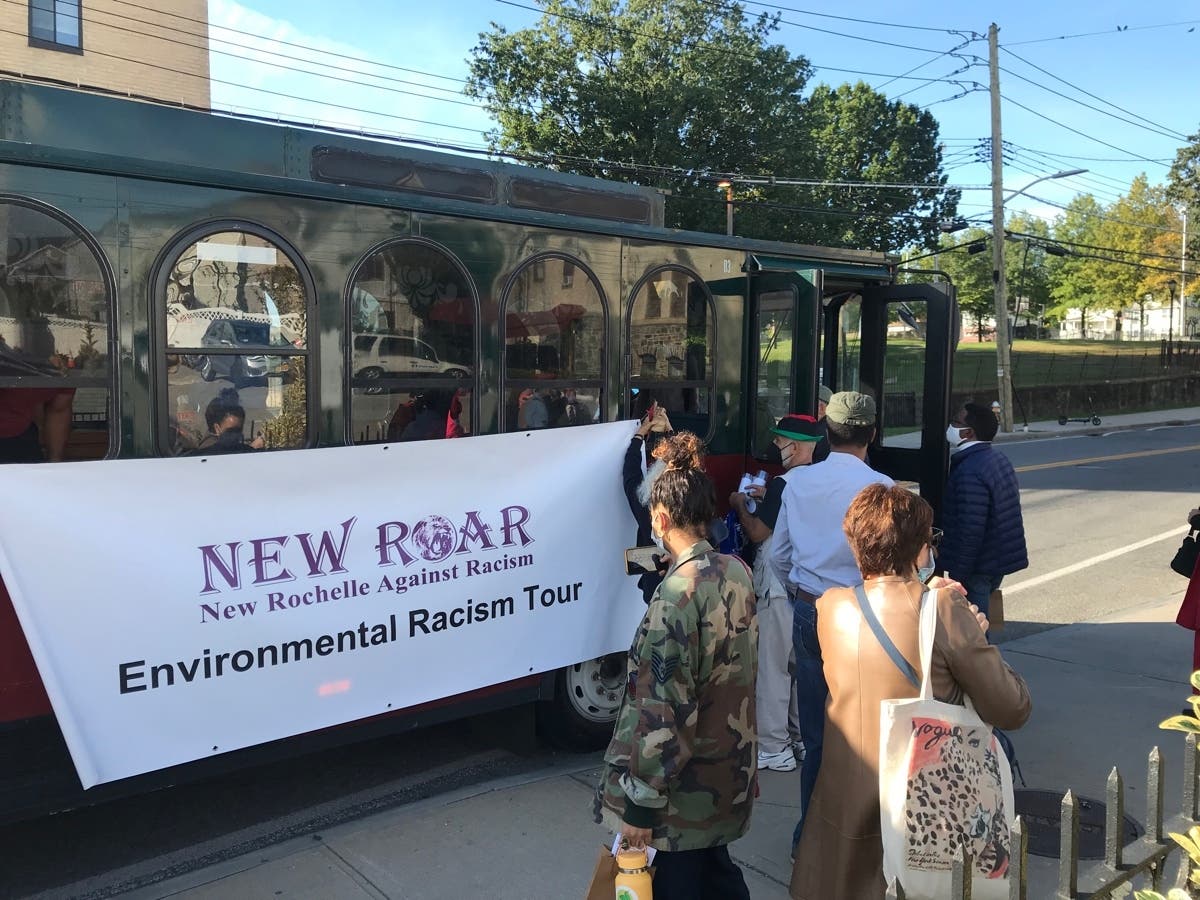
NEW ROCHELLE, NY — A trolley tour highlighting historic policies and decisions that adversely affected Black neighborhoods in the city made a stop at the site of a planned drive-thru coffee shop to make a point about how little things may have changed.
It is well documented that a history of unjust zoning schemes, the use of eminent domain and corrupt redlining by lenders took a toll on Black communities across the United States in the past. A series of trolley tours staged by New Rochelle Against Racism (New RoAR) gave participants a glimpse of how those decisions made decades ago are still putting predominantly Black neighborhoods at a disadvantage to this day.
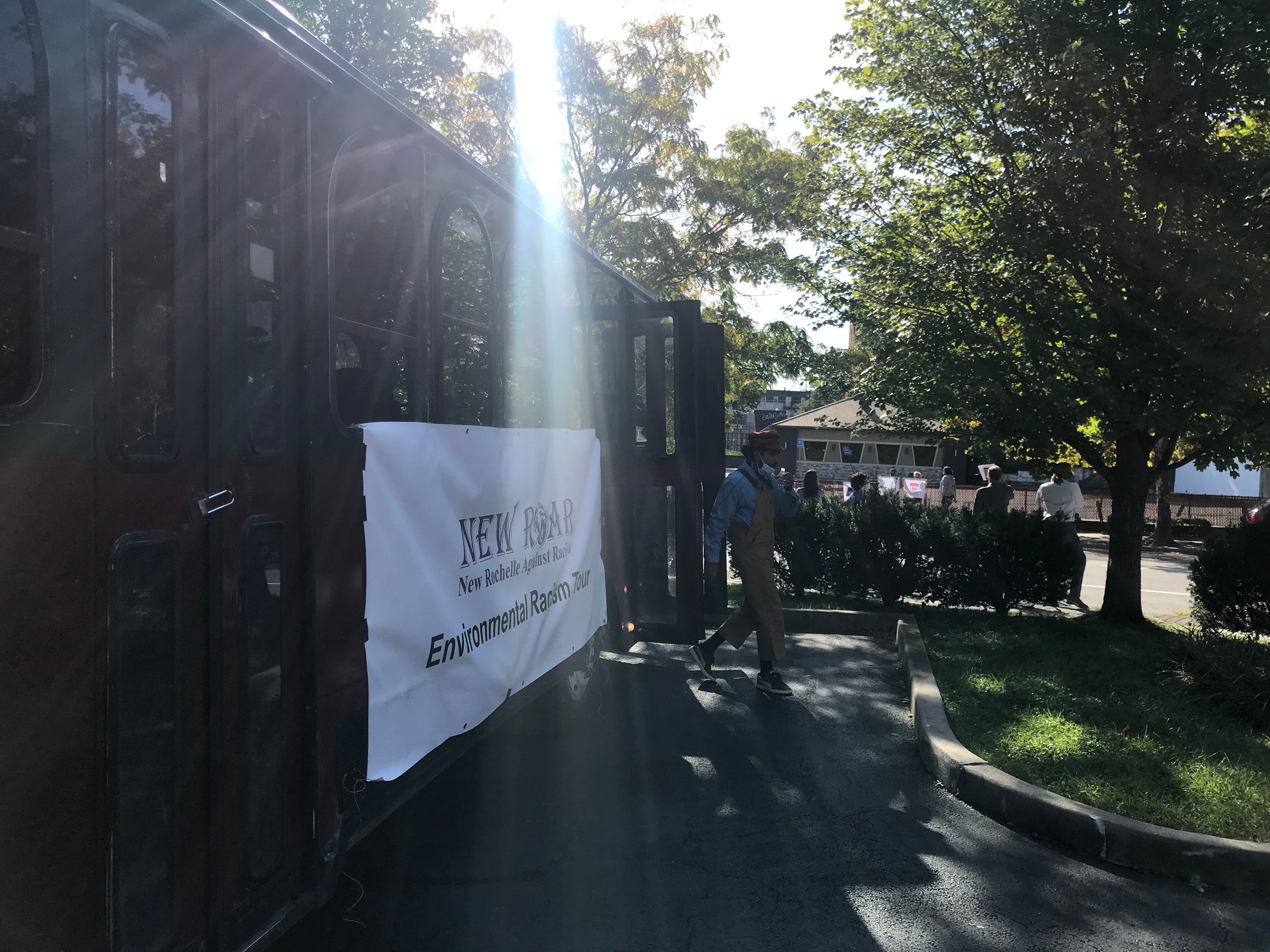
The "Environmental Racism Tour" took passengers through a timeline of thriving neighborhoods that were isolated by massive public works projects, targeted as locations for heavy industry and systematically stigmatized to lower property values. The evidence of those policies could still be seen from the windows of the trolley, as it crisscrossed the city.
Find out what's happening in New Rochellefor free with the latest updates from Patch.
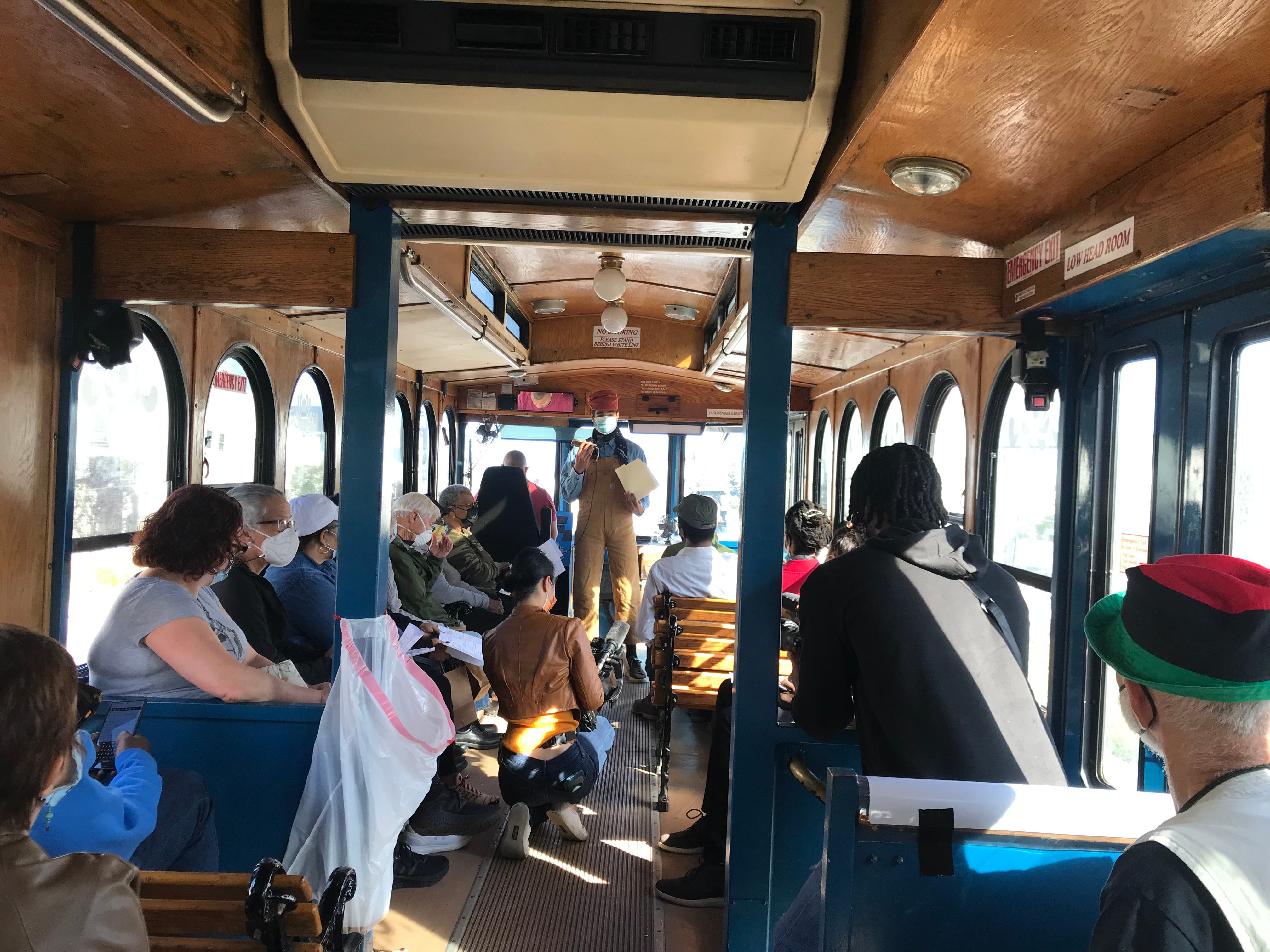
Evidence of past injustices can still be seen by those willing to look, tour guide and "conductor" Blaze Jones-Yellin explained. (Jeff Edwards | Patch)
New Rochelle senior citizens, Dorothy Oliver and Stephanie Bartee spoke about watching the tight-knit neighborhoods where they grew up slowly become less and less of a community as interstate highways and factories replaced family homes, often with little compensation for the families forced to relocate.
Find out what's happening in New Rochellefor free with the latest updates from Patch.
Bartee recounted for those on the trolley how her family had lived in the area that would eventually become New Roc before being relocated to the Peter Bracey Housing apartments.
Organizers say that while the trolley tour took a look at racist policies of the past, there is real anger in the community about the way elected city leaders are handling the recent spate of recent development projects. Concerns that predominately minority communities are once again bearing the brunt of the downside to the changing cityscape served as the inspiration for a tour to remember historic mistakes so they are not repeated.
"The purpose of the First Annual New Rochelle Environmental Racism tour was our attempt to expand the conversation about what is acceptable in our city," RoAR spokesperson Lisa Burton told Patch. "We cannot be a city that values diversity but as a matter of public policy continues to put its Black and Brown citizens at risk. We cannot make public statements declaring a climate crisis while encouraging increased air and noise pollution by targeted zoning. We cannot continue to value and protect commercial interests while ignoring asthma clusters and other health concerns."
Burton said ignoring the city's part in a history of environmental racism would be a mistake. She said New Rochelle can and must do better.
The trolley tour made a pit stop to silently protest at the site of a proposed new drive-thru coffee shop. (Jeff Edwards | Patch)
The tour made a pointed stop at the site of a controversial planned development.
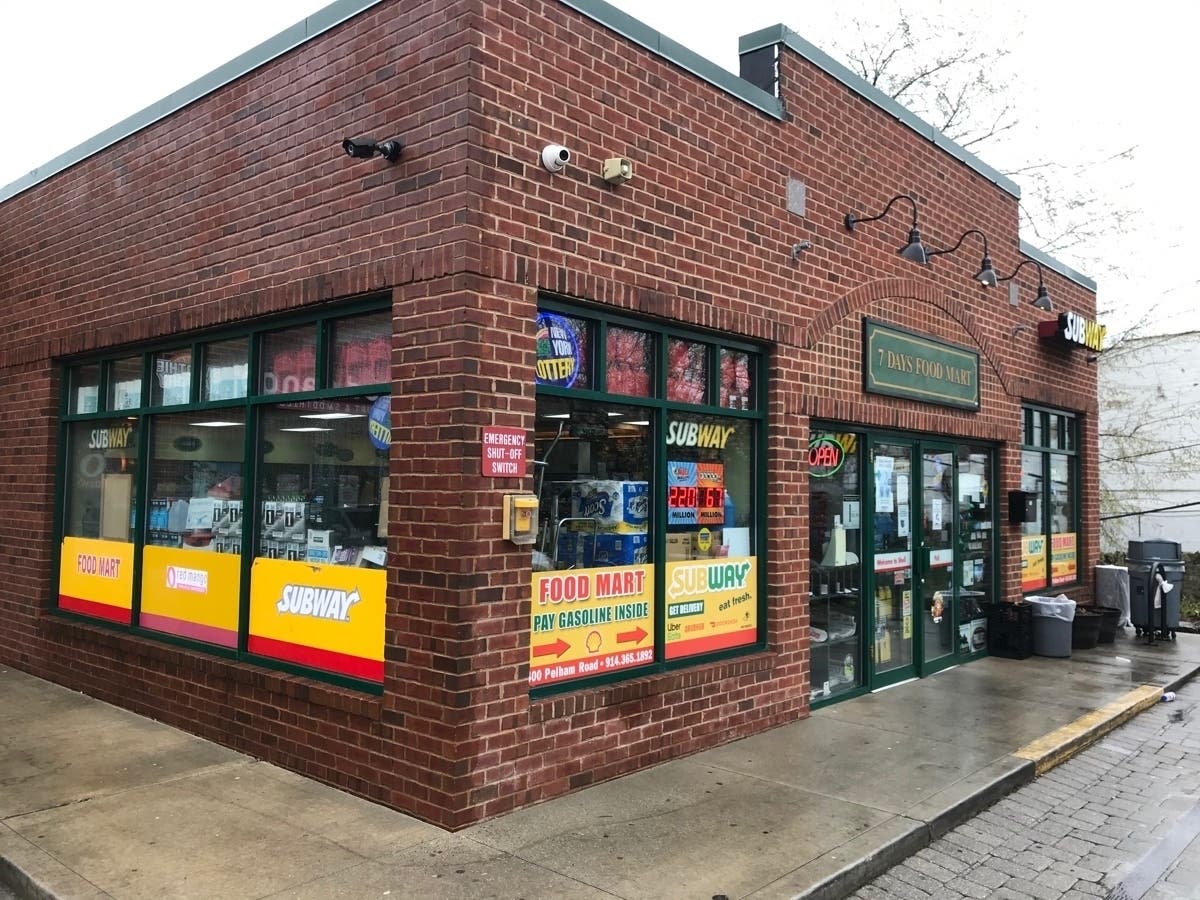
Holding signs reading, "I can't breathe" and "How Many 'Bucks = One Black Life?," organizers silently protested in front of the vacant former-Pizza Hut that is slated to become a Starbucks with a drive-thru. The project will likely become a reality after earning a critical approval from the city earlier this month.
SEE ALSO: Environmental And Racial Concerns Raised Over Starbucks Plan
At issue is the concern that lines of idling vehicles directly under the windows of nearby apartments set aside for formerly homeless families could create a health hazard.
"The city does not allow a drive-through, for example, at the McDonald's on North Avenue," Burton told the planning board at a June meeting. "It is inconceivable that the apartments for White Oak and the new development there would ever be subjected to the noise, the pollution, of idling cars sitting through a drive-through but somehow it's okay over near Bracey and by Fountain Place. The difference is kind of obvious. One is a black neighborhood, a poor neighborhood. The other is white and middle class."
SEE ALSO: New Rochelle Officially Declares Climate Emergency
New RoAR members insist they aren't anti-development and would be perfectly happy to see a coffee shop at the location — provided a drive-thru isn't part of the plan.
It is understandably difficult to see the connection between a convenient stop for a grande latte and an historic pattern of inarguable environmental racism, but for the people who lived though, and continue to suffer the consequences of that dark history, a proposal for a quick coffee stop has become a legitimate source of anxiety.
And that may be reason enough to give those concerns due consideration.
Get more local news delivered straight to your inbox. Sign up for free Patch newsletters and alerts.