Community Corner
Exhibit Celebrates Desegregation of New Rochelle Schools
A symposium and exhibit in New Rochelle marks the 50th anniversary of the Taylor case, which was the first case to challenge school segregation in the North.


Because of gerrymandering and a prohibition on transferring to different schools, in 1961, the Lincoln School in New Rochelle was the only option for African-American elementary students living in the neighborhoods near that school.
The community and attorney Paul Zuber led the charge for change. The Taylor case, filed on behalf of a New Rochelle family, was the first legal challenge to de facto segregation in the North after the 1954 Brown vs. Topeka Board of Education case.
An original exhibit, "Reflections of Change: A 50 Year Retrospective of the Lincoln School Case," opened Wednesday night at the Museum of Arts & Culture at New Rochelle High School with a symposium discussion marking the 50th anniversary of the Taylor case.
Find out what's happening in New Rochellefor free with the latest updates from Patch.
In the case, state and federal courts rejected the argument that segregation at the New Rochelle elementary school "just grew that way"—an allusion to the character Topsy in Harriet Beecher Stowe's classic novel Uncle Tom's Cabin.
The exhibit charts the history of the Lincoln School from its opening in 1898 as Winyah School to its demolition in 1963. Attorney Paul Zuber persuaded Judge Irving Kaufman that New Rochelle had created a segregated school system when it gerrymandered white students to Webster and Mayflower, leaving the Lincoln School District predominantly black and prohibiting student transfers.
Find out what's happening in New Rochellefor free with the latest updates from Patch.
Segregation was no less real in northern cities than in the South where social inequality was brazenly memorialized into law. Above the Mason-Dixon line, customary practice or de facto segregation just as effectively excluded African-Americans from equal access to education, employment, and housing into the latter half of the 20th century.
"Down home our bigots come in white sheets," reads a quote from Paul Zuber. "Up here they come in Brooks Brothers suits and ties."
In northern cities like New Rochelle, Boston and Chicago, challenges to segregation stirred protests, controversial bussing plans, and hostility, yet the popular perception persists that racial segregation was strictly a Southern phenomenon.
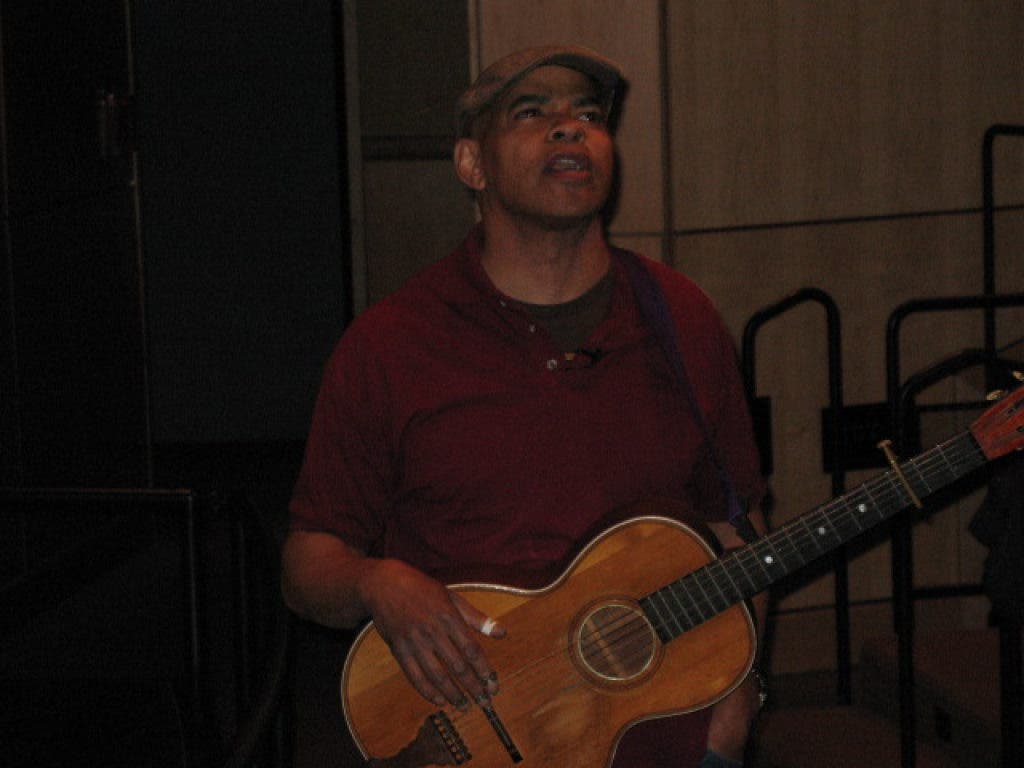
The exhibit and symposium aim to address the gap in awareness. Jacqueline Yizar, who attended Lincoln School, said the exhibit brought back happy memories of the era. But blues guitarist Guy Davis recalled New Rochelle's complicated civil rights history as he performed songs from the Civil Rights Era.
“I hope the exhibit we have put together gives a sense of the complexity of this case,” said museum director Theresa Kump Leghorn. “We wanted the exhibit to pay tribute to the courageous Taylor case litigants and to attorney Paul Zuber while also respecting the teachers and students who loved Lincoln School.”
The symposium included Yizar; Dr. Paul Murray, a Siena College professor who has written a book about the Taylor case; Paul W. Zuber and Mrs. Barbara Zuber, son and wife of the late Paul Zuber, lead attorney for the plaintiffs in the Taylor Case; and moderator Linda Tarrant-Reid. Blues guitarist Guy Davis, son of actors Ruby Dee and the late Ossie Davis, opened the evening with songs from the Civil Rights Movement.
The event was made possible through grant support from the New Rochelle Council on the Arts and in-kind support from ShopRite of New Rochelle. The museum, open year-round, is a program of the non-profit New Rochelle Fund for Educational Excellence and the only Regents-chartered museum in a school in New York State.
Curated with the help of high school students Raj Basek, Leah Goldman and Shannon McCullough, social studies department chair Steve Goldberg, and Fashion Institute of Technology intern Stephanie Blanc, the exhibit features memorabilia, photos, artifacts, and video clips from the 1964 CBS documentary After 10 Years, The Courts and the Schools.
For more information about the museum, or to arrange a group visit, contact Director Theresa Kump Leghorn at 914-576-6518. The exhibit will be open to the public, Monday through Friday- 9 a.m. to 3 p.m., and Tuesday and Thursday evenings, 7 p.m. to 9 p.m.
CORRECTION: A previous version of this story incorrectly said the Lincoln School was the only option for African-American elementary students in New Rochelle. There were 10 other elementary schools that drew from their respective neighborhoods with varying degrees of racial balance. Patch regrets the error.