Schools
Longtime NASA Technologist Gives Fox Lane 6th Graders Insight Into Space
"If you don't get into NASA, you can still work in space," he told students. "Maybe someday you can even run a hotel in space."


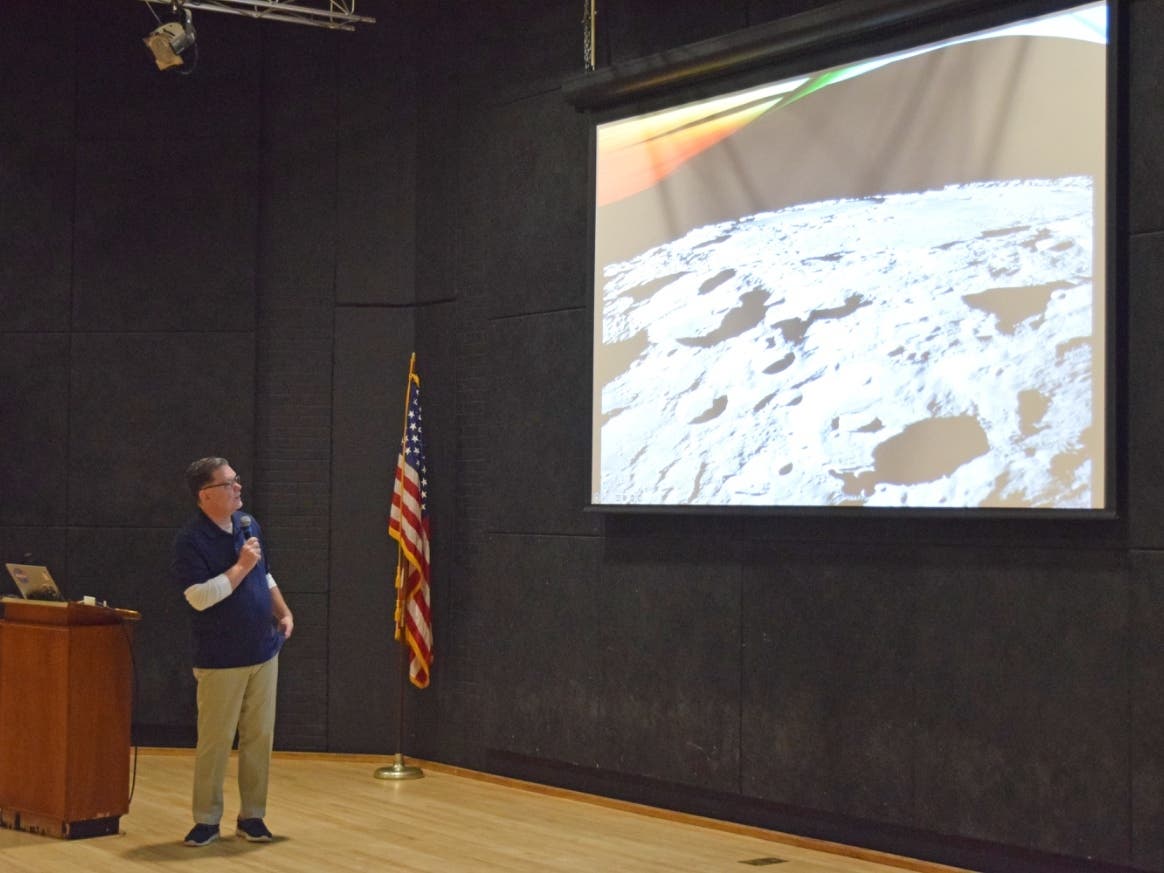
BEDFORD, NY — As the world watches astronauts reach further into space than ever before, students in Bedford had a very down-to-earth guest with some insider knowledge about outer space exploration.
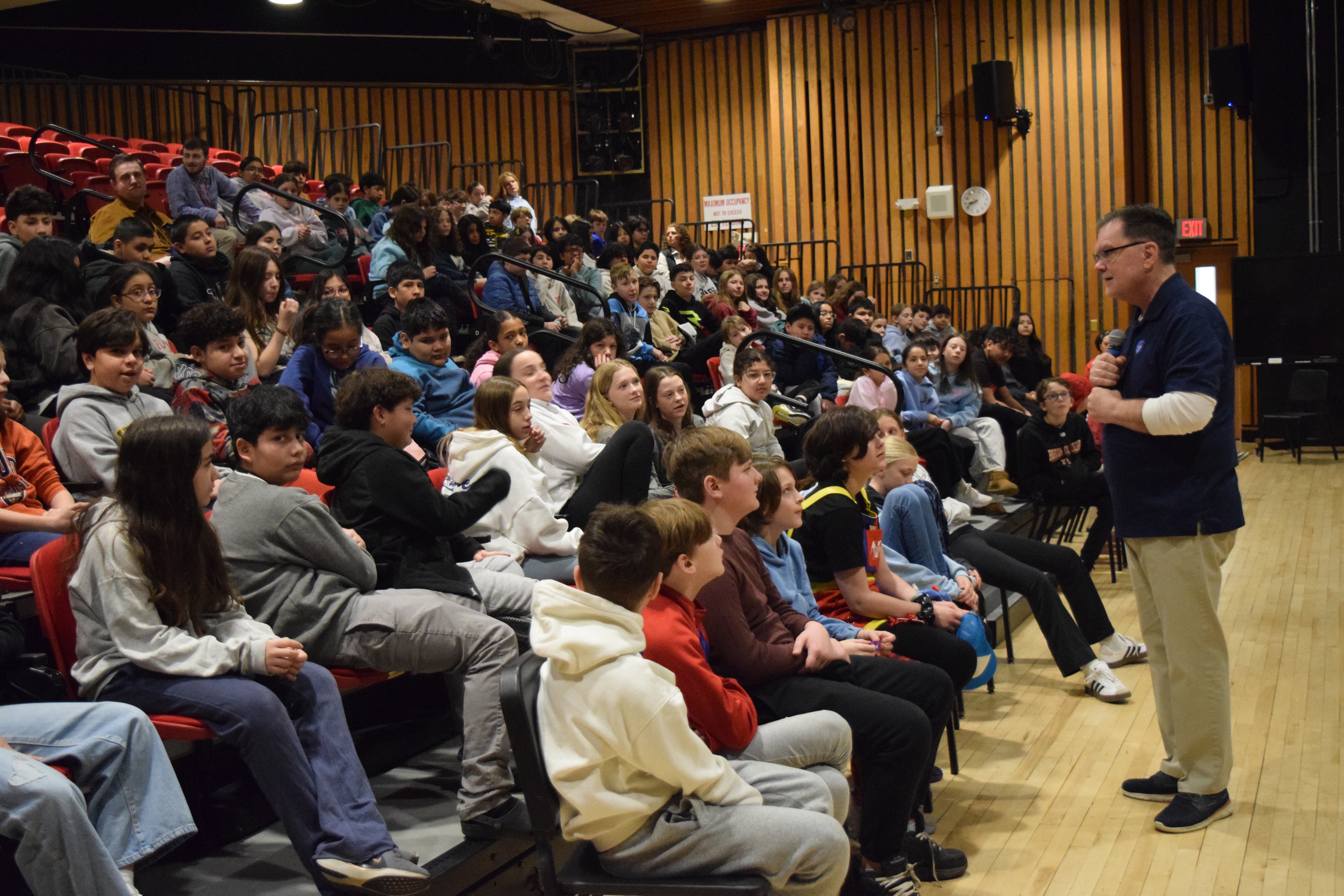
From the Bedford Central School District.
Before spring break, Jim Adams, a retired Deputy Chief Technologist at NASA, visited Fox Lane Middle School sixth graders during a team day to talk about space, space missions and careers in space.
Find out what's happening in New Rochellefor free with the latest updates from Patch.
Adams, who worked at NASA for 27 years, worked with teams that flew to Mercury, Jupiter, Saturn and more. He was originally hired by NASA to help build the International Space Station.
“Students were very excited to make connections with what we have been learning in class and what Adams talked about,” said science teacher Nolan Crohn.
Find out what's happening in New Rochellefor free with the latest updates from Patch.
Curriculum connections included space exploration, the challenges facing humans exploring the solar system, and the environments on different planets.
With the Artemis II launch happening not long after Adams’ talk, a lot of what he discussed touched on what astronauts would be experiencing as they traveled farther from earth than any other humans have before.
“Do you know what happens to your body when you live in space?” he asked students. “The lack of gravity causes fluids in your body to go into places they normally wouldn’t. You leech calcium and your muscles atrophy. Astronauts exercise for two hours per day while they’re in space so that when they get back to Earth, they won’t break any bones, and they’ll be able to walk.”
Adams also compared the Apollo 8 mission with Artemis II, noting that the current mission has been a much more collaborative experience. Apollo 8 was launched during a time of great distrust, when the US and Russia were rushing to see who could go to the moon first. Today, 61 nations have signed the Artemis Accords (which, according to NASA “provide a common set of principles to enhance the governance of the civil exploration and use of outer space”). The idea is that this latest launch is an effort from Earth—not just the United States.
“With Apollo 8, we didn’t know for sure if we built the right technology to be sure humans could survive in space,” Adams said. “Now, we’re trying to prove that the crew can safely leave the earth, circle it, head to the moon, do a figure eight and come back.”
According to Adams, Artemis II is the biggest rocket ever built. It has been scheduled to launch in the past, but hydrogen and helium leaks required it to go back for repairs.
“We want this rocket to be perfect,” he said. “There’s no room for error. We’re not going to send four astronauts into space in a rocket we think is just ‘ok.’ We’re not going to risk their lives on something we don’t think is perfect.”
Students were thrilled to take part in a question-and-answer session.
“We wanted them to have the opportunity to ask questions of someone who was personally involved in a lot of the things we have been learning about,” Crohn said.
Their questions were incredibly insightful.
“How do we know how hot the sun is?”
“Why has it taken us so long to go back to the moon?”
“What do you think the difference is between technology in the 60s and 70s and what they’re using in Artemis II?”
Adams told students that the Apollo rocket used a computer that had less power than a calculator.
“The difference between then and now mostly has to do with electronics. The rocket is fundamentally the same, using the same physics.”
Students also learned about Adams’ career trajectory. He started out in the 1970s when the microchip was new. He wanted to build electronic cash registers, but companies wanted someone with a degree in electrical engineering. He had studied physics. Instead, he got a job at GE figuring out how electronics were affected in space. Eventually, NASA approached him.
“You never know where your career is going to take you if you keep your mind open,” he said.
Giving students information on the range of jobs available in space was one of the major goals science teachers had for the visit.
“Adams spoke about how NASA hires people with all kinds of backgrounds: from computer programmers and spacesuit clothing designers to chefs that prepare food that’s safe and nutritious to eat in microgravity, there are so many options,” Crohn said.
Adams also noted how many opportunities there are to work in space today beyond NASA.
“Space tourism, private space stations, companies going to the moon to collect helium-3 that might help power sources. If you don’t get into NASA, you can still work in space. Maybe someday you can even run a hotel in space!”
This release was produced by the Bedford Central School District. The views expressed here are the author’s own.
Get more local news delivered straight to your inbox. Sign up for free Patch newsletters and alerts.