Community Corner
Martin Luther King Jr.: 5 Things To Know
Bells will toll 39 times, one for each year Martin Luther King Jr. lived, Wednesday at 6:01 p.m., the time of his death 50 years ago.


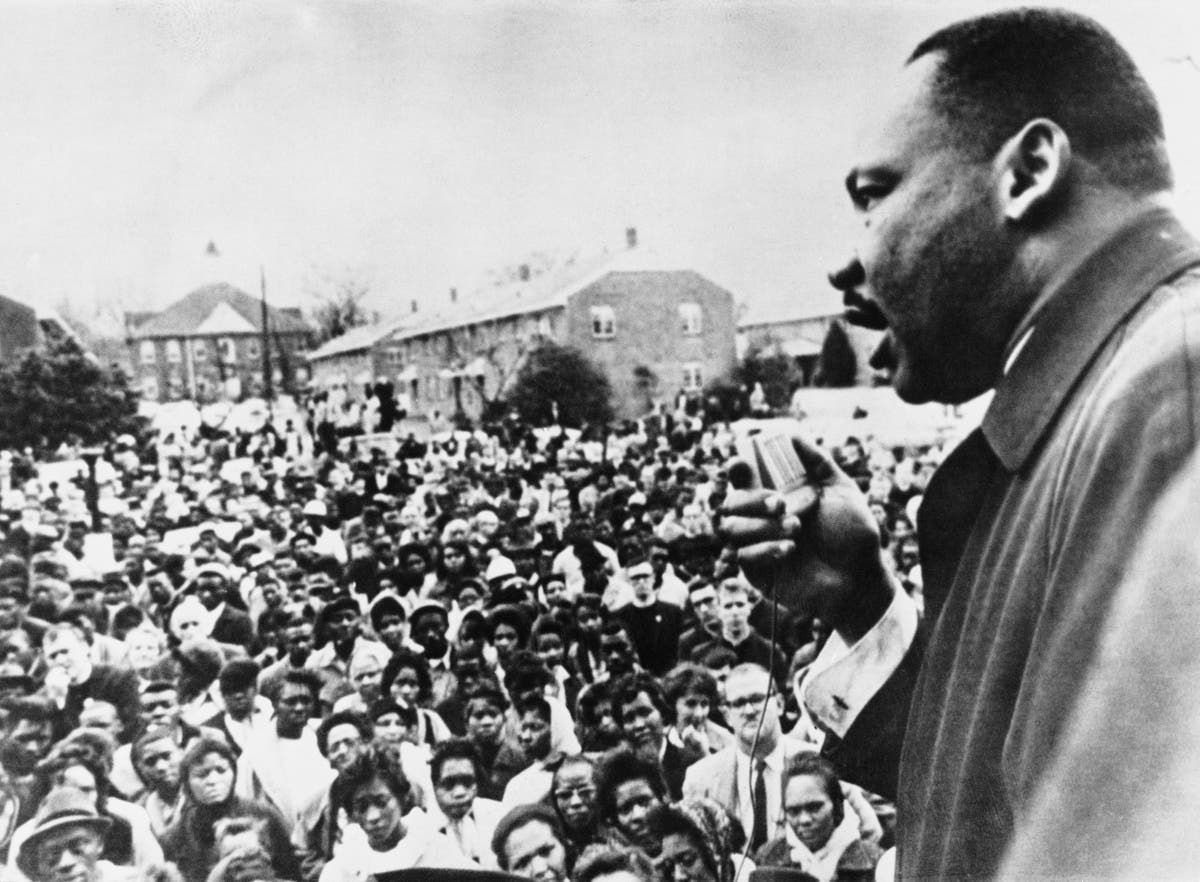
The Rev. Martin Luther King Jr. was the leader of the American. civil rights movement from the mid-1950s until his death 50 years ago Wednesday, April 4, 1968, when he was felled by an assassin’s bullet — the antithesis of his message of non-violent activism — at the Lorraine Motel in Memphis, Tennessee.
Bells will toll across the world at 6:01 p.m. Wednesday, the time he was shot, and his message of nonviolence. The bells will sound 39 times, once for each year the iconic civil rights leader lived.
His message of nonviolence, service and hope is as relevant today as it was half a century ago. One example: Modern civil rights leaders are reviving a key initiative at the time of his death, the Poor People’s Campaign, with 40 days of marches, sit-ins and other peaceful protests to unite poor people of diverse backgrounds in a call for better homes, jobs and education.
Find out what's happening in New Rochellefor free with the latest updates from Patch.
Here are five things to know about the social activist and humanitarian:
At 35, King was the youngest person ever to receive the Nobel Peace Prize. He was awarded the prize in 1964 for his work to combat racial inequality through nonviolence. During his acceptance speech, he again emphasized the importance of nonviolent protests and called attention to poverty. “ … I am still convinced that nonviolence is both the most practically sound and morally excellent way to grapple with the age-old problem of racial injustice,” he said. “A second evil which plagues the modern world is that of poverty. Like a monstrous octopus, it projects its nagging, prehensile tentacles in lands and villages all over the world. Almost two-thirds of the peoples of the world go to bed hungry at night.”
Find out what's happening in New Rochellefor free with the latest updates from Patch.
The son, grandson and great-grandson of Baptist ministers, King’s birth name was Michael King Jr. He was born to Michael King Sr. and Alberta Williams King on Jan. 15, 1929. But his father, the pastor of the Ebenezer Baptist Church in Atlanta, had visited Germany in 1934 and was inspired by the teachings of Protestant Reformation leader Martin Luther, and began calling himself and later his son Martin Luther.
King was jailed 29 times and assaulted four times. Though his message was resonating strongly among many, King was often targeted by police officers who saw his call for racial equality as a threat to American society. He frequently found himself in jail for practicing civil disobedience, including in Birmingham, Alabama, where he wrote the "Letter From a Birmingham Jail" that became a key civil rights document. The FBI tracked King’s every move, intensifying their wiretaps and surveillance operations after the August 1963 March on Washington, where King delivered his “I have a dream speech,” regarded by many historians as the most important speech in the 20th century.
King traveled more than 6 million miles, gave 2,500 speeches and published five books and numerous articles. From 1957, when he was elected the first president of the Southern Christian Leadership Conference formed to assist the civil rights movement, until his death in 1968, King traveled across the nation spreading the teachings of nonviolent resistance that had been inspired by Ghandi.
King is the only non-president to have a national holiday named in his honor. President Ronald Reagan signed a bill in 1983 establishing Martin Luther King Jr. Day, to be observed on the third Monday in January near King’s birthday on Jan. 15. The first observance was in 1986. King is also the only non-president with a memorial on the National Mall in Washington, D.C. He is honored across the country, where about 900 streets and boulevards are named after him, according to Derek Alderman, who heads the geography department at the University of Tennessee. About 70 percent of them are in Southern states: Alabama, Florida, Georgia, Louisiana, Mississippi, North Carolina and Texas.
ALSO: Martin Luther King Jr.’s Voice Lives On 50 Years After Assassination
Photo: Dr. Martin Luther King Jr. (1929 - 1968) addresses civil rights marchers in Selma, Alabama, in April 1965. (Photo by Keystone/Getty Images)
Get more local news delivered straight to your inbox. Sign up for free Patch newsletters and alerts.