Politics & Government
Affordable Housing Plan Spotlighting Rental Apartments Moves Forward in Southold
Southold Town Supervisor Scott Russell has said the goal is to create 50 new affordable apartments in the next 3 years.


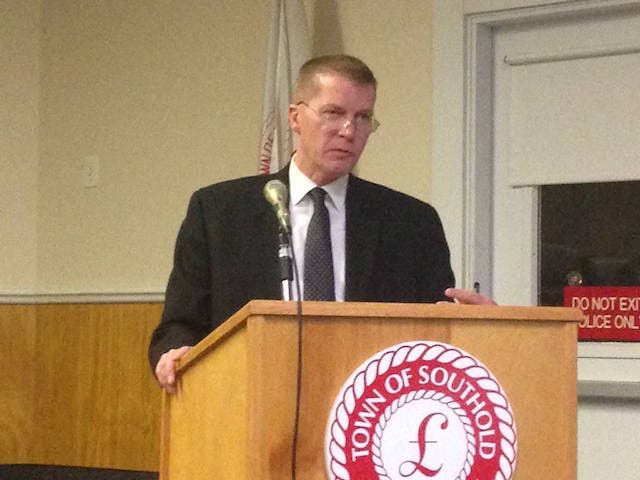
NORTH FORK, NY - Southold Town Supervisor Scott Russell is shaping his plan to create 50 affordable apartments over the next three years, setting specific goals to shepherd the vision into reality.
The supervisor first pitched the plan during his State of the Town address.
On Tuesday, Rona Smith of the town's housing advisory commission spoke to the board at a work session about recommendations regarding the affordable housing code.
Find out what's happening in North Forkfor free with the latest updates from Patch.
"I'm here to endorse the idea of increased density in affordable housing districts, with some caveats," she said.
Reflecting back on the Cottages at Mattituck, Smith said while there was a long list of applicants, the list was "whittled down" due to the inability of many to afford the homes; credit card debt made many ineligible to qualify, she said.
Find out what's happening in North Forkfor free with the latest updates from Patch.
Instead, Smith said there is a dire need for rental housing in Southold Town. "There's really virtually no affordable housing that's available year-round," she said. "A lot of people have to take seasonal rentals in the winter and move out when the summer season starts so the owner can reap the benefits of summer renters."
The biggest problem, Smith said, is that even though the town's HAC went out to encourage developers to consider affordable housing, there were virtually no responses, largely because the cost of land is too high.
In addition, the town's preservation program has diminished the overall acreage available for development, she said.
Should the town allow land to be divided into smaller parcels for affordable housing, Smith said the developments should have no more than 25 units, and each unit must remain affordable in perpetuity, with the aim of finding homes for those who live and work in town full-time.
Whoever rents the units must oversee them and ensure repairs are managed, so the apartments don't become "shoddy," she said.
Plans taking shape
The supervisor said he’s met with industry professionals who’ve developed projects in towns with no sewers, much like Southold; a community of 20 apartments is a reachable goal, with a recognized and approved sewer system, he said.
Under Southold's current AHD zoning, six units are allowed per acre, but to make a plan viable, an increased density of 12 units would be needed. "I know that seems like a lot but we are serious about developing affordable housing," he said. “We need to listen to developers,” he said.
Developers have had difficulties providing affordable housing because they need critical mass, he said. The current zoning of six units per acre is ”too onerous to overcome. If we go to 12, I think we can generate more interest but we can always put a cap on it so no community has more than 24 units. The septic issue can be addressed and we can provide the opportunity to developers to build more apartments on less property to ensure economic viability,” Russell said.
While Russell said the community won't accept a proposal for 40 to 50 units, perhaps 18 to 22 would be more palatable .
Russell said he's seen the Sandy Hollow Cove development in Tuckahoe, a plan he said is a good model for Southold. "I looked at the floor plans, the layout, site design and the artist's rendering. It is similar to projects built in the region," he said.
As for where the units would be situated in Southold Town, Russell said, "The town has historically focused on encouraging housing in and around the hamlet centers. That is fine but should only be a general guide at this point. The fact is that, if we want to encourage creating new affordable apartments, we need to be open to all locations."
The supervisor said the town can always cap the number of units allowed; no more than 24 units might be allowed, he said. "If we cap it out, I think we can overcome a lot of the local hurdles," he said.
Russell said it's critical to set "a hard number" of units as a goal because the town has never set any tangible targets in the affordable housing arena.
While some might say 50 units over three years is not enough, Russell said, "that's 50 more than we have right now."
Smith added, "We've had 23 in the last 11 years."
Russell said the plan is also to look at the town's current zoning; right now, apartments are largely seen as accessory units; he helped former Supervisor Josh Horton create legislation that expanded the use of accessory apartments, Russell said. "We need to look at apartments as principal uses in commercial zones," he said.
When that initial legislation was created, the thought was not to lose commercial space downtown. But now, Russell said, more than "100,000 square feet of vacant rental space exists in Mattituck."
Sanitary flow hurdles might be easier to overcome for apartments as principal uses in commercial zones, Russell said.
"I'd like to really start moving very quickly on this," Russell said. "This isn't a new crisis. It has been one here in Southold for a long time. Past initiatives of this board to spur the creation of new housing haven't worked. Time to try a new approach."
Next steps include discussing the initiatives at a series of code committee meetings then, the finished work product of those meetings should result in code amendments that would be subject to a public hearing.
The town hosted two public forums on affordable housing in recent months.
As for who would be eligible to rent the units, Russell said while the town's affordable housing registry has about 100 names on it, "it hasn't been updated or a few years now. We will obviously want to undertake an update in the near future."
A State of the Town pledge
At his state of the town address, Russell said, “Historically, Southold has set specific goals to provide a benchmark for measuring success, or lack of, in meeting its public policy goals. We’ve established percentages, hard numbers, tonnages, you name it, to use as a metric to measure our performance on a host of issues. In addressing affordable housing, we have no set goals, no targets, and no hard numbers. We know that the need for affordable housing is critical and have only a general understanding of how many units are needed, yet, we have produced nothing more than a wish list.”
Public opposition can be reduced by ensuring the affordable apartments are scattered throughout the hamlets and in scale with the surrounding community, he said. “We’re not looking at projects that will overwhelm the community. If they’re well-placed, they won’t have the negative impacts.”
Another way to reduce public opposition is through a “far-reaching and ambitious effort” to educate the public about the programs — and the people the town is trying to help, he said.
The town’s affordable housing commission has already commenced that effort, he said.
Affordable housing alternatives are meant to help the young, single professional, the firefighter, the EMT who comes to the aid of the community, the nurses at the hospital, he said. Young people, Russell has long said, are the town’s greatest export.
And the need is urgent: “We need to be more innovative in promoting the creation of more housing options,” Russell said. “We need to modify the code . . .allow small scale apartment buildings be constructed, especially by converting our existing inventory. We should amend the code to allow for up to six apartments to be built as a principal use in our commercial zones.”
The approval, he said, would require a special exception by the town’s zoning board of appeals. That approval, he assured, would also require covenants to ensure that the affordable housing units stay part of the affordable housing inventory in perpetuity, eliminating the need for affordable housing district, or AHD, zoning, Russell said.
“The current code, which I helped draft partially to protect commercial space, is simply not enough,” the supervisor said. “There are existing structures in our commercial areas that are probably best suited for residential use, not commercial.”
The bottom line, Russell said, is that the problem simply cannot be solved with large-scale affordable developments of 40 to 50 units, a notion that’s not favorable to the community. “The public would never accept it, and probably shouldn’t,” he said. “Smaller scale projects can be developed that do not impact the surrounding community and that can still be economically viable.”
Get more local news delivered straight to your inbox. Sign up for free Patch newsletters and alerts.