Health & Fitness
Anemones Bring a Global Flair to Local Gardens
Diversity Can Be a Fascinating Criteria for Choosing Garden Plants


On Long Island our gardens are a miniature United Nations. Researching the origins of common North Fork perennials has unearthed all sorts of fascinating international connections. The relationships between plant families is also far more complex than and unusual than I would have expected.
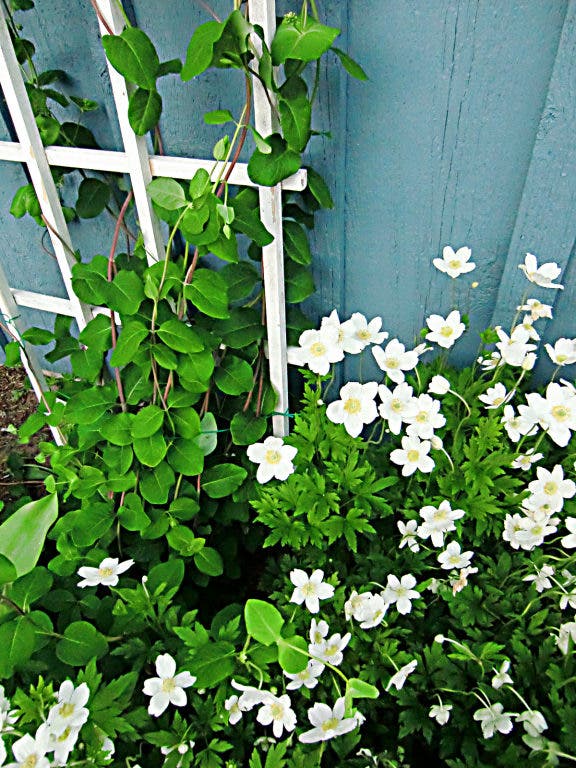
Take the anemone, for example. For starters, this incredibly lovely and versatile plant is a Renunculaceae—related both to the lowly buttercup, and some say Pasque flowers (Pulsatilla) and Hepaticas (Hepatica). The name anemone comes from the Greek for “daughter of the wind”. In fact colorful varieties of anemones, from crimson to deep purple, grow all over the Mediterranean, from Greece to Israel. Recently on a visit to my Mom in Wisconsin, I spotted a bed of them in her neighborhood, absolutely thick with gorgeous white blooms.
Garden catalogs are wildly enthusiastic about easy it is to grow these plants. Sad to say, I lost a stand of Greek anemone gifted by a friend some years back. But I still have a very hardy pale lavender stand of the Japanese (japonica) anemone alongside the pond in our garden. While some varieties of anemone are dwarf, by maturity this Japanese anemone’s elegant foliage can reach a height of 5 feet.
I suspect like a lot of gardeners, I tend to zero in, first and foremost, on whether a plant is a survivor. Or does it earn a place in the garden either because it is a prolonged bloomer or its foliage is attractive long after the flowering season is past? Of late I have had yet another criteria to the list: that of diversity. And there, I am discovering, the possibilities are endless.