Community Corner
New Box Turtle Conservation Project Aims To Save Local LI Population From Extinction — With Dogs' Help
"Because turtles are small and move slowly, a road represents a major and often dangerous obstacle for them."


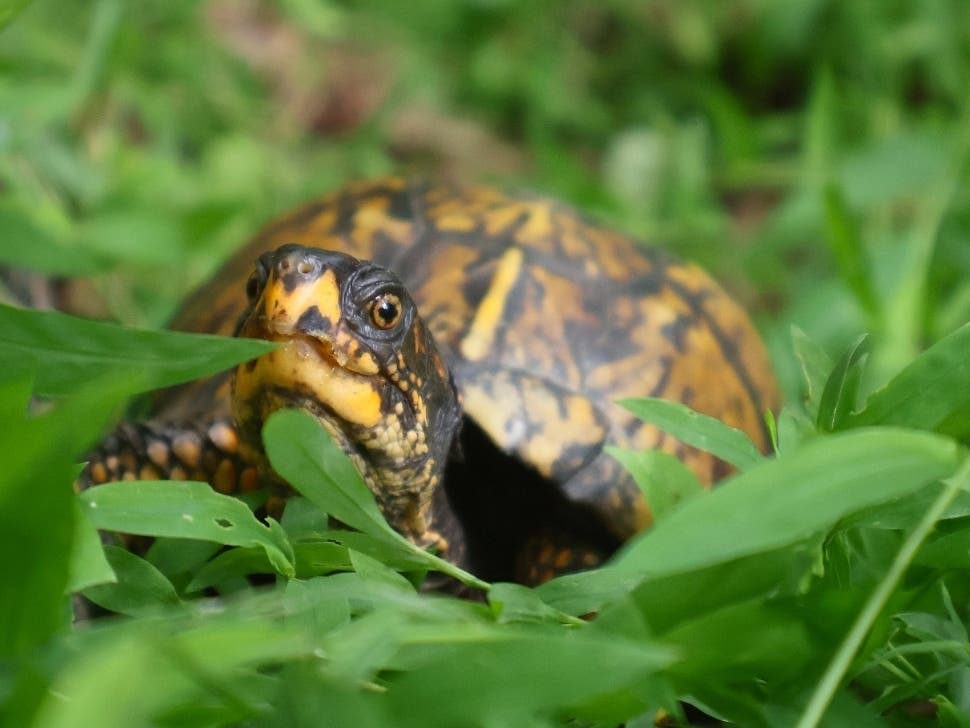
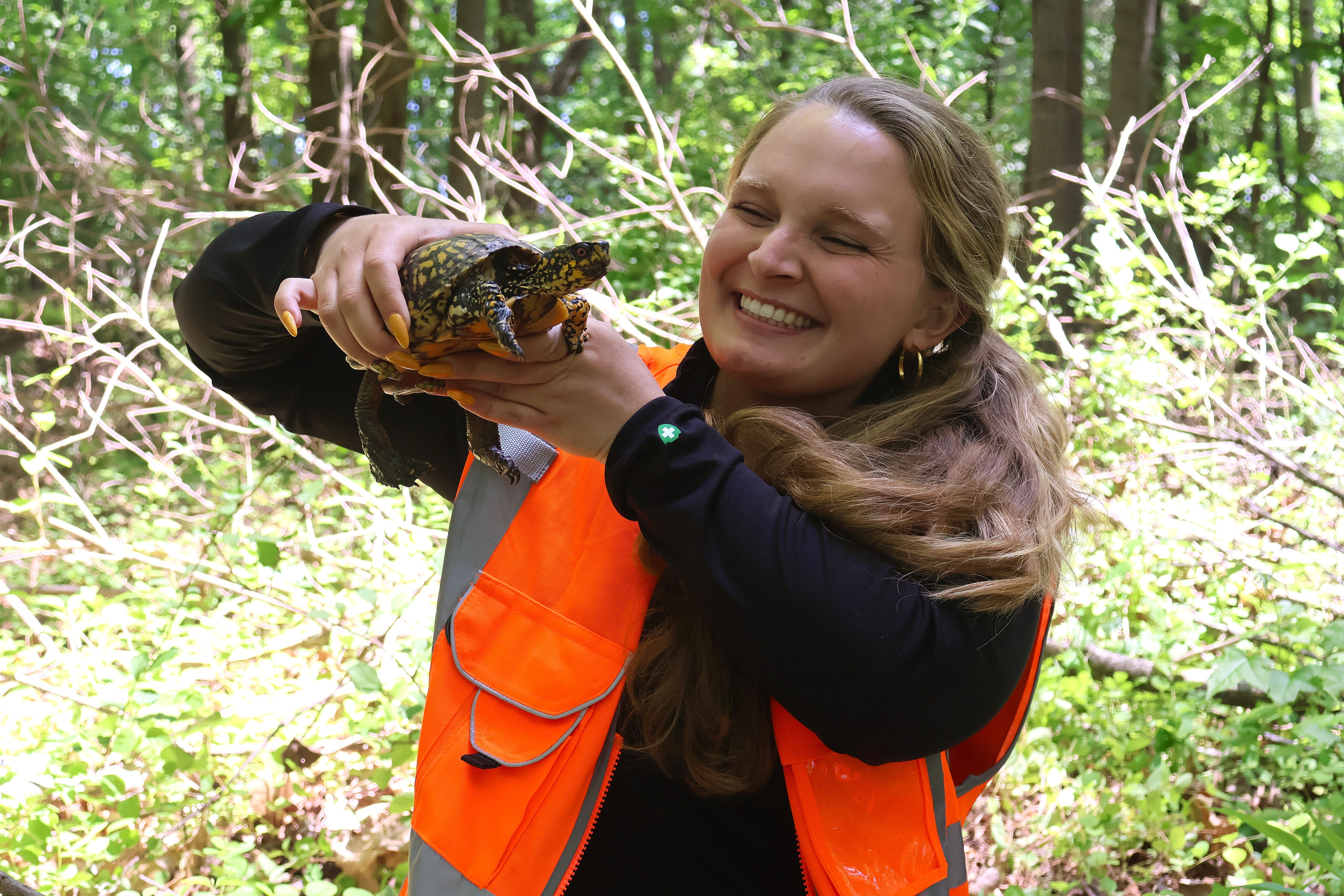
NORTH FORK, NY — A new study is underway to help protect local box turtles from extinction — and dogs are part of the conservation team.
Group for the East End is partnering with postdoctoral researcher Dr. Anna Thonis to study the threats eastern box turtles face and develop a conservation plan to save the local population from extinction, the organization said.
Four field surveys will take place on the North Fork in May and June where Dr. Thonis, alongside Bark and Code owner and trainer Dr. Kris Hoffman—a wildlife detection dog handler and the owner of Newt and April— Group staff, and volunteers, will search for turtles and document findings to better understand the local population, representatives said.
Find out what's happening in North Forkfor free with the latest updates from Patch.
A lack of basic information about the health of local turtle populations makes it difficult to understand the threats the species face, experts said.
Through the field surveys, Dr. Thonis will have a better understanding of where turtles are present, their genetic diversity, possible exposure to contaminants, disease prevalence, injury rates, and overall body condition, she said.
Find out what's happening in North Forkfor free with the latest updates from Patch.
"Relentless development pressure" has resulted in a devastating loss of habitat for wildlife across eastern Long Island and beyond. The remaining habitat where eastern box turtles live and breed is often fragmented by high traffic roads. This presents a dangerous challenge as these reptiles need to cross busy roads to reach freshwater ponds in summer and leafy burrows in winter, experts said.
"Understanding where turtles are being struck by vehicles is similarly important," Dr. Thonis said. "One thing that I don't think people think about enough is that turtles — and wildlife broadly — experience roads very differently than we do. Because turtles are small and move slowly, a road represents a major and often dangerous obstacle for them. While many people will stop to help a live turtle cross safely or will bring an injured turtle to a rescue center, turtles that have already been killed are rarely reported. As a result, we have an incomplete picture of where the most dangerous road crossings are actually located."
As part of their efforts, Dr. Thonis and the Group have also launched the North Fork Turtle Watch initiative, which encourages the public to report all turtle sightings, including those that are deceased, to determine where the highest vehicle strikes occur, experts said.
"Involving the community in this project is crucial to the key missing piece: data," Group Director of Outreach Taralynn Reynolds said. "Data is what informs conservation policy and action. It will give us the necessary information to work with municipalities to take steps to protect not only turtles, but also other local wildlife species. It’s information gathering at its best and provides an exciting opportunity for the community to be actively involved in scientific research."
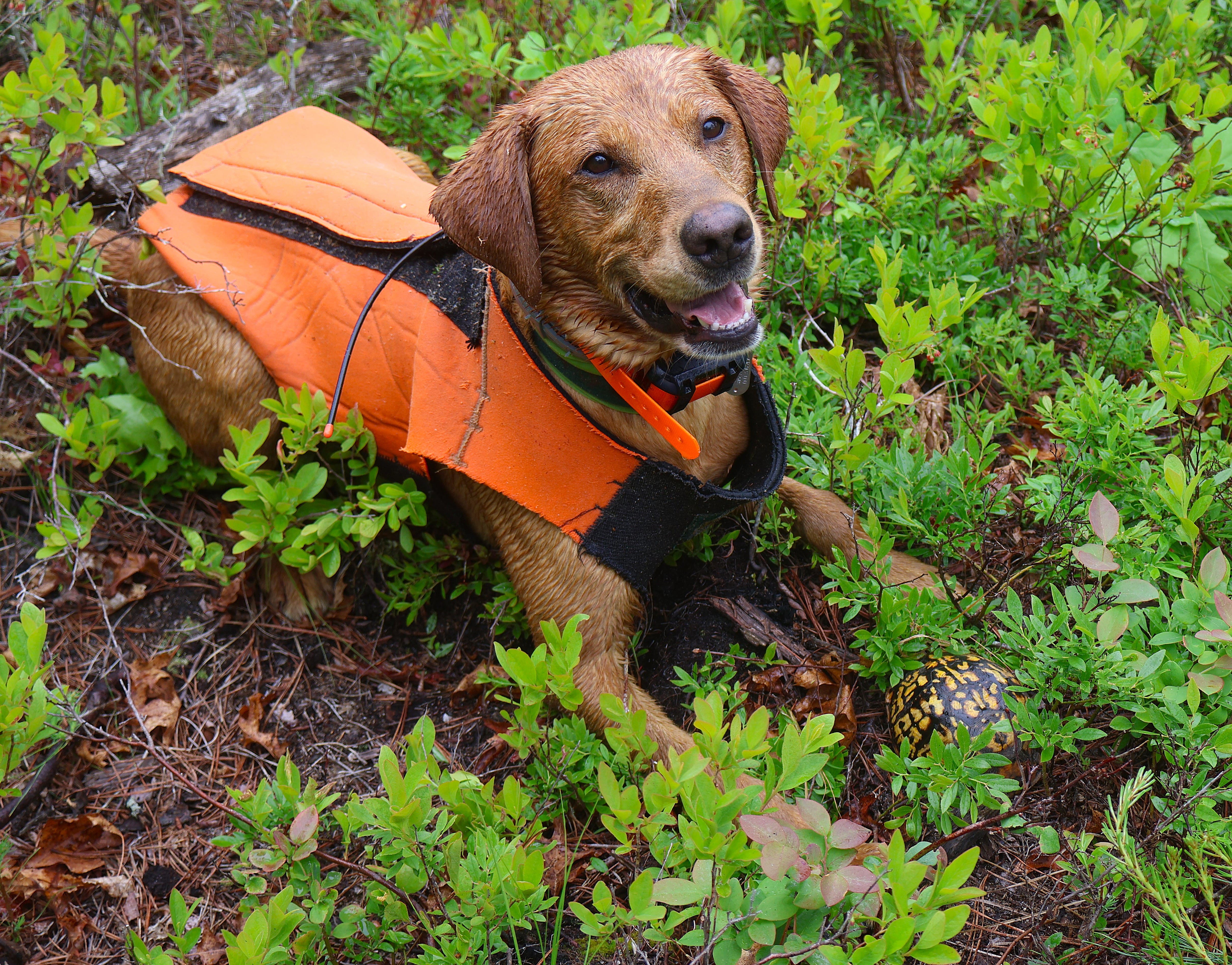
What makes the field surveys particularly unique is the use of wildlife detection dogs, representatives said. Dr. Kris Hoffman is the owner and handler of Newt and April.
It’s a team effort, all agreed —to work with the dogs, handlers need to understand the ecology of the turtles, the geology and vegetative community of the survey sites, the physics of air movement and scent availability, the statistical assumptions of wildlife models, the traditional survey methods for each species, and has to read their dog's body language constantly.
"The dogs are amazing," Dr. Hoffman said. "They find turtles that are completely hidden from view. Sometimes these are turtles that are hibernating underground or underwater, sometimes these are turtles that are a hundred yards upwind in a bush, and sometimes these are turtles that just blend into the leaf litter so well that we would miss them. My favorite places to search with the dogs are in vegetation that is so thick that I can't see my feet. Dogs really excel and people really have a hard time in these places."
As poaching is a significant threat to turtles, specific location details for the field surveys are not shared with the public, the Group said.
This project is supported by North Fork Side by Side.
For more information about the Box Turtle Conservation Project, including the North Fork Turtle Watch initiative and volunteer opportunities,click here.
Get more local news delivered straight to your inbox. Sign up for free Patch newsletters and alerts.