Health & Fitness
Iris ... Old World Elegance in our North Fork Landscape
Fleurs-de-lis grace a garden with the sum of its exotic parts.
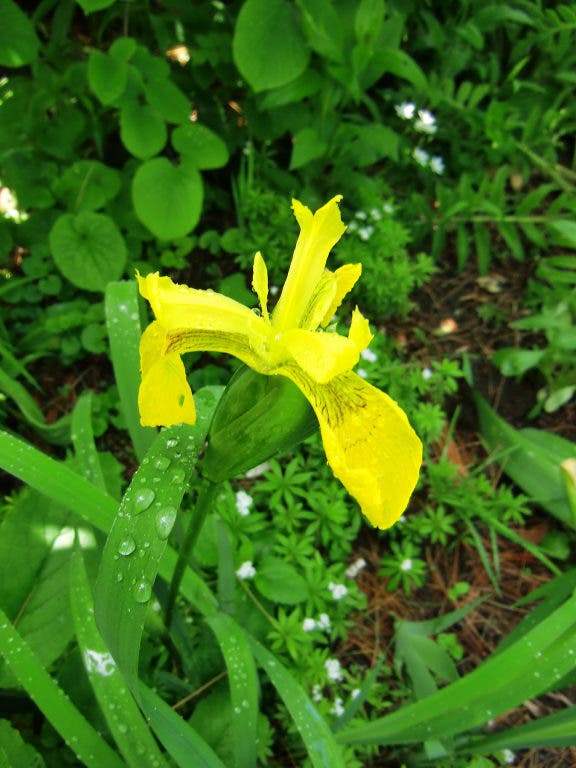


One of my favorite flowers of all time is coming into its blooming season. There are 260 species of iris, known for their stunningly complex tri-foil looking blossoms. The word "Iris" itself comes from the Greek word, rainbow. How can such a beautiful flower and spectacular dagger-like leaves come from such ugly, fleshy, gnarled-looking root-like clumps technically known as rhizomes? Everything about this beautiful perennial is charged with sophistication and mystery. Raised velvet ‘beards” run the full length of the petals. When the flower falls, a thick-ribbed ‘fruit’ appears. (I’ve been told it’s a good idea to dead-head that bulbous fruit quickly so the energy and nutrients all go to the root structure.) The foliage itself provides a dramatic focal point in the garden all growing season long.
While hybrid iris appear in a stunning variety of colors, I must admit I am partial to the old-fashioned two-tone yellow-purple, light-dark purple and rust-maroon varieties that sprawl down the hillsides where abandoned farmhouses once stood. I can imagine the pioneer women planting those whimsical plants to interject a bit of elegance and luxury into their austere and difficult lives. Their instincts were good ones. Although it never was officially adopted as a French national symbol, a stylized fleurs-de-lis or iris turns up very early on in European history as an emblem associated with royalty of that country. And a courtly perennial it is, indeed.