Health & Fitness
Revolutionary History Lives on in North Fork Gardens
Wild Tulips on the North Fork Once Grew in Jefferson's Garden.
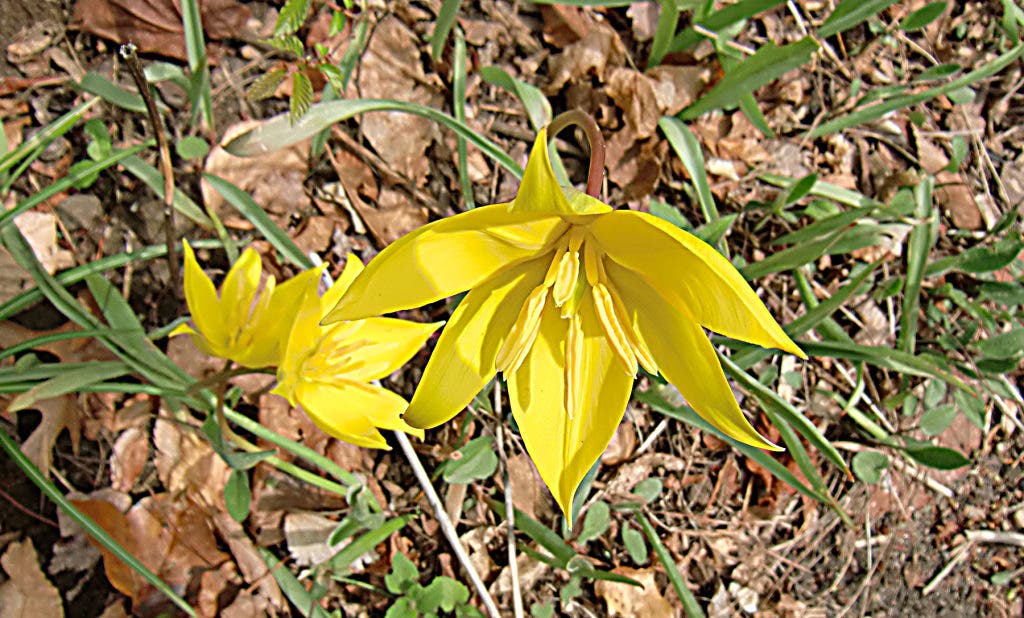


Amazing what you can turn up on the web ... We have Jeffersonian tulips on the North Fork. Who knew? First, these odd-looking bright-yellow-flowering plants showed up one spring in the empty lot across the road. Then I found a stand of them in my garden. As we speak, they are spreading systematically from bed to bed. I don’t pretend to understand how. But I love ‘em.
The blossoms are a strange tulip shape, suspended on long, slender stems. The leaves look a bit like the flat-bladed leaves of my garlic chive. It wasn’t until I started researching wildflowers for my blog, that I found out what they are. Up until then I just took them as a special gift and left it at that. But WHO they are turned out to be exciting. They are naturalizing wild tulips and American gardeners have planted them since colonial times. Thomas Jefferson grew these stunning beauties, both T. clusiana and T. sylvestris (known as the wood tulip) at Monticello. Wow. And somehow, we’ve got ‘em on the North Fork.
Apparently, T. Sylvestris is low maintenance and long-lived for a tulip. And for once my if-it-ain’t-broke approach paid off. The wild tulip will naturalize best if just left undisturbed for years at a time. Its natural home is along the edges of woodlands or meadows. One website says that in some years a “cinnamon blush” appears on the pointed petals, which is one way of recognizing this particular wild tulip. Blush or no blush, I’m just happy it decided to take up residence in my garden.