Community Corner
Controversial Battery Storage Facility Talk At Cutchogue Civic Soon
"I don't think we need this. It's too dangerous for us." Firefighters have expressed heated opposition to the plan for battery storage.


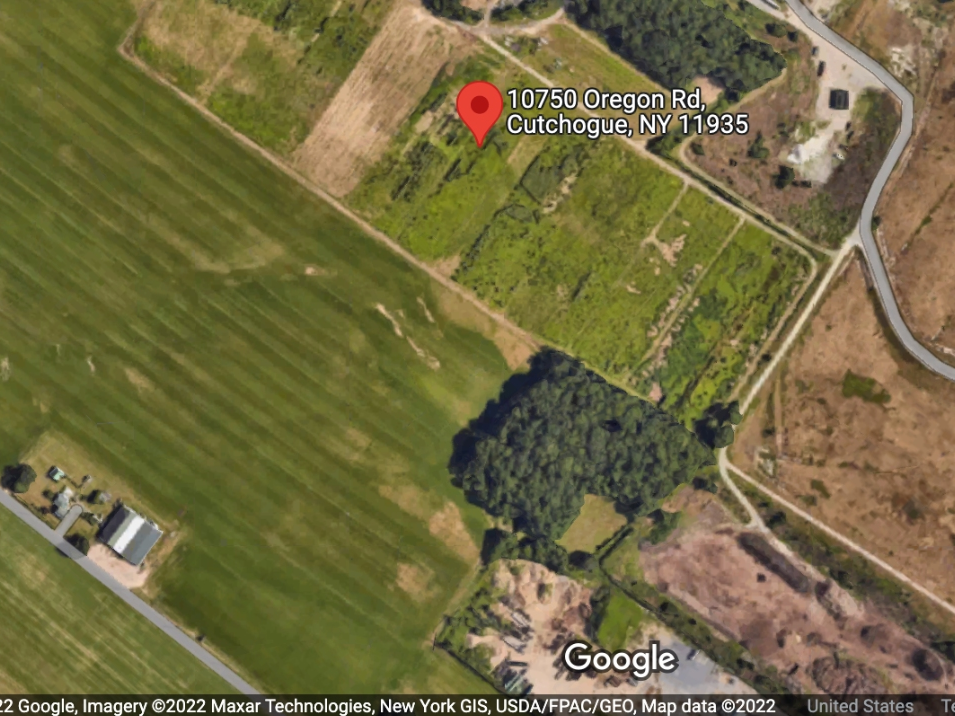
NORTH FORK, NY — The public is invited to weigh in on a controversial proposal for a proposed battery energy storage facility in Cutchogue that has many seeing red.
The Cutchogue Civic Association will sponsor a panel of speakers at a question-and-answer forum on the proposed project on Thursday at 6 p.m. at the Southold Town Recreation Center, located on Peconic Lane.
The public expressed their concerns about the project, pitched by Key Capture Energy, at a zoning board of appeals hearing, and then, a planning board public hearing, last month. The plan calls for the construction of a 60-megawatt lithium-ion battery storage facility located at 10750 Oregon Road in Cutchogue.
Find out what's happening in North Forkfor free with the latest updates from Patch.
A special exception would be needed for the project but Southold Town Planning Board Chair Donald Wilcenski said at the last meeting that the board intended walk back its letter of support based on the outpouring of opposition.
At the ZBA hearing, which was also held via Zoom, representatives for the applicant said the project would enhance power grid reliability and stability for LIPA customers.
Find out what's happening in North Forkfor free with the latest updates from Patch.
"The Long Island grid is rapidly changing," said Phil Denara of Key Capture Energy. "The local grid will need fast response and flexible solutions like battery storage."
The facility would be unmanned and have minimal impacts on the current infrastructure, representatives for the applicant said. It would be feasible to move overhead lines underground and use local labor, meaning the creation of jobs, they said.
ZBA Chair Leslie Weisman expressed concerns. "We've all come to know this as a beautiful, rural environment, with open space," she said. "There are concerns about the visual impacts."
Joel Richardson, a civil engineer for H2M of Melville said the site plan, on 27 acres, would consist of 272 battery containers installed, accompanied by 34 conversion units to charge the batteries. There would a 12-foot tall visual and sound barrier on the north and west perimeters of the parcel, with the balance surrounded by a chain link fence, he said. An access drive would be created to Oregon Road, but minimal traffic is expected, he said, with one vehicle trip on average per month for maintenance and for staff to visit, he said.
Most property at the site would be undisturbed; the project would not impact an existing sod farm, he said.
"It's designed to allow first responders to reach it in an emergency," he said, adding that training would be provided for firefighters on how to respond in an emergency.
A variance would be needed to connect two substations and for lightning masts, he said. The facility would be well set off the road with plantings to mitigate the impact on Oregon Road, Richardson added.
At that hearing, residents stood up to voice concerns about what would happen in the event of a fire or explosion; special equipment would be needed, some said.
The National Fire Protection Association has listed concerns about similar projects including a "thermal runaway," which they said is "the uncontrollable self-heating of a battery cell. It begins when the heat generated within a battery exceeds the amount of heat that can be dissipated to its surroundings. The initial overheated cell then generates flammable and toxic gasses and can reach a heat high enough to ignite those gasses."
Other concerns, the site said, include "off gassing. "The gasses that are released from battery energy storage systems are highly flammable and toxic. . . If the gas is able to reach its lower explosive limit before finding an ignition source, then there is the potential for an explosion," the page said.
Some present pointed to a 2019 incident in Arizona also discussed by the NFPA.
Richardson countered that according to the Electrical Power Research Institute, there was only a 1 to 2 percent failure rate globally; the company operates other facilities in locations including Texas and "none have had a fire," he said.
In the case of a fire, he said, the company would send its own personnel, but called such a scenario "highly unlikely." A response plan would be developed with the local fire department, he said, adding that there was "no significant risk to the community" from fire or toxicity.
Cutchogue Fire Department Board of Commissioners Chair Dave Blados said, "Our concerns are many. I feel more conversation has to take place."
He asked about what would be used to extinguish a fire, explaining that the closest water source on Oregon Road was 15 to 20 feet away.
And, in the event of a crisis, he asked, "Who do we wait for? I don't think we need this," he said. "It's too dangerous for us?"
He also asked what, if any, benefits would be seen by Cutchogue residents. He also expressed serious worry about toxicity of the land in the event of a fire or explosion.
Representatives for Key Capture said toxicity levels after a fire are "much in line with that of a typical structure fire, in terms of water runoff. There are trace amounts of heavy metals, not expected in large quantities or any higher than in a structural fire."
The application presents a "learning curve for all of us," Weisman said. "With this new technology, many people are understandably leery and fearful — it's completely understandable. We don't know what to expect and we want to protect our families, our friends, our community. We need to have experts educate us more on what we can expect and how we can move forward with an energy strategy that doesn't compromise where we live."
An attorney who represents Alix and Kevin O'Mara of Cutchogue said that he did not believe the project was an essential public service; based on the concerns of the fire department and others, he believed more information was necessary.
Others expressed concerns about whether the project was compatible with the character of the bucolic community, and discussed visibility and open space in an area located in the rich green belt. The project would break up the horizon line, potentially cause noise and pose a threat to safety, some said.
Hundreds had signed a petition against the project, the attorney for the O'Maras said. "There's fairly substantial opposition to this."
"It seems to me there must be a lot of money being made here, which is fine, that's how the system works," Kevin O'Mara said. "But when it puts us at risk . . ." In Arizona, after the explosion, there were weeks of evacuation, he said, asking where contaminated water would go in the event of such an event on the North Fork.
"There just is not the support for this facility," he said.
Anne Murray, North Fork Environmental Council land use coordinator, urged the ZBA not to issue a special exception. The state had developed a guidebook outlining best practices and training for local governments to ensure responsible battery storage development, she said. That guidebook recommends convening a local task force of local stakeholders to weigh in on the project's development, she said.
"Southold Town has not planned for, nor has it developed any laws, governing placement of the facility," Murray said. "The NFEC suports battery storage but only if the town has a plan in place, and if they are sure there are environmental standards and, more importantly, a safety review."
Ron McGreevy, a retired chief in the New York City Fire Department and a longstanding member of the town's architectural review committee, said based on his research, "These batteries are very, very bad."
The Arizona explosion had flames of 50 to 75 feet, he said. "This puts a particular burden on the fire department," comprised of volunteers, who might risk serious injury, he said.
One resident asked what percentage of energy created would benefit local residents.
Weisman said LIPA determines where the energy in the grid goes but the energy generated could go up-Island if needed there.
Another asked why the project would be sited in a place where the aquifer is not deep and where the environment is a resource.
"It's sacred out here," she said.
"Oregon Road is precious to all of us," Randy Wade said.
Dennis Lane of Cutchogue also expressed fears for the fire department, who he said should not be put at risk in the event of a thermal runaway; he also discussed potential effects on humans from lithium batteries .
One man, a lifetime resident of Oregon Road, added: "I can't say I believe in their ability to execute this safely at this scale, given the safety concerns we have."
A woman who moved to Oregon Road with her husband five years ago said she first headed down Oregon Road and found sunflowers and natural beauty. "We are people that will be able to see the lights from this," she said. "This isn't just a greenbelt. It's the most bucolic place we've ever seen."
Dave Bergen, president of the Cutchogue Civic, said he believed the voices of the town's head of emergency management, as well as those of the Southold Town Police, needed to be heard before any decisions were made.
Morgan Zuhoski Evans, born and raised on Oregon Road, also spoke. "I grew up after a rainstorm, with no shoes on, jumping in the fields. It's about wanting to keep things beautiful on the North Fork." The many who headed to the area during the pandemic were seeking open space and natural vistas. "And Oregon Road is a part of that."
The ZBA adjourned to a special meeting that will be held on Jan. 19.
Get more local news delivered straight to your inbox. Sign up for free Patch newsletters and alerts.