Politics & Government
Crowd Packs Town Hall With Concerns Over Special Events Code
The town board canceled the hearing after residents, ag members say they weren't given time to speak; supe says months' notice was given.


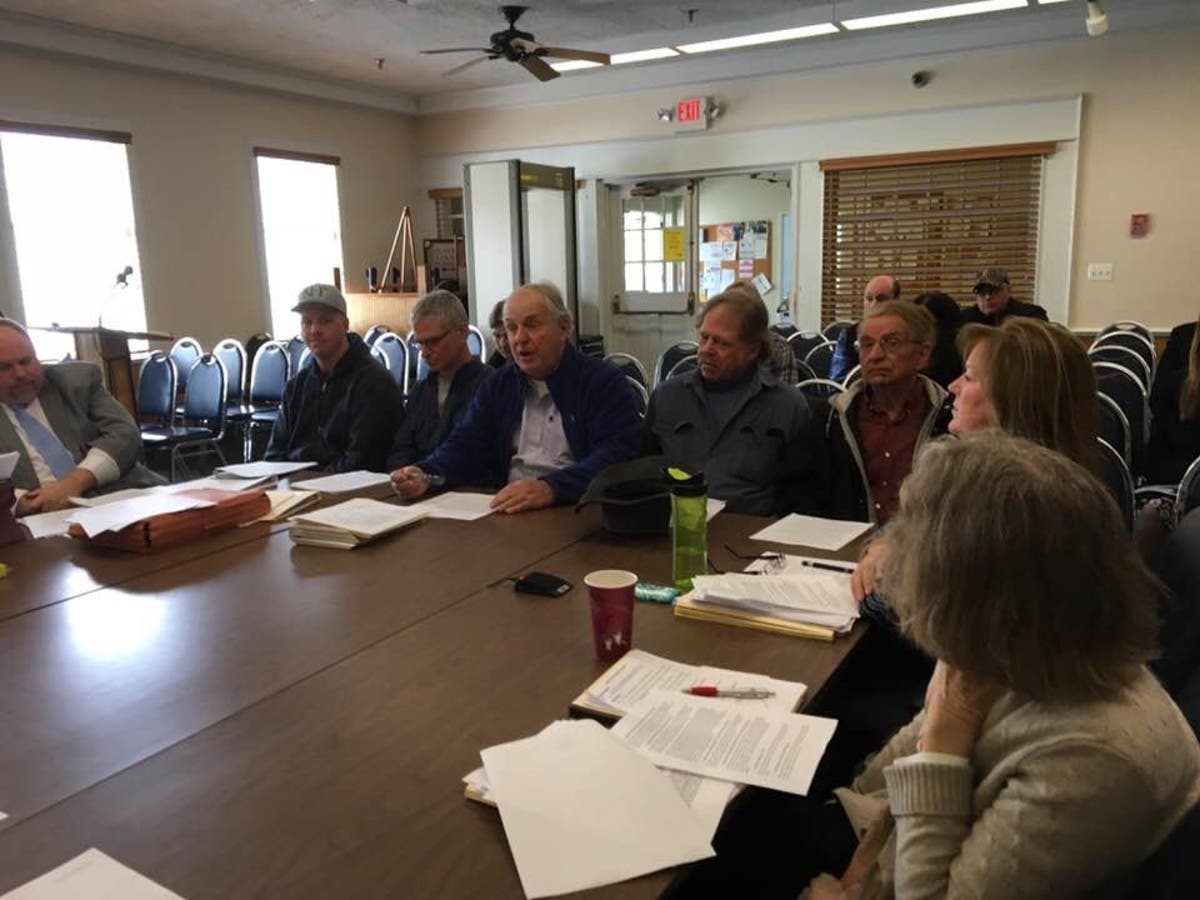
SOUTHOLD, NY — A concerned crowd packed Southold Hall Tuesday afternoon for a public hearing on local law related to special events — but the town board had decided earlier in the day at the work session to cancel the hearing.
Southold Town Supervisor Scott Russell began the meeting by saying that he'd received a letter from a group of constituents who said they felt they hadn't been given enough time to weigh in; the board then decided to cancel the hearing and go back to code committee to rework the draft.
Russell said he found it difficult to understand how people could say they weren't given enough time to review the draft, when it was noticed weeks before the public hearing. "We have code committee meetings and no one shows up," he said. "We can't drag people to the meetings. No one does anything up until the 11th hour."
Find out what's happening in North Forkfor free with the latest updates from Patch.
The intent of the changes, the board said, was to clean up the administrative review process and take the burden from the zoning board of appeals chair who currently reviews all applications.
And, said Russell, the other goal was to establish a special event committee to oversee the application review process.
Find out what's happening in North Forkfor free with the latest updates from Patch.
According to the draft of proposed changes, a special events committee would review an application forwarded by the town clerk's office and make determinations regarding the completeness of the application, request further documentation as it deems necessary and make recommendations to the town board as to whether the application should be granted.
That committee would include the government liaison officer, as chairperson. It would also include the chairperson of the zoning board of appeals, the planning director, the chief of police, and the chief building inspector, or their designees. The town attorney would act as counsel to the committee and the town board would appoint a secretary to assist the committee in the processing of applications.
Also according to the proposed changes, all special events in town would require issuance of a special event permit by the town board.
Struck from the code was a sentence that said the zoning board of appeals office could accept a single application for a recurring event, not to exceed three in a six-month period, that are of similar size and scope.
The proposed changes also said fees would be prescribed by a resolution of the town board.
Chris Baiz, chair of Southold's agricultural advisory committee, attended Tuesday's work session and brought a letter from the ag advisory committee suggesting code changes he said would be more suitable, including that the only change necessary was changing the office to submit a special event application from the current ZBA to the new special event committee.
In addition, Baiz said, "consistent with the law as presently written," the suggestion would be that the town board need only approve large public events of 500 to 1,000, rather than "every single event application, as presently proposed."
Baiz added that the proposed idea of singly filing one application for each event, instead of multiple events of a similar nature, would more than double the number of applications received. Requiring the town board to approve or reject each application would more than double the number of resolutions the town board votes on a year, he said.
"Does this help all the rest of those trying to advance an economy of the town that would better help and allow its citizens, especially the younger ones, to support themselves and their families?" he asked.
Baiz said the ag advisory committee discussed ways to streamline the special events permitting process to reduce paperwork, including multiple event dates applications. For events of a repetitive nature at a single venue, one permit would be sufficient for the year, Baiz said
The ag advisory committee also recommended exempting private events by invitation only, such as "weddings, wakes, baptisms, communions, bar mitvah's, etc." . . .that are "of a venue's repetitive activity, indoor or outdoor," from the code.
The committee also recommended that no site plan from the planning board for car parking on farms be required — rather, by law, allow 10, 15, or 20 cars per unrestricted acre of the parcel in question.
He added that the special events committee should include two members of the ag advisory committee, one representative of the Long Island Wine Council and the local affairs officer from Southold from the Long Island Farm Bureau.
The decision to cancel the hearing was made after Baiz came before the town board with his concerns Tuesday morning.
Russell said the changes in the code were meant to address health, safety and welfare, not ag issues.
He added that there was nothing in the legislation that would stop weddings or put an onus on that industry. "We expanded the code to allow them," he said. And, Russell said, nothing proposed would change the review process.
Russell said a letter he received from some concerned individuals said the fear was that the new proposed changes would "politicize" decision making. He added that there was irony because originally, the town was accused of giving too much authority to the ZBA chair, who currently reviews applications, and now that the town board would be accountable under the proposed changes, the fear was that the board would "politicize" the process.
Many of those who signed the letter and stated concerns were individuals Russell said he's seen at town events and at meetings in recent days and no one mentioned any issues.
"No one ever called us and said, 'Let's discuss this.' We could have pulled back," Russell said. "It's political grandstanding."
The supervisor said in the future communication could be improved on both sides.
"This wasn't the board's attempt to take back authority. We had a discussion of how to take it off ZBA Chair Leslie Weisman's desk and the board took it back reluctantly," Russell said.
At the town board meeting Tuesday night, Russell said the reason the public hearing was canceled was that the board had received the letter raising concerns, and stating there had been no allowance for input or comments from businesses involved.
"The fact of the matter is we've been discussing this for some time," Russell said. Code committee meetings are noticed but few attend, he said.
The changes, Russell said, are "largely administrative in nature." As to the idea of one permit per six events, Russell said the town board needs to address that issue because some people who are applying for those applications are supposed to be applying for specific events but are "really applying for the dates and not operating in good faith. We need to close the loophole."
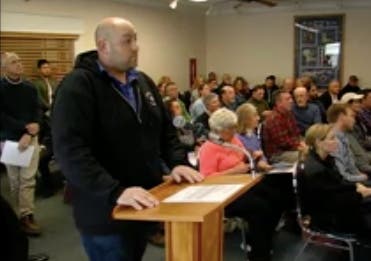
The whole code needs to be revised, Russell said, but the proposed changes were "administrative. If one provision alarmed people that's our mistake,"
One woman said what Russell had offered as explanation for the hearing being canceled was "clear as mud." She pointed out that the meeting room was packed with people waiting to discuss special events. She added that the first hearing had also been canceled; the board reminded that had happened due to Town Hall's closure due to snow.
The woman said the legislation impacts "a tremendous number of businesses in the community," including farms, caterers, vineyards, tent companies, bathroom trailers, and more. "It's like playing the game 'telephone;' no one knows what's happening. What they know is that their livelihoods depend on it," she said.
"No one knows what's happening. What they know is that their livelihoods depend on it."
Russell said the code committee meeting was noticed some time ago and a draft of the proposed legislation was online.
"Some of the people that said they attempted to contact us are people I see regularly. If at any time, anybody raised objections or concerns, we could have tabled this and cleaned it up — but we need to hear from people," Russell said. "Out of fairness to you and to us this doesn't have to wait until the 11th hour."
Russell said the code committee began discussing the draft last year and there was plenty of time to engage.
Anthony Sannino said Steve Bate of the Long Island Wine Council tried to reach out; Russell said he was not contacted and Sannino said Bate spoke to the town's government liaison officer and town attorney.
As it stands, Russell said, no changes have been made to the current special events code.
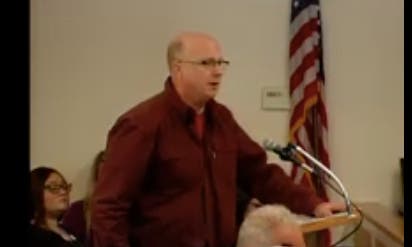
Mike Falcetta, general manager of Sparkling Pointe Vineyard, asked if another public hearing was necessary.
Councilwoman Jill Doherty said the original goal was to clean up the code administratively but as discussions were held, new issues were raised, so now the draft will go back to code committee and then, when a new draft is crafted with any changes it will go to the town board and then the public hearing will be re-noticed.
"It's a bit disappointing. We're all here hoping to have a public hearing. We all shut down our days to give out input on this," Falcetta said. He then asked how a point person could be designated so there is a chain of command and communication — and stakeholders "can be part of the creation of this code so it works well for" all involved.
"We do all we can to reach out," Russell said, adding that it was "unfair and dishonest" to reach out at the "11th hour. If Steve (Bate) had concerns he could have brought them to the town board. I've never turned down a meeting."
Doherty said the groups could designate a point person to check the town's website, where meetings are listed.
Falcetta said Bate said he'd reached out to the town attorney and government liaison officer.
Russell said again he'd not been contacted and the meetings had been noticed. "I don't know how else to get people in to discuss. Ringing alarm bells at the last minute is certainly not fair to you or us."
Other concerns raised included the fear that a venue could book a wedding, take a deposit, and then be told by the town that the special event permit was denied, something that could leave business owners subject to lawsuits.
Business owners cannot even file for special events applications until they have bookings, they said.
Karen Rivara of the ag advisory committee said the draft should be sent to the group for review.
Karl Novak, president of the Long Island Farm Bureau, said some of the strike throughs on the draft appeared to be more than just administrative changes and could "adversely impact the business community."
He said the LIFB was happy to participate in the process.
Adam Suprenant of Coffee Pot Cellars said while he does not do special events, he encouraged the board to reach out to all businesses, not just farms and wineries.
He asked about an agenda for code committee meetings; Russell said to look online and added that the notices are sent to the media. Councilman Jim Dinizio said to check the calendars for meeting dates but said there is no agenda package similar to what's given for town board meetings.
Russell said if people say the issue is critical and want to attend, the public hearing can be scheduled for an evening town board meeting, as has been done in the past.
Michael Variale of East End Wedding Guide said the industry brings a $60 million infusion to Southold Town businesses.
Russell said again that "nothing in this legislation was going to impact weddings in any way."
Kathryn Sepenoski said while the board said it was proposing to address just administrative changes, "the crux of that is what we are not very happy about." She thought the process to date has worked well and Weisman made good decisions. The changes are "adding layers of potential miscommunication from certain politicized areas."
She added, "We are already seeing there could be missteps. We have concerns . . . We feel that this is a way to hinder our ability to grow and stay viable to pay rising taxes or mortgage costs. If we have regulations that strangle us to the point that we can’t remain here — what just happened during this last noreaster, when you could look down the entire street and not see a business open, that is what the North Fork will look like, and has looked liked," in past times of economic crisis.
Local businesses, she said, revitalized after hard times, came back stronger, and changed. "We already have plenty of regulation. If you over regulate us any more people will leave, tourism will leave," she said.
Doherty suggested individuals wishing to reach the board should write a group email to all.
Richard Vanderburgh, now president of the Greenport Village Improvement District, asked if the code committee meetings are held at the same time each month; Russell said they are, and are held when there is pending legislation to discuss.
Vanderburgh also asked about fees; Russell said the proposal was to set fees at the beginning of each year by resolution.
"I assume all you folds are amenable to rewriting and rediscussing?" asked Steve Mudd.
"We've been amenable this whole time," Russell said.
After Tuesday's town board meeting, Russell commented by email: "The meeting was in one respect, a bit disappointing. Many of the people in the room I see on a regular basis. No one ever raised an issue regarding the proposed amendments."
He added that the town issues a public notice so everyone knows when and where the town officials are meeting to discuss those types of issues; the draft was published and out on the website.
"It was clear from the comments that people were aware of the code because they said they have been discussing it for the last month and a half. They said they were making a lot of phone calls among themselves. That raises the question — why weren't they calling the board?" Russell asked.
Russell said it was also clear that there wasn't a good understanding of the impact of the proposed changes.
"Meetings, questions and comments prior to a public hearing could have gone a long way to help clarify the issues. There were leaders of several organizations that were there" at the meeting, the supervisor said. "It's unfortunate that they waited until tonight but, now it is good that they are."
He added, "There was a positive outcome. The board was able to dispel some inaccuracies and some misinformation that had been distributed . . . over the past few weeks. Now we can engage in honest dialogue. That can only benefit the process moving forward."
Patch courtesy photos.
Get more local news delivered straight to your inbox. Sign up for free Patch newsletters and alerts.