Community Corner
East End Osprey Population Continues To Thrive, Research Indicates
The sound of osprey chirping as they return to their nests each year are a beloved harbinger of the season on the East End.


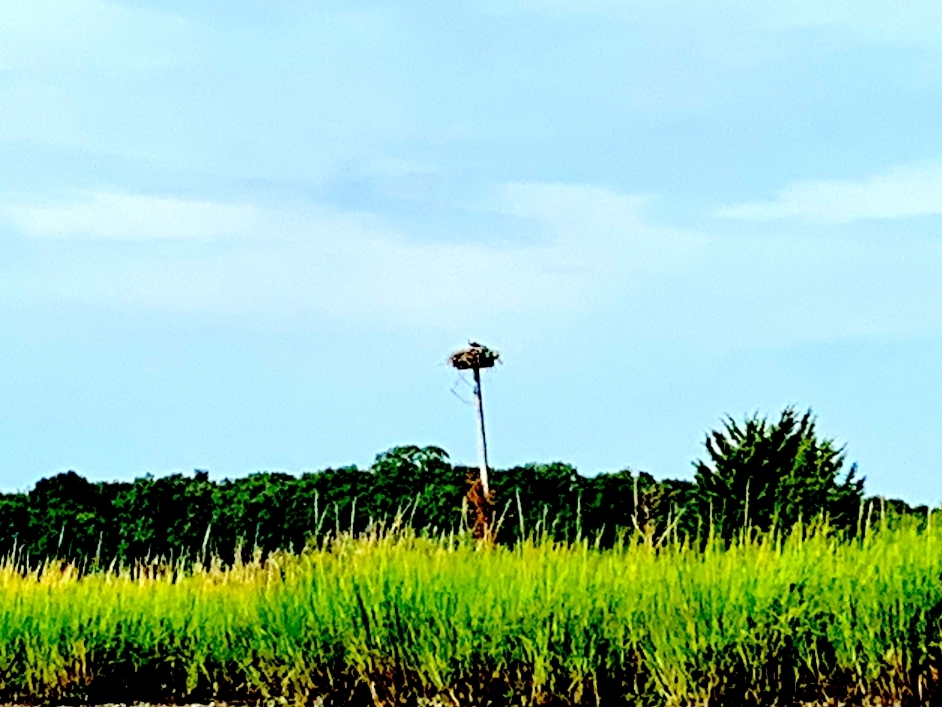
EAST END, NY – The East End's beloved osprey, a harbinger of spring and summer that delight residents as they return to their nests each year, continue to thrive, according to the Group for the East End.
The organization has been monitoring local osprey populations, recording critical information and enabling conservation efforts for more than 30 years.
The news has been good for some time: In 2021, the Group for the East End reported that the East End's osprey population had rebounded by more than 200 percent in a less than decade.
Find out what's happening in North Forkfor free with the latest updates from Patch.
Last summer, the Group monitored 477 nesting sites in the 5 East End towns of East Hampton, Riverhead, Shelter Island, Southampton, and Southold, documenting 353 active nesting pairs, which produced 505 fledglings, they said.
In addition, with an eye toward advancing conservation efforts, the Group has also continued its partnership with PSEG Long Island to identify and install hazard mitigation measures to prevent nesting, or relocate existing nests, on utility poles. Of the 200 poles identified, more than 80 of the highest risk poles received v-guard installations to protect ospreys and their nests.
Find out what's happening in North Forkfor free with the latest updates from Patch.
In Riverhead, Group staff and volunteers monitored 25 potential nesting sites, 19 of which showed
activity, producing 29 fledglings. In Southampton, west of the canal, 49 sites were monitored, 38 of which were active, producing 49 fledglings. In Southampton, east of the canal, 105 sites were
monitored, 74 of which were active, producing 90 fledglings. In East Hampton, 63 sites were
monitored, 49 of which were active, producing 84 fledglings. In Southold, 183 sites were monitored, 136 of which were active, producing 193 fledglings. On Shelter Island, 52 sites were monitored, 37 of which were active, producing 60 fledglings.
Those numbers do not include Shelter Island's Mashomack Preserve, East Hampton's Gardiners Island, or Southold's Robins Island, Plum Island, or Fishers Island.
The Group also noted that osprey are back to nesting in trees. As the population has increased, Group staff and volunteers have seen an increasing number of ospreys building their nests in large trees. For centuries, breeding pairs found natural nesting sites along the East End's beaches, shoreline, and waterways.
However, the Group for the East End said, while it is a great sign that ospreys are nesting in their original habitat again, many still make their home atop utility poles, which can appear as an attractive location for the birds, calling for critical mitigation efforts to help protect the species.
To that end, mitigation efforts in partnership with PSEG Long Island began in 2021 when the Group surveyed about 600 utility poles that would be of the highest risk to nesting ospreys. 200 poles were ultimately identified as posing as risk, and were divided into potential low, medium, and high risk categories. All high-risk poles and some medium risk poles received appropriate hazard mitigation measures, the Group for the East End said.
“This partnership is invaluable,” shares Group environmental associate Marina DeLuca. “The number of potential conflicts and emergency situations that have been avoided through this preventative work will be visible for years to come.”
In 2023, the Group will host a training for PSEG Long Island staff to discuss the history of the osprey, how to identify hazards, and address potential conflicts. The Group will also continue to survey high risk areas and work with PSEG Long Island to install mitigation measures.
“PSEG Long Island has worked for many years to carefully relocate osprey nests on electrical equipment, because we believe in environmental stewardship and because it improves reliability for customers,” said Michael Sullivan, vice president of transmission and distribution for PSEG Long Island. “By partnering in our efforts to protect the osprey, both PSEG Long Island and Group for the East End are able to accomplish much more than we could separately. With the Group’s pole survey data, PSEG Long Island can be more proactive and less disruptive about relocating nests — taking care of more potential problem spots during the offseason when the osprey are wintering elsewhere. To help ensure osprey continue to thrive, it’s important for concerned residents and companies to work together, and we are grateful for our partnership with Group for the East End.”
In addition to monitoring efforts, the Group has installed and maintained more than 250 osprey nesting platforms over the past three decades. Group staff and volunteers have also partnered with local organizations, including The Nature Conservancy, Eastern Long Island Audubon, North Fork Audubon, Seatuck Environmental Association, and various staff from town agencies, to gather osprey breeding data on eastern Long Island.
When explaining why the osprey population continues to swell, Group for the East End attributes the spike to several reasons, including the elimination of certain harmful pesticides that caused the population collapse about 50 years ago, to the construction of safe and secure nesting platforms, to the more recent improvements in fishing regulations, specifically regarding the limit on “bunker” or menhaden, a smaller fish that is predated on by larger fish, such as bluefish and striped bass, which play a key role in the diet of osprey populations and their success.
The bunker regulations were put in place to help increase the local fishing economy— both industrial and recreational—however, an added benefit has been an increasingly available food source for the region's osprey population, which maintains a diet of roughly 99 percent fish, the group said.
The osprey resurgence comes after years of concern for the species. The decline of the osprey in the 1950s through 70s was caused by DDT-induced eggshell thinning, greatly reducing the reproductive efforts of osprey and hurtling the iconic “fish hawk” on a path to local extinction or extirpation from New York State.
In 1976, the species was listed as endangered in New York. With the ban of DDT in 1972, the population slowly began to rebound in the early 1980s.
In 1983, the osprey was downgraded to “threatened.” By 1995, there were 230 breeding pairs on Long Island and four years later osprey was downgraded again to “Species of Special Concern,” which is its current status.
In addition to the threat of pesticides, wetland destruction also carved away the osprey’s nesting habitat at an accelerating pace. As the osprey population increases, many birds have begun to nest naturally in trees while others find themselves on docks, chimneys, light, and utility poles. Nesting in these areas can lead to conflicts with humans or injuries to the birds.
Get more local news delivered straight to your inbox. Sign up for free Patch newsletters and alerts.