Community Corner
Iconic North Fork Barn Saved For Posterity: 'A Part Of The Landscape'
"It was a tremendous amount of work, and yet so satisfying to see such a beautiful structure saved, not torn down and put in a landfill."


NORTH FORK, NY — A storied North Fork barn that's been the backdrop for scores of Instagram shots, paintings and photographs — and that's captured the heart of a community — has been joyfully saved from an uncertain future.
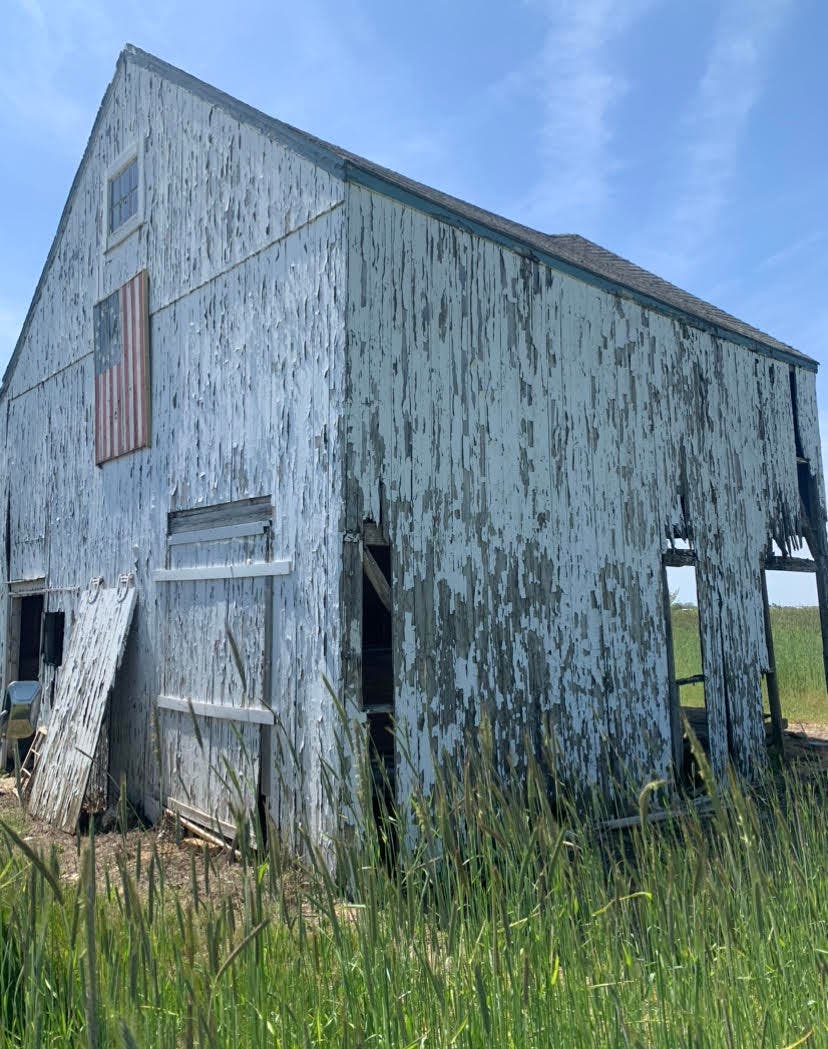
Locals and visitors alike driving to and from the North Fork know they are almost home when they see the weathered white barn, adorned with its trademark flag, tucked away just off Main Road in Laurel.
But during past months, as the barn began to crumble, many were fearful that it would fade from the landscape like so much of the North Fork's rich past.
Find out what's happening in North Forkfor free with the latest updates from Patch.
Craftsman John Dickey said he'd read an article about the precarious state of the barn at Half Hollow Nursery in Laurel that was published in 2022 on North Fork Patch. The article, he said, "was the motivation behind my involvement in doing the restoration. "
Dickey said he had another job in the Hamptons and spent a few days there. The Patch article about the barn popped up in his newsfeed. "I read it with great interest," he said. "As this is a field that I work with, I decided I would reach out to Half Hollow Nursery to see if we could be involved."
Find out what's happening in North Forkfor free with the latest updates from Patch.
Dickey said he could tell that the barn held a special place in the hearts of community members. "That’s important to us as a company that deals in reclaimed wood," he said.
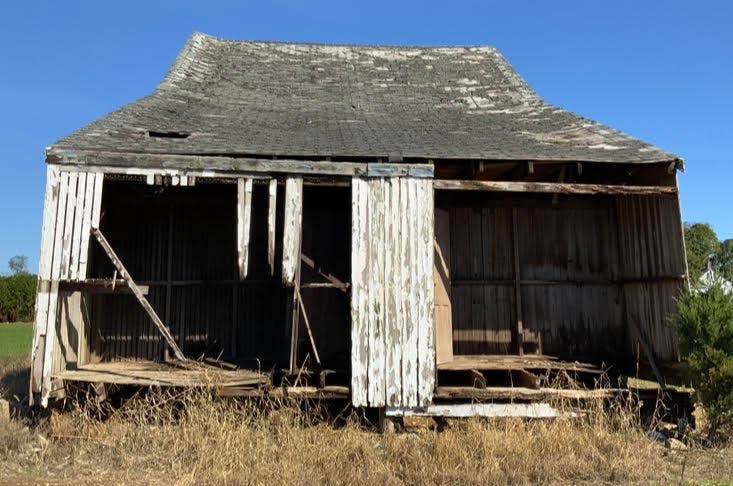
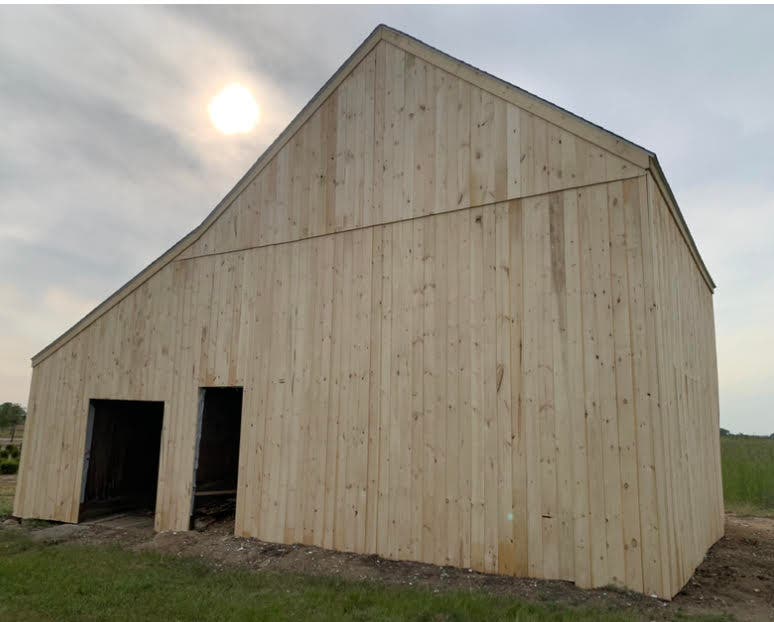
Discussing the process of restoring the barn, Dickey said: "The bones of the building were still in good shape, but most of the corner posts were rotted. We had to dig and pour new concrete footings and then installed timbers from the same era, salvaged from other New England barns."
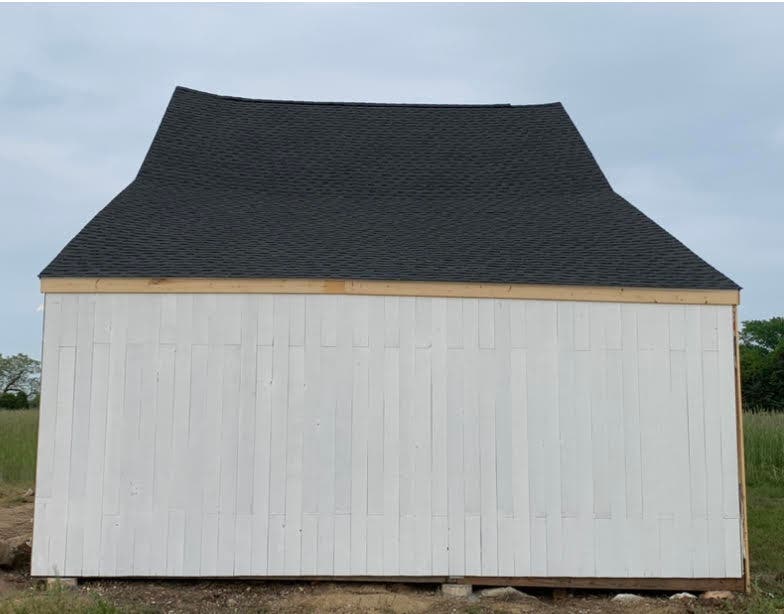
Not noticeable from the outside, the entire building was wrapped in a weatherproof seal, which will keep it dry, he said. Also, while the roof framework was solid, the shingles needed to be replaced.
"We decided to add some heavy weatherproofing material — called ice and water shield — and underlayment over the entire roof and then re-shingled it," he said. "That is really what leads to the demise of most buildings. It’s not keeping up with the roof maintenance."
Looking ahead, as renovations continue, the plan is to add gutters, which will shed the water away from the east and west walls, Dickey said.
Overall, he said, the project took a few months based on factors such as unpredictable weather.
And, Dickey said: "We finished the project on budget, which was thousands of dollars under the original estimate."
The project was meaningful to Dickey: "There’s something special about that area. The air is crisp, the sunsets are stunning, and, of course, the barn is a beautiful part of the landscape. It happens to be the same size and shape as the restored barn where we have our workshop in Connecticut."
In past months, as those driving by noticed that the barn has deteriorated, with damage to its west side evident, residents on a local Facebook group sounded a rallying cry to restore the barn, which they say stands as a testament to the North Fork's rich history and a symbol of all that's cherished for those who strive to save what's left.
Christopher Lange, who owns Half Hollow Nursery in Laurel and Dix Hills with his family, including his mother Sarah Lange and his aunt Betty Rasweiler, said they have a deep love for the barn's rich history — and for the more than 600 acres of farmland on which it stands, just over the border in Riverhead Town.
He was eager to find a way to preserve the barn and when Dickey reached out, the pair hit it off, he said.
Renovations still ahead include painting, the reinstallation of some windows and doors, and leveling the inside to make the interior one flat surface, Lange said.
"John did a great job," Lange said. "We used as much of the original material as we could."
But, while much has been saved, the structure has been modernized to shepherd it into its next chapter for future generations.
Lange mentioned the waterproofing, and adding extra support on original beams, and where needed, enscapsulating the original wood. There's a brand-new roof, with as many of the original beams kept as possible, Lange said. Still ahead, tasks include painting the barn and restoring the iconic flag on the outside of the structure that's become of symbol of home for so many.
Seeing the barn reborn has been "definitely exciting," Lange said, not just for his family but for the employees who've watched the transformation unfold.
Working with Dickey has been rewarding, Lange said. "He's a great guy. I told him I'd never done this before and I was trusting him to keep it as authentic as possible while still trying to modernize it."
His family paid for all the renovations, he said. "We humbly were in a position to be able to do it. We wanted to do it — we love the barn as much as everyone else."
While Lange said his family was resolute in not accepting help from anyone, they also were sure to move forward with care. "It always came down to, if it was feasible," Lange said. "We had to be sure that it wasn't going to affect the way we run our business, the way we pay our employees, and the ways we work to better the company — that we didn't put money toward the barn in lieu of those things. But it all worked out."
He added: "Farming is never an easy task, and it's definitely not an easy task on Long Island in 2023, but I was fortunate enough to be in the position to have the choice of continuing to farm with amazing people who've been working for our family longer than I've been alive."
His family is marked by generations dedicating to preserving farming on Long Island. "That's why we're still a nursery, still a farm on Long Island where everything is becoming more saturated, gobbled up — where people are asking where the next condo complex is going to be."
Lange said the barn stands as a testament to North Fork tradition at a time when much is changing and much, too, has been lost.
In the next few weeks, Dickey will be back to help with aesthetic touch ups and to pour the concrete inside the barn, Lange said.
But as it stands, Lange said, "The barn is saved. Even right now, it will stand the way it is, all the biggest issues have been addressed."
Preserving the barn, he said, was "kind of a community duty."
Dickey said looking ahead, work includes building doors in imitation of the originals, some of which simply, worn down by time and the elements, could not be saved.
According to the company's website, Half Hollow Nursery was established in 1952 by Lloyd Rasweiler on 40 acres in Dix Hills.
"Having grown up raising produce on his family’s farm, Lloyd decided to venture into nursery crop production. Starting with Taxus, which remains one of the company’s primary crops today, the product line and acreage expanded with the purchase, in the early 1960s, of farmland in Laurel. Through the years this operation has grown to encompass 625 acres, producing a wide range of premium container and field grown plants," the site said.
Lange, 28, said he left the corporate world and came back to run the family business, hearing the siren song of the place where his roots run deep. "The first thing I wanted to do was to repair the barn," he said.
But the barn had fallen into a state of deterioration for about 10 years, and the costs to repair the structure, which would have to be largely rebuilt, seemed prohibitive at first.
Despite his hopes and dreams for the barn, the pandemic hit, and like all businesses the struggle to survive took on new urgency. That same amount of money needed to repair the structure might be better used to build a new, fully functional barn, Lange said in a 2022 interview with Patch.
And yet.
The barn, and all it symbolizes, is more than just that, in so many ways. So many drive by to see the barn, take photos by the trademark flag. The funny thing, Lange said, is that the flag is not painted on the barn, despite what many believe. It was gifted to his grandfather in the 70s or 80s and put onto the barn, where it's stayed since.
Even back in the 70s, Lange said, back when the barn still had a wall, his grandfather, seeing that mules were no longer being used, had plans to take down the barn. "Then he put the flag on it, and everyone loved it, so he said, 'Now we've got to keep it,'" Lange said.
And that's exactly what Lange plans to do.
The barn, does, indeed, have history, dating back most likely to the 1850s or thereabouts, said Jamesport historian Richard Wines. Wines bought the house that originally stood before the barn in 1995 and had it moved to Jamesport. That house, he said, was built by a whaling captain, Robert Wilbur, who died in the Gold Rush in California. "It's possible he built the barn sometime before his death in 1850," he said, adding that the barn's small size was suited for a few horses, just right for a whaling captain.
After Wilbur died, his widow had to part with the home; she sold it to the Edmund Fanning, who also might have built the barn, Wines said.
Wines commended Lange and his family for shepherding the barn forward. "They've taken good care of it," he said. "When we moved the house, they didn't want to part with it."
And while he said it's true that saving the barn is an economic challenge — "Barns like that cost more than they're worth" — Wines said the true value of the barn is in what it's come to mean to the entire community.
"It's become the favorite subject for artists on the North Fork," Wines said. "There are so many paintings and photographs of the barn."
That's why, Lange said, despite the challenges, he and his family found a way to restore the barn for future generations. "How many people, at 27, decide to take over their family farm?" he asked in 2022. "One day, I'd like to hand it over to my own child."
Love for the North Fork is why Lange left the tech world and came home. "The reason why we are a family business, and still going, is because we appreciate the quality of, and want to uphold the integrity of, the North Fork," he said. "We want to keep it the way it was."
Looking back, said Dickey, restoring the barn "was a tremendous amount of work, and yet, it was so satisfying to see such a beautiful structure not torn down and put in landfill. Most of these types of structures, with a little TLC and investment, can be revitalized and continue to serve their owners for another century or more."
Get more local news delivered straight to your inbox. Sign up for free Patch newsletters and alerts.