Politics & Government
North Fork Affordable Housing Crisis: Town Talks Solution, Residents Weigh In
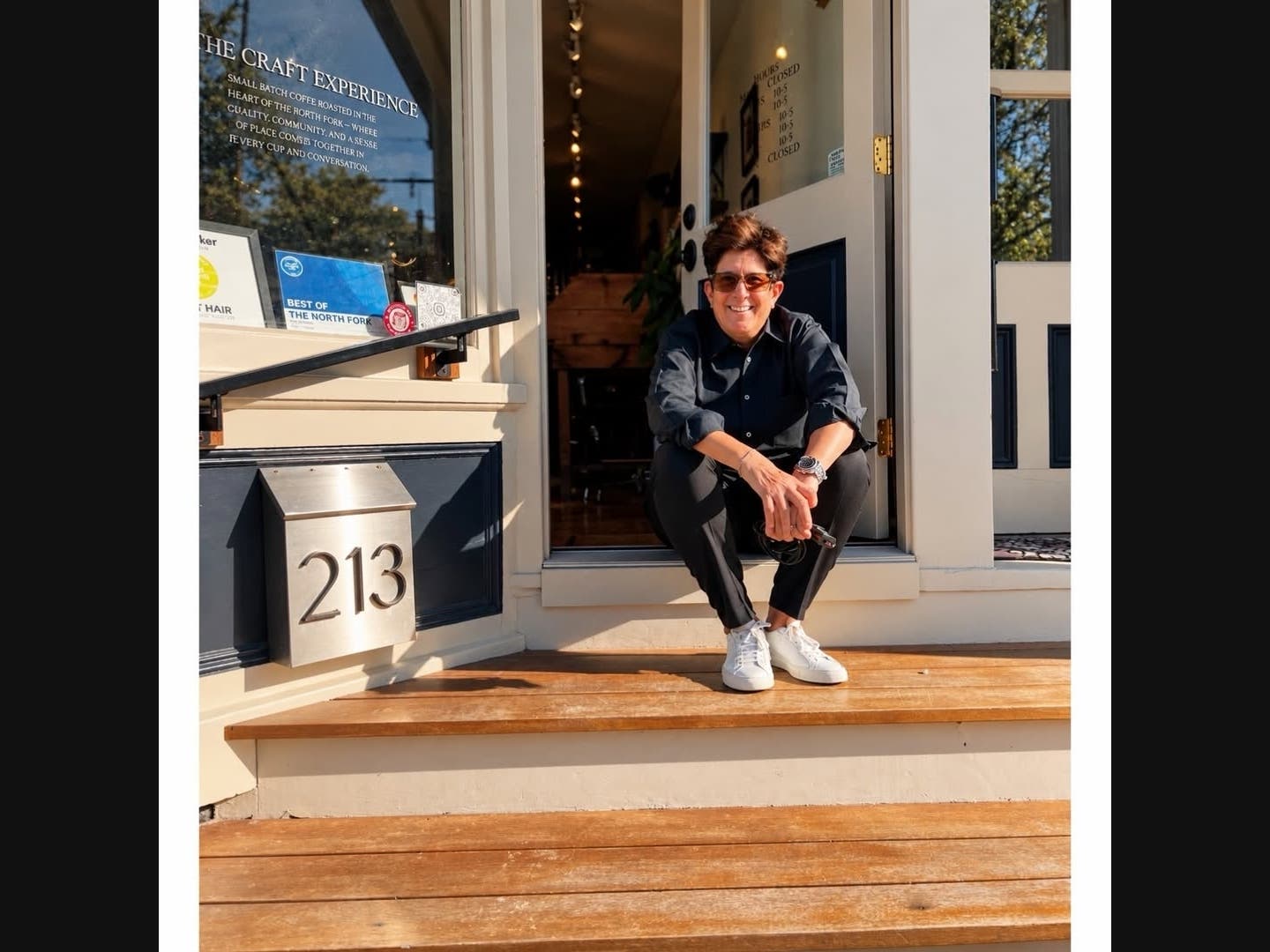
"This is reality housing, not affordable housing." - Kathryn Sepenoski, who said the need is dire for housing for young people and workers.


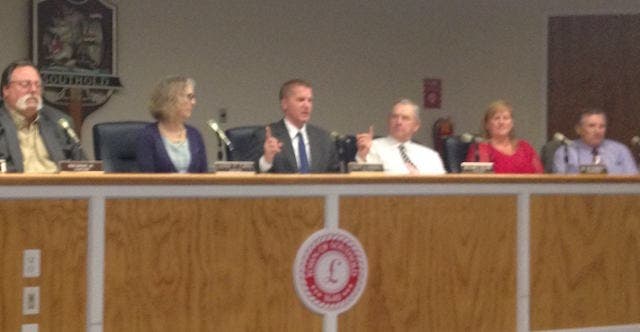
SOUTHOLD, NY - The public had its turn to speak out Tuesday night about a new plan that would promote creation of desperately needed affordable housing in Southold Town.
A public hearing was held on changes to town code that would increase allowable density from the current six units per acre to 12 per acre, establishing a limit of 24 units for any proposal. The initiative was first discussed by Southold Town Supervisor Scott Russell during his State of the Town address in February.
Topping his list of goals for 2016 was the critical need to zero in on the dearth of affordable housing in Southold, setting specific goals, Russell said.
Find out what's happening in North Forkfor free with the latest updates from Patch.
“Historically, Southold has set specific goals to provide a benchmark for measuring success, or lack of, in meeting its public policy goals. We’ve established percentages, hard numbers, tonnages, you name it, to use as a metric to measure our performance on a host of issues. In addressing affordable housing, we have no set goals, no targets, and no hard numbers. We know that the need for affordable housing is critical and have only a general understanding of how many units are needed, yet, we have produced nothing more than a wish list.”
Russell pledged that he wants all that to change.
Find out what's happening in North Forkfor free with the latest updates from Patch.
The supervisor said that the town board would make a commitment to the community to create no less than 50 new affordable apartments in the next three years. “This is a modest goal but it is a goal and should be used as a metric to evaluate our success and leadership.”
In order to create the new apartments, Russell said steps must be taken to increase density from the current six units per acre to 12 per acre, establishing a limit of 24 units for any proposal.
“We need to listen to developers,” he said. Developers have had difficulties providing affordable housing because they need critical mass, he said. The current zoning of six units per acre is ”too onerous to overcome. If we go to 12, I think we can generate more interest but we can always put a cap on it so no community has more than 24 units.”
“The septic issue can be addressed and we can provide the opportunity to developers to build more apartments on less property to ensure economic viability,” Russell said.
The supervisor said he’s met with industry professionals who’ve developed projects in towns with no sewers, much like Southold; a community of 20 apartments is a reachable goal, with a recognized and approved sewer system, he said.
Public opposition can be reduced by ensuring the affordable apartments are scattered throughout the hamlets and in scale with the surrounding community, he said. “We’re not looking at projects that will overwhelm the community. If they’re well-placed, they won’t have the negative impacts.”
Another way to reduce public opposition is through a “far-reaching and ambitious effort” to educate the public about the programs — and the people the town is trying to help, he said.
The town’s affordable housing commission has already commenced that effort, he said.
Affordable housing alternatives are meant to help the young, single professional, the firefighter, the EMT who comes to the aid of the community, the nurses at the hospital, he said. Young people, Russell has long said, are the town’s greatest export.
There are two proposals, but only the first is up for action, Russell said: The current proposal would require a change of zone to affordable housing district designation; it would allow up to 12 units per acre. There is no restriction where any proposal could be placed and could be located in any existing current zoning whether it's residential or commercial provided the board approves a change of zone, he said.
The other, second, proposal, which was discussed at the State of the Town address, would allow for up to six units in the town's commercial zones, essentially adding up to six apartments to the current list of allowed uses in the code for commercial properties provided that the ZBA grant a special exception. There would be no requirement for a change of zone but the units would be part of the affordable housing program, Russell said.
The two are separate proposals and the proposed code change, discussed at Tuesday night's meeting, is only for the first one.
The proposal for the commercial zones hasn't been acted on, yet, Russell said.
The bottom line, Russell said, is that the problem simply cannot be solved with large-scale affordable developments of 40 to 50 units, a notion that’s not palatable to the community. “The public would never accept it, and probably shouldn’t,” he said. “Smaller scale projects can be developed that do not impact the surrounding community and that can still be economically viable.”
Residents speak out
Raymond Fedynak of Mattituck said he felt the increased density would be really "cramming people into a small area. Is that what the Town of Southold wants?" He said he did not want Southold "to look like Queens or Manhattan" with no space between homes.
Russell said it was a fair point but said the changes in code do not refer to single family homes but instead, to town houses and apartment units.
Fedynak said the increased density would impact the town in terms of water quality issues and an increased burden on school systems. "Is that the direction the town is going in?" he asked.
Russell said the town has an affordable housing program, with guidelines. "Our first priority is for those who live in the school district," he said. The second, he added is for residents who have been living in town for at least three years. "This is multi-generational," Russell said. "This is for seniors, for middle income individuals who can't afford $2,400 a month to rent a house, and for young people."
Councilman Jim Dinizio said, as for the argument that residents are fearful of Southold looking "like Levitown," for years, the town has encouraged farming, vineyards, and land preservation, all holding down school taxes.
When the market fell in 2008, Dinizio said, Southold didn't feel the brunt as badly. "We have a really good base here," he said. "But now, we need a place for our workers."
Go to any fire department, Dinizio said, and the volunteers are aging. "We don't have enough young people and in 10 or 15 years," town residents could have to pay for fire department personnel, he said. The need for rescue services was evidenced just this weekend by the high number of calls, including a house fire.
"We've got to start somewhere," he said. "I beg to differ about it ever looking like Levitown but we do need places for people to live."
Russell said those applying for the affordable housing program are carefully vetted and must have lived in town for three years. "There won't be an influx from up west."
Also, any developer with a project must come before the town board and the proposal will be subject to public hearings. Those living in the affordable homes will have their income verified every year, he said.
Cutchogue resident Benja Schwartz applauded the town board for addressing the issue and said he hoped the town would not be subsidizing affordable homes for individuals.
"This is not subsidized housing," Russell said. Applicants would be subject to income verification and credit checks. The intent of the legislation is not to provide subsidized housing, he said.
Suffolk County Legislator Al Krupski suggested affordable housing be situated near hamlet centers and transportation and said the town should look at as of right density.
Southold Town Councilman Bob Ghosio agreed and said while in town there are small, irregular lots where additional density might have been considered, all within walking distance of hamelt centers, roadblocks have arisen due to the need for alternative septic treatment systems.
While he said land preservation and the desire to maintain the town's traditional character has long been a goal of the town, small businesses are struggling to keep employees. "High paying jobs aren't available where you can afford mortgage or rents of $2,500 per month," he said. But workers such as nurses, firefighters, and teachers are critical to the town, Ghosio added.
East Marion's Anne Murray asked if town would ensure affordability in perpetuity. Russell said yes, the units would remain affordable; he added that state building code limits how many apartments could be created on a square foot basis.
Robert Dunne of Peconic said when he heads to the South Fork at 5 a.m. on a weekday to deliver plants during the week, "It takes as long as it does to get to Manhattan, because people that work in the Hamptons canot afford to live in the Hamptons."
The town's proposal for affordable housing, he said, "is a really good thing. Unless we want to find ourselves with LIE traffic five or 10 years down the road, with people we need to do our plumbing and landscaping driving in from eastern Nassau or western Suffolk."
He added, "You have to do this."
Russell reminded that the goal is to scatter the affordable housing throughout town and the projects would be subject to architectural review to ensure the buildings match the character of the hamlets.
Local business owner Kathryn Sepenoski, who owns Port of Egypt, Heron Suites, and Sep's Farm, said the need is dire. "I just hired one man who is driving from East Setauket daily to help at the marina," she said.
She has two sons, Sepenoski said, one an architect and the other, an educator, both of whom want to move home to raise families. "We want our family to come back and be a part of the fabric of this community," she said. "From the receptionist at the front desk of the marina to the mom with three kids who manages the hotel, these are the people who need housing, without the stigma of the word 'affordable.' This is reality housing, not affordable housing."
Russell said the issue was the number one problem identified at a round of chamber of commerce debates during election season.
Orient's Debbie O'Kane asked that sustainable building practices and energy efficient standards be considered in creation of the units.
Russell emphasized that the affordable housing was meant to encompass people who "are already part of the community, wherever it's built."
"We're at the end of our rope," both Dinizio and Councilwoman Jill Doherty agreed. Doherty said the idea was to be creative and attract developers to create the affordable units; the projects could include adaptive reuse and retrofit of an existing building, Doherty said.
The board decided to vote in two weeks on the issue.
"I thought that the general consensus of the members of the public that spoke was positive. There were lots of questions which is understandable," Russell said, after the meeting.
Get more local news delivered straight to your inbox. Sign up for free Patch newsletters and alerts.