Community Corner
Suffolk Leads State in Heroin Overdose Deaths: Heartbroken Mom Shares Pain at Losing Son to Epidemic
Lawmakers, experts and devastated families fight a scourge that's killing a generation.


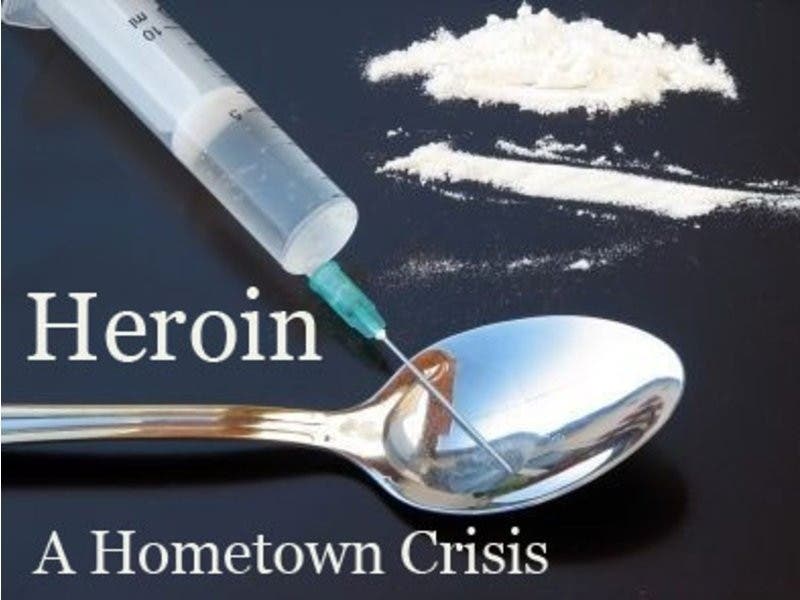
Statistics were released recently that confirmed what so many devastated families already know to be heartbreakingly true: Suffolk County leads New York State in heroin-related overdose deaths by a wide margin.
Between 2009 and 2013, 337 heroin-related deaths were reported in Suffolk County.
The "New York State Opioid Poisoning, Overdose and Prevention," report prepared for Gov. Andrew Cuomo and the New York State Legislature was unveiled last week.
The report "provides an overview of opioid-related mortality and morbidity and other consequences of heroin and prescription opioid misuse across the state over the last five years," the document states.
New York State Assemb. Andew Raia, ranking member of the health committee, was joined by Suffolk County Legis. William 'Doc' Spencer, chairman of the health committee, and heroin and substance abuse experts at a press conference on Sunday in Hauppauge to discuss the data.
The report indicates that 337 people died from heroin overdoses in Suffolk County during a five-year period, more than in the Bronx, which recorded slightly over 200 such deaths, the second-highest rate in the same period. There were 128 heroin-related deaths in Nassau County.
The report also indicates that Suffolk County is plagued by cheap heroin coming into the United States, lawmakers said, with hospitals and outpatient treatment facilities swamped by an ever-escalating number of cases and Narcan saves rising dramatically.
Raia said the Pilgrim State Psychiatric Center in Brentwood is under utilized and he urged state officials to open up beds at the facility for inpatient treatment of heroin addicts, according to a PIX 11 report.
"This is an emergency," Raia reportedly said. "We need to open up those beds as quickly as possible."
According to the report, opioid-related emergency department visits increased 73 percent from 2010 to 2014. The number of heroin-related deaths increased in 2013 to 637, and opioid analgesics related deaths rose to 952, increases of 163 percent and 30 percent from 2009, respectively, the report states.
In 2013, an average of two New Yorkers a day died of heroin-related overdoses, the report said. More than four times as many men died of one of these overdoses compared to women; whites died of heroin-related overdoses at a rate of nearly twice that of blacks, and almost 1.35 times that of Hispanics.
"The upward trend in heroin-related overdose fatalities among younger New Yorkers is particularly alarming," the report states. "Half the people who died were under age 35."
Numbers not surprising
“These numbers are absolutely devastating, but shouldn’t be a surprise to anyone," said Dr. Jeffrey Reynolds, president and chief executive officer of the Family and Children's Association in Mineola. "Treatment professionals and bereaved families have, for more than a decade now, been warning about the worsening crisis. There are still gaps in school-based prevention, waiting lists for treatment slots, insurance company barriers to care and too few resources designed to support those who do find a path to recovery."
Bur, he added, "Some good things have happened recently, including more than $25 million in new addiction services funding in the recently passed state budget, but our slow collective response gave heroin a 10-year running head start. Now we are trying desperately to catch-up."
Although Narcan saves are reported daily, Reynolds said education is critical: "The widespread distribution of naloxone has prevented many overdose fatalities, but too often, I’m seeing folks revived, brought to an emergency room only to be discharged within an hour and dead of a subsequent overdose within 24 hours. This is a huge missed opportunity and we need to make sure that those who are revived are properly counseled, their families are supported and we help them find a path into treatment."
He added, "If we truly want to turn a corner and see a drop in overdose fatalities, we need an all-out sustained push that involves everyone – schools, cops, health care professionals, treatment providers, families and entire communities. And we all have to agree than one overdose is too many.”
One mother's agony
Penny Maffetone knows all too well the horror of heroin addiction: She lost her son, Michael, at 29 in 2012 when he overdosed in the family's Laurel bathroom.
"As a mom to one of the 337 heroin deaths in Suffolk County, it's the most devastating thing I have ever been through, losing my firstborn son to this horrible epidemic," she said." I'm just glad to see that it is talked about more now than it was four years ago. Maybe more people will reach out for help and another family will not have to feel as lost as we feel. I miss Michael more than words can ever describe."
Maffetone's younger son Paul, found his life forever impacted by his brother's death. He's made it his mission to make a difference, creating the not-for-profit organization Michael's Hope and organizing Narcan training sessions and educational forums, as well as speaking at schools to help raise awareness and save lives.
Stories are shared at Michael's Hope meetings, about how heroin addiction sometimes begins with opioids found in a parent's medicine cabinet or after an injury requires a prescription for pain killers. The low price of heroin soon makes it the drug of choice, experts say.
Of the statistics, Maffetone said, "I think it's a scary fact but it's just that — it's a fact. And we have got to start the conversation. We have to start spreading more awareness and prevention in our communities and schools. This is a crisis. We have to take a stand together and rise as a whole."
Michael's Hope co-founder, vice president, and director Kristina Amato of Commack agreed.
"This epidemic is at its highest peak," she said. "We don't have time to waste, the time is now. We need to get into schools and educated about this heroin epidemic so kids can be properly educated about the truth. That's the biggest thing — people are in denial of how serious this is. It's in our own stomping grounds and the only way we can prevent any more losses of loved ones is spreading the awareness and using our voices to take a stand."
She added that through community events, Narcan training, and education, "The greater chance we have, to save a life."
Read the full state report here.
Get more local news delivered straight to your inbox. Sign up for free Patch newsletters and alerts.