Politics & Government
Supervisor Scott Russell's Tentative 2017 Budget Seeks to Pierce Tax Cap
"This budget is no frills, has no gimmicks and contains no one-shot wonders." - Southold Town Supervisor Scott Russell.


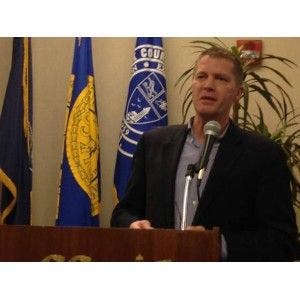
SOUTHOLD, NY — Southold Town Supervisor Scott Russell's $44.1 million tentative 2017 budget calls for a tax rate increase of 7.63 percent — and would pierce the New York State tax levy cap.
Russell filed the tentative budget Friday and said it was the "culmination of several difficult decisions."
While the supervisor said he was proud to have filed budgets that have complied with the state tax cap in past year, "I am unable to do so this year," he said. "It is unreasonable to expect that the requirements of the tax cap to be met each and every year without causing long-term injury to Southold's fiscal health."
Find out what's happening in North Forkfor free with the latest updates from Patch.
The budget, Russell said, reflects the necessity to maintain a healthy fund balance to both meet growing demands on town services and invest in infrastructure such as roads, which have been "severely compromised by recent weather events."
He added, "This budget is no frills, has no gimmicks and contains no one-shot wonders. It meets the town's financial obligations, ensures continuation of public services, and demonstrates fiscal restraint."
Find out what's happening in North Forkfor free with the latest updates from Patch.
Key features of the budget include
- A total appropriation of $44,136,421, which represents an increase of 1.44 percent over 2016.
- A tax rate increase of 7.63 percent
- An increase in the town's medical costs from $5,636,926 in 2016 to a projected cost of $6,322,711.
- A total appropriation of $2,422,000 for road resurfacing and drainage projects.
- No new positions created or funded that were not established in the budget for 2016.
- Increased the estimated fund balance from 2016 to 2017.
Russell urged the town board not to appropriate any more money from the fund balance to reduce the proposed tax increase.
"One of a town's chief indicators of sound fiscal health is the level of its fund balance. The taxpayers were rewarded for past efforts that had allowed us to recently refinance outstanding debt, which will result in approximately $2 million in future obligations," Russell said.
In addition, the supervisor said he would ask the board to carefully evaluate the staffing needs of the town over the next few years; in order to meet demands, it might be necessary to start reducing staffing levels with a policy of attrition, he added.
"The budget is in the hands of the town board now and it will be up to the members whether or not to support the increase," Russell said, in an email. "If they think the budget should be cut then they are up against a very difficult challenge."
The supervisor said the two chief expenditures that made it difficult to comply with the cap, the first being the increase in medical costs.
"Our obligations to Empire next year have increased nearly 10 percent, or over $500,000," he said. "Second is the need to invest in crumbling roads. Severe winter weather over the past few years has left roads crumbling. The allocation of $2.4 million is substantially more than budgets in the past, which typically were under $1 million. That figure may be fine to stay on top of road maintenance in normal years but it simply isn't right now."
Discussing the fund balance, Russell said in order to comply with the tax cap in the past, the town has needed to apportion more into each new budget than what was preferable.
"Wall Street reacts poorly to this approach, and we all read about towns to the west that are in dire fiscal straights because of these tactics. The fund is a chief indicator of the fiscal health of a town and we needed to reverse the trend of it shrinking," he said.
Property tax levy growth for local governments will be capped at 0.68 percent for 2017, decreasing slightly from 2016, when it was 0.73 percent, according to State Comptroller Thomas P. DiNapoli in July.
"In what is becoming the norm, New York’s local governments must cope with extremely limited growth for property taxes to stay within the tax cap,” said DiNapoli. “Low inflation has positive effects for consumers, but it also reflects an uncertain economic environment. Local officials have faced growing fixed costs and limited budget options for years, but 2017 will necessitate even tougher financial choices.”
The 2017 fiscal year is the fourth year in a row that local governments have had their levy growth capped at less than 2 percent and the second year in a row that it has been capped at less than 1 percent, a release from DiNapoli's office said.
At its last meeting, the town board voted to schedule a public hearing on possibly allowing the board to pierce the tax cap; that hearing does not mean that the board would pierce the cap, it would just grant the board the authority to do so, with a supermajority vote required.
Patch photo by Lisa Finn.
Get more local news delivered straight to your inbox. Sign up for free Patch newsletters and alerts.