Neighbor News
This true Southolder ... Ezra L'Hommedieu
Truly - Truly deserves so more than mere acknowledgement!
By Danny McCarthy
Here's a tribute to one of the foremost citizens of the 18th century, Southold’s own Ezra L’Hommedieu.
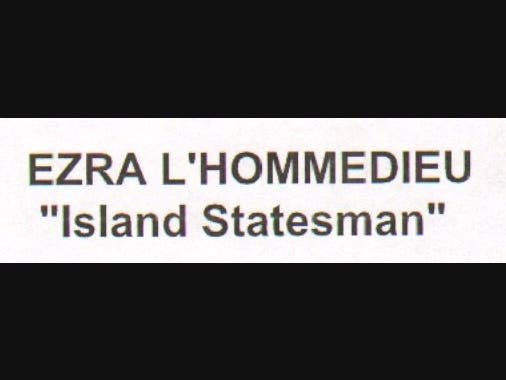
Long Island Forum September 1949 article by Clarence Ashton Wood on Ezra L'Hommedieu "Island Statesman:"
Find out what's happening in North Forkfor free with the latest updates from Patch.
On the second page of the article in the first column and it also goes into the second column saying:
"... Nathaniel and Grissell Sylvester, the parents of Mrs. L'Hommedieu, were themselves political refugees from the vengeance of Cromwell. It is hence not strange that their hospitable Shelter Island mansion often harbored Quakers and other displaced persons. It may well be that Capt. Sylvester induced L'Hommedieu, the Huguenot, to build a dwelling, a store and a mill on Hallock Bay across the bay. We find L'Hommedieu soon acting as attorney for Francis Brinley, a merchant of Rhode Island and kin of Mrs. Sylvester, in the purchase from Thomas Moore of Southold of 100 acres at Oysterponds. ..."
Find out what's happening in North Forkfor free with the latest updates from Patch.
Ezra L’Hommedieu passed away at the age of 77 in 1811 and is buried in the Southold Presbyterian Church Cemetery next to his former first wife, Charity Floyd, whose brother was General William Floyd, a signer of the Declaration of Independence.
- Ezra L’Hommedieu, an American statesman, was born in Southold on August 30, 1734, the grandson of French/Dutch settlers, who represented New York in the Continental Congress, the State Assembly, among other local offices, and was the author of the Empire State’s constitution. A patriot of the Revolutionary War era, he was an educator, administrator and humanitarian. L’Hommedieu was one of the earliest graduates of Yale who practiced law afterward in New York City.
Ezra was one of the leaders of the New York Agricultural Society and he was a farmer himself. In 1756, a young fellow named George Washington, who was a surveyor at the time, was traveling out here on the North Fork and met Ezra L’Hommedieu, a leading patriot during the War of Independence in 1776. Both gentlemen agreed that both Horton Point and Montauk Point possessed the high elevation required for the establishment of effective navigation beacons. He helped to designate the future placement of the lighthouse at Horton Point with George Washington in 1757. The Federal Government didn’t purchase the land on the cliff at Horton’s Point until 1855 for $550 although President Washington commissioned the lighthouse to be built in 1790. The lighthouse was completed in 1857 for $7,500. It was a bright idea! Couples can be married at Horton’s Point but they do not hold receptions there. Founders Landing provides a great place for a party. It is heated and air-conditioned. It was Ezra L’Hommedieu as representative of the Chamber of Commerce who chose in 1792 Turtle Hill as the site of the Montauk Point Lighthouse. He was also known for developing methods of scientific farming, including the use of seashells to fertilize soils. He was one of the first patent holders in the United States, a Suffolk County clerk, and state regent.
A little brick schoolhouse was built “for the advancement of literature” by a group of prominent men in 1795 and L’Hommedieu was one of those involved.
L’Hommedieu Mansion built at the foot of Town Harbor Lane was patterned after the one built by his great grandfather, Nathaniel Sylvester, who owned Shelter Island. The L’Hommedieu Barn that was built on his property around 1750 stands on the grounds of the Southold Historical Society, and was restored circa 2005.
The Honorable Ezra L’Hommedieu, Esquire, chaired a meeting of a respectable number of citizens at the Senate Chamber in the City of New York for the purpose of instituting such a society. Entries of Observations on Manures, On the feeding of hogs to advantage, Observations on the Smut of Wheat and the means of preventing it, Means of preserving Mildewed Wheat from injury, and Method of Distilling Ardent Spirits from Potatoes with observations are communicated by Mr. L’Hommedieu in this book.
Ezra L’Hommedieu married his second wife, Mary Catherine Havens, in 1803 when he was 69 years of age and they had one daughter, Mary, who became Mrs. Samuel S. Gardiner. He passed away at the age of 77 on September 28, 1811 and is buried in the Southold Presbyterian Church Cemetery next to his former first wife, Charity Floyd, whose brother was William Floyd, a signer of the Declaration of Independence.
According to Whitaker’s Southold, he may be regarded as the greatest man that ever lived from birth to death in Southold. He was a statesman, educator, agriculturist and humanitarian. He was the first highly educated physician who practiced here.
He was a member of the First Church of Southold, a member of the State Senate and the chairman of its judiciary committee. The First Church of Southold was the earliest in Suffolk County and Long Island as well. The certificate of incorporation was signed on April 4, 1785 and on the same day, Ezra L’Hommedieu recorded it as county clerk. He died when he was 77 years old.
According to The Suffolk Times and former Southold Town Historian Antonia Booth, in a December 15, 1994 article re: Thomas Jefferson Slept Here – Twice, Thomas Jefferson and James Madison had a quest to find out about a Hessian fly that “attacked Long Island’s wheat crop for years.” They sailed from Connecticut on June 12, 1791, stopping in Oysterpond for breakfast, in Southold to dine and lodge at Peck’s Inn, and on June 13, having breakfast and dining at Griffin’s in Riverhead. Jefferson apparently visited the home of Ezra L’Hommedieu. He and Jefferson corresponded further about the fly after their visit. Only the old wheat was damaged in 1788, 1789 and 1790. Apparently, Jefferson writes, the fly was traveling about 20 miles a year (depending on the winds), appearing to move only in an easterly direction, seemingly repelled by west winds. Jefferson and Madison moved on to Mattituck on June 13 and from there continued to Flushing and New York where the Hessians were stationed from 1776 to 1777. Jefferson hated cities. Through the efforts of Ezra L’Hommedieu sending Jefferson a sample of wheat stubble containing the live insect in its chrysalis stage (the protected stage), he suggested an experiment that would prove it could have withstood the Hessians’ trip from Germany, also describing his own experiments in detail. He wrote an English scientist who said the ‘wheat insect’ didn’t exist in England and questioned whether it was extant in Germany.
Freedom of the Press ... Here's a Definite Update!
Clement M. Healy's Images of America-North Fork Cemeteries has errors regarding the birth date and death date of Ezra L'Hommedieu. On page 76 in that volume, he has typeset that Mr. L'Hommedieu was born in 1714. On page 77, he has typeset that Mr. L'Hommedieu died on September 20, 1897.
The Rev. Epher Whitaker's Whitaker's Southold on page 23 reads:
He was born here on August 30, 1734. He died September 27, 1811
I ALSO HAPPENED TO DOUBLE-CHECK ...
The Rev. Epher Whitaker, D. D. printed History of Southold, L. I. : Its First Century in 1881. Regarding a list for Ezra L'Hommedieu, on page 229 in History of Southold, L. I. : Its First Century, we see typeset:
"From 1787 till his death, September 28, 1811, he was a Regent of the State University."
Here's an online availability History of Southold, L. I. : Its First Century carrying the volume where I'm able to spotlight pages 228-229 ~ When you the download the link, you'll be able to see the month title mistake:
https://archive.org/details/historyofsouthol00whit/page/228
I purchased the book and received the copy in the mail and that typo is there too on page 229!