Community Corner
Maple Syrup Season: From Trees to Pancakes
Maple season has arrived, and several area farms are holding events to celebrate.
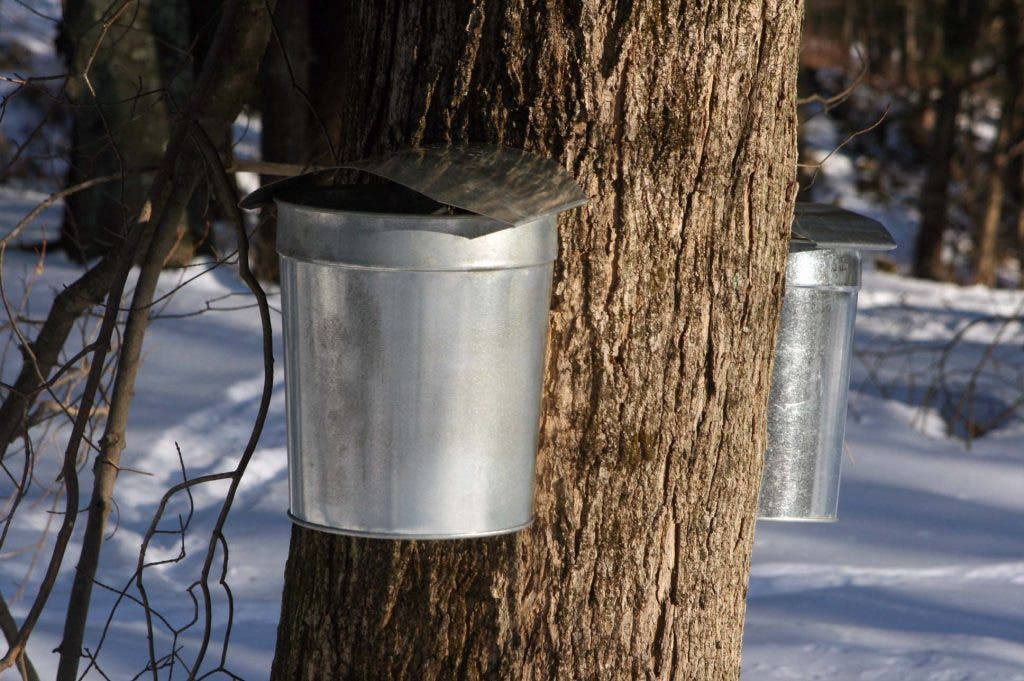


Temperatures hovering around freezing may be aggravating for us, but they’re perfect for maple trees. They’ve been storing their starch since autumn and now it’s turning to sugar. By late February, their sap is ready to be tapped.
Most people associate maple syrup with Canada or Vermont, but New York is the world’s third largest producer. And the lower Hudson Valley still has a number of working maple farms.
Glenn Niese’s family has been making syrup in Putnam Valley since 1892. He still taps thousands of trees each season. “It’s going to be a good year,” he predicts. “We’ve had a lot of snow and a very cold winter.” Sap flows best when night temperatures are in the mid-twenties and rise in the daytime to the mid-thirties.
Find out what's happening in Nyack-Piermontfor free with the latest updates from Patch.
Sleepy Hollow’s Doug Maass is also a maple expert. He teaches people how to tap trees on their own property. Maple farming can be “seductive,” he says. “It’s very relaxing to walk through the woods and hear drip, drip, drip.”
The season is short, usually lasting about four to six weeks. And it’s hard work. “When the sap starts running, you’re up all day and night,” says Niese. Plus you need to work quickly. “If you’re not fast you’ll miss it.”
Find out what's happening in Nyack-Piermontfor free with the latest updates from Patch.
First you hang buckets and insert two-inch taps into the bark. After the sap is collected, it's filtered to eliminate impurities. Next you boil it to 220 degrees. Finally it’s re-filtered, reheated and bottled at 180 degrees. Unopened, maple syrup will last forever.
Most trees produce one gallon of sap a day. Since the sap is largely water, it takes 40 gallons of sap to produce one gallon of syrup. Tapping doesn’t harm the trees and some large trees can take up to four taps at a time.
Maple trees are never too old to produce, according to Niese. He knows a 300-year-old tree that hasn’t yet retired.
Here are some local spots to celebrate the maple season:
Carmel: Clearpool Camp, 33 Clearpool Rd. Annual maple event including discussion and pancake breakfast, March 12, 9 a.m.–1 p.m.; adults $10; children $5
Chestnut Ridge: Green Meadow Waldorf School, 307 Hungry Hollow Rd.
Maple Sugaring, sponsored by Nature Place Day Camp; learn how to tap trees and make your own syrup; March 6, 10 a.m.-noon; free.
Somers: Muscoot Farm, 51 Route 100. Maple Sugaring demonstrations; March 6 & 13, 11 a.m.-2:30 p.m. (weather permitting); free. Also: Sugaring Off Pancake Breakfast, March 19 & 20, 11 a.m.-3 p.m.; adults $7, children $3
Yorktown Heights: White Oak Farm, 680 Croton Lake Rd. Westchester’s last commercial maple farm. Local maple products for sale. 914-245-7535.
Putnam Valley: Niese’s Maple Farm, 136 Wiccoppee Rd. Participating in annual NYS Maple Producers Weekend, offering breakfast and live entertainment; March 19 & 20, March 26 & 27, 9 a.m.-3 p.m.; adults $7, children $5.
Pomona: Camp Hill Farm. Rockland’s only maple syrup producing farm. By appointment.
Your Backyard: Got Maples? Make Syrup! Doug Maass will come to your house and show you how to tap your own trees. 914-631-7541; Price $50