Crime & Safety
Accused Grandparent Scammer Picked Up 'Bail' Money: Police
Have you had suspicious packages delivered to your home or business? Ossining police suspect a phone scam has used local addresses.


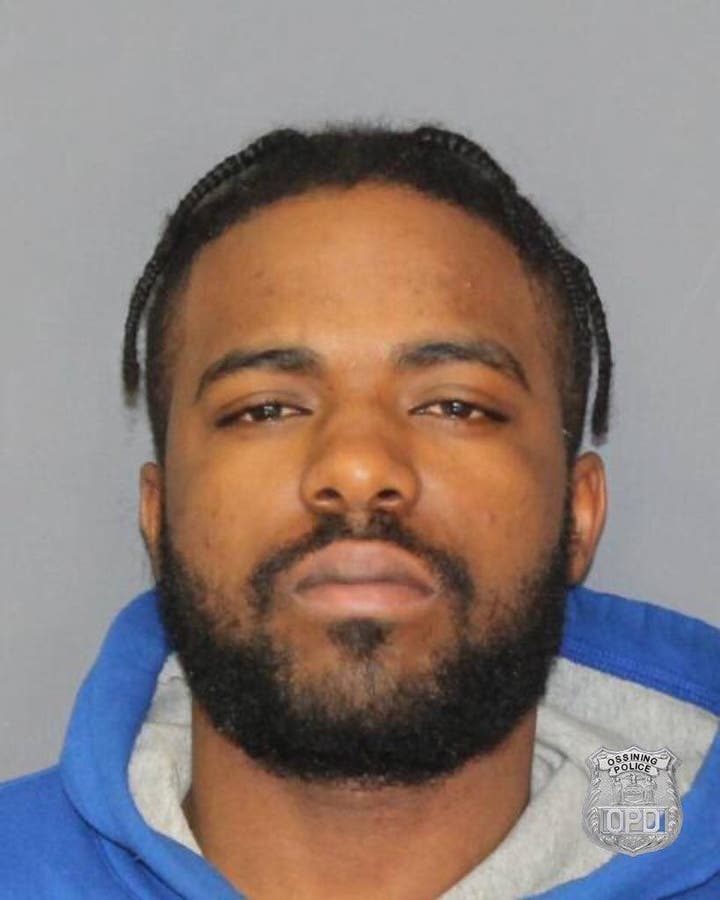
OSSINING, NY — A Long Island resident faces charges connected to a phone scam targeting elderly people across the United States. He is accused of playing the well-known 'grandparent scam' which involves a request for money because a grandchild or other relative needs the funds due to an unexpected emergency.
Ossining police were alerted to the ongoing scam as a victim in Texas was hit up for a third time.
Jasaun Butler Pope, of Valley Stream, New York was arrested on Ann Street by Ossining police who alleged that they found two packages of money in his possession — from the victim in Texas and a victim in Missouri, each sent to a different Ossining address whose residents were not in on the scam.
Find out what's happening in Ossining-Croton-On-Hudsonfor free with the latest updates from Patch.
"Here’s where you come in - we believe that this person has been having packages shipped to unsuspecting residents in our community and then retrieving those packages before you even realize it was there," police wrote on Facebook. "We know a lot of you have those fancy Ring cameras or some other such security device. Have you had suspicious packages delivered to your home or business? Have you seen this person on your cameras? If so, call us! There are probably more Grannies, Grandmas, Nonas, Abuelitas, Nanas, Grandpas, Grampses, Pop Pops, Yeyes, and Grandpappies who could use our help."
The 28-year-old was charged with 3rd degree Grand Larceny, 3rd degree Criminal Possession of Stolen Property, and 3rd degree Attempted Grand Larceny, all felonies.
Find out what's happening in Ossining-Croton-On-Hudsonfor free with the latest updates from Patch.
He was arraigned in Ossining Town Court and is being held at the Westchester County Jail on $10,000 bail.
The investigation is ongoing, said Ossining Police Chief Kevin Sylvester.
According to the FBI, the grandparent scam has been around for years. The FBI's Internet Crime Complaint Center has been receiving reports about it since 2008.
But in recent years, the scam has become more sophisticated, authorities say.
"Thanks to the Internet and social networking sites, a criminal can sometimes uncover personal information about their targets, which makes the impersonations more believable. For example, the actual grandson may mention on his social networking site that he's a photographer who often travels to Mexico. When contacting the grandparents, the phony grandson will say he's calling from Mexico, where someone stole his camera equipment and passport," the FBI explained.
Here are some common 'Grandparent Scam' scenarios, according to the FBI:
- A grandparent receives a phone call (or sometimes an e-mail) from a "grandchild." If it is a phone call, it's often late at night or early in the morning when most people aren't thinking that clearly. Usually, the person claims to be traveling in a foreign country and has gotten into a bad situation, like being arrested for drugs, getting in a car accident, or being mugged…and needs money wired ASAP. And the caller doesn't want his or her parents told.
- Sometimes, instead of the "grandchild" making the phone call, the criminal pretends to be an arresting police officer, a lawyer, a doctor at a hospital, or some other person. And we've also received complaints about the phony grandchild talking first and then handing the phone over to an accomplice…to further spin the fake tale.
- We've also seen military families victimized: after perusing a soldier's social networking site, a con artist will contact the soldier's grandparents, sometimes claiming that a problem came up during military leave that requires money to address.
- While it's commonly called the grandparent scam, criminals may also claim to be a family friend, a niece or nephew, or another family member.
"Sums can vary from several hundred to several thousand dollars, sometimes over the course of two or three calls," the U.S. Department of State warns.
According to the FBI, you should contact local police or the or the state consumer protection agency if you think you've been victimized.
Get more local news delivered straight to your inbox. Sign up for free Patch newsletters and alerts.