Politics & Government
Bipartisan NY-NJ Watershed Protection Act Back Before Congress
Hudson Valley politicians and conservationists have fought for a federal funding stream for a decade.


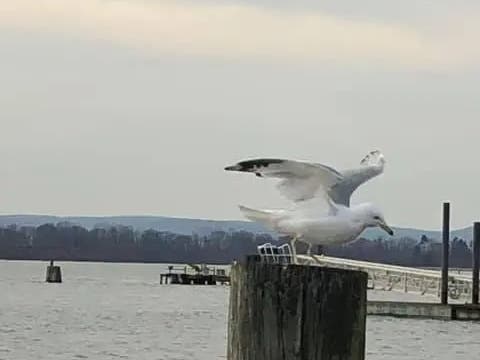
HUDSON VALLEY, NY — Federal investment in protecting the Hudson River has drawn bipartisan support from the region's representatives in Congress.
The New York-New Jersey Watershed Protection Act was re-introduced Monday. The act authorizes the federal government to support the restoration and protection of the vital water resources of the Hudson, Mohawk, and Raritan Rivers and their tributaries with $20 million annually for watershed restoration grants through Fiscal Year 2029, to help stretch limited resources and investment.
"The bill really is bipartisan, at least for the purpose of bringing this money home," Jeremy Cherson, Senior Manager of Government Affairs for Riverkeeper, told Patch. "All the money that New York taxpayers send to the country — we're trying to get some back to restore the nation's most populated watershed."
Find out what's happening in Ossining-Croton-On-Hudsonfor free with the latest updates from Patch.
The other good thing is that it is backed by members of both states' delegations in both houses of Congress, which Cherson said really increases its potency.
Congress has considered watershed protection its business since the 1950s — saying that furthering the conservation and utilization of the Nation's land and water resources was a matter of national welfare.
Find out what's happening in Ossining-Croton-On-Hudsonfor free with the latest updates from Patch.
"Managing water resources at the watershed scale, while difficult, offers the potential of balancing the many, sometimes competing, demands we place on water resources. The watershed approach acknowledges linkages between uplands and downstream areas, and between surface and ground water, and reduces the chances that attempts to solve problems in one realm will cause problems in others," the National Research Council said in a 1999 report "New Strategies for America's Watersheds."
But somehow, while the Long Island Sound, Chesapeake Bay, Great Lakes and the Delaware Bay have all gotten federal watershed protection, the New York harbor's watershed has not.
"The Hudson, by some political fluke of history, was left out," Cherson said.
Over the past decade, the late Rep. Maurice Hinchey and then Rep. Paul Tonko have pushed to correct that omission. Tonko's New York-New Jersey Watershed Protection Act got the farthest ever last year during the 117th Congress, but it passed the House but not the Senate.
"For too long, our New York-New Jersey Watershed has been grossly underfunded, despite being America’s most populated watershed," Tonko said Monday. "I’ve long pushed to support this critical waterway, driving forward federal restoration efforts that will have massive ripple effects, including protecting communities from flood risks, supporting local wildlife, improving water quality, and driving economic growth."
This year, Tonko (D-NY) and Rep. Nicole Malliotakis (R-NY) introduced the bill in the House. The bill is sponsored by cosponsored by U.S. Representatives Frank Pallone, Jr. (D-NJ), Chris Smith (R-NJ), Nydia M. Velázquez (D-NY), Jefferson Van Drew (R-NJ), Jerrold Nadler (D-NY), Mike Lawler (R-NY), Donald M. Payne, Jr. (D-NJ), and Marc Molinaro (R-NY).
"One of the 17th Congressional District's most important features is the Hudson River," Lawler said. "That's why I'm proud to join my colleagues in introducing the New York-New Jersey Watershed Protection Act, which will ensure the Hudson River and its tributaries are protected."
In the Senate, Majority Leader Charles E. Schumer and Sen. Kirsten Gillibrand co-sponsored to Sen. New Jersey Sen. Cory Booker's bill, which is also supported by NJ Sen. Bob Menendez.
The rivers and waterways in the NY-NJ watershed generate billions in economic activity, provide critical pathways for both commerce and recreation, they all pointed out.
"New York and New Jersey share nearly 500 miles of coastline that play a critical role in generating billions in revenue, promoting tourism, and protecting our communities from storm surges and rising seas," Malliotakis said. "In recent years, hazardous waste, chemicals, and untreated wastewater have diminished the quality of water in the NY-NJ watershed, putting our already vulnerable waterways at risk."
Gillibrand said the act would help fund effective watershed management strategies, support conservation efforts and promote partnerships between stakeholders.
The New York-New Jersey Watershed Protection Act of 2023:
- Establishes a new program, administered by the U.S. Fish & Wildlife Service and modeled on other successful regional watershed restoration programs, to coordinate restoration efforts.
- Ensures that restoration efforts utilize science-based principles to protect fish and wildlife habitat, improve water quality, increase public access to the watershed, mitigate flood risks, and develop public outreach and educational activities.
- Emphasizes the need for restoration funds to be delivered to frontline communities experiencing environmental injustice.
- Authorizes $20,000,000 annually for watershed restoration grants through Fiscal Year 2029.
More than 50 organizations support the legislation, including: Scenic Hudson, Riverkeeper, NY/NJ Baykeeper, Backcountry Hunters & Anglers, Hudson River Foundation, Environmental Defense Fund Action, National Parks Conservation Association, National Wildlife Federation, New York League of Conservation Voters, The Nature Conservancy – New Jersey, and The Nature Conservancy – New York.
The NY-NJ Watershed Act would only authorize Congress to appropriate the money — which would require more work every year. No problem, Cherson said. "Our region has so many amazing environmental groups, it's really a hotbed of ecological knowledge. We have some of the best people thinking about these issues."
A federal funding stream would exponentially increase the amount of environmental restoration, protection of drinking water, fish recovery, and pollution issues, he said. "It could fund a wide set of plans and priorities."
The bipartisan approach was important to all the environmental groups pushing the bill, he said; and it wasn't really a hard sell. Molinaro, when he was the Dutchess County Executive, was very involved in the PCB issue on behalf of the local communities that use the Hudson for drinking water. Malliotakis has been supporting erosion control work around Staten Island such as living breakwaters.
"That's the type of project this bill could help accelerate on Staten Island and the region," Cherson said.
Last year, the bill had a hearing in July. Cherson said he hoped for similar timing this year, and then having the bill attached to a larger package for a vote by December.
Get more local news delivered straight to your inbox. Sign up for free Patch newsletters and alerts.