Community Corner
Opioid Epidemic: Federal, State Funds to Hudson Valley
New rounds of funding to fight the opioid epidemic in suburban New York are coming from federal and state governments.


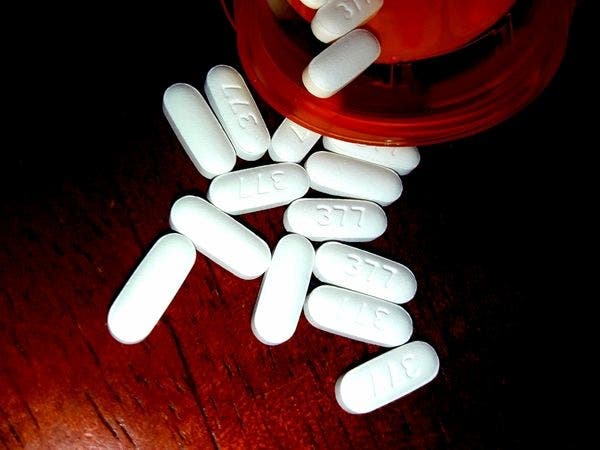
HUDSON VALLEY, NY, — State and federal officials have announced new funding to combat the heroin and opioid epidemic in New York. The state has allocated $200 million in the 2018 budget for treatment and prevention. In addition, the federal government has pledged $25 million, members of the New York congressional delegation announced.
Some of that money is designated for the Hudson Valley. For example, in the newly approved state budget, $19 million for the Hudson Valley will support one community coalition, two family support navigators, two peer engagement programs, one adolescent clubhouse, one recovery community and outreach center and one 24/7 urgent access center.
The announcements come as the New York Attorney General has announced a new plan to fight drug dealing in the state.
Find out what's happening in Ossining-Croton-On-Hudsonfor free with the latest updates from Patch.
And they also coincide with a new report from the Rockefeller Institute of Government, “By the Numbers: The Growing Drug Epidemic in New York." The report looked at 17 counties for which there was complete data, including Dutchess, Orange, Rockland, Ulster and Westchester counties in the Hudson Valley. Between 2010 and 2015, 14,173 people died from drugs in New York. In contrast, 9,754 people suffered drug-related deaths in the preceding six years (2004-2009). The largest increases were upstate or in the suburbs outside of New York City, with the greatest increases in Erie, Onondaga, Ulster, Westchester, and Oneida counties.
"The numbers are just staggering," said Gov. Andrew Cuomo in a recent speech announcing that $200 million has been allocated in the state budget to fight the drug problem. "80 percent of all opioids produced are consumed by Americans. 80 percent... 91 Americans die every day from opioid abuse ... The rate of death from opioids is as high as it was at the rage point of the AIDS epidemic. That's how serious this is."
Find out what's happening in Ossining-Croton-On-Hudsonfor free with the latest updates from Patch.
U.S. Sen. Kirsten Gillibrand offered these facts on the epidemic:
- Nearly 2 million Americans abuse or are addicted to prescription opioids, and nearly half a million more are addicted to heroin according to SAMHSA.
- In 2015, nearly more than 33,000 people died in the United States from overdose related to opioids, more than any year on record, according to CDC.
- The increase in opioid addiction is linked to an increase in opioid prescriptions. Between 1999 and 2010, there was a 400% increase in sales of prescription opioid pain relievers in the U.S. Over the same time period, there has not been an increase in the amount of pain Americans report according to CDC.
- In 2012, health care providers wrote 259 million prescriptions for opioid pain relievers – enough for every American adult to have a bottle of pills according to CDC.
- Teenagers who receive an opioid prescription by 12th grade are 33% more likely to abuse opioids after high school. The risk for opioid abuse is even higher among teenagers who report little to no previous use of illicit substances according to the National Institute on Drug Abuse.
- Of teenagers who abuse opioids, roughly half obtained the opioids from a friend of family member, according to research by the National Institute on Drug Abuse.
- In a paper published by the American Dental Association in 2011, 64% of dentists surveyed preferred prescribing the opioid hydrocodone with acetaminophen for a third molar extraction, for an average of 20 pills per prescription.
- 4 in 5 individuals who use heroin report prior abuse of prescription opioids, according to SAMHSA.
New York's FY 2018 Budget includes more than $200 million to support prevention, treatment and recovery programs targeted toward chemical dependency, residential service opportunities, and public awareness and education activities. More information is available here.
In his speech Cuomo complimented State Sen. Terrence Murphy (R-Westchester-Putnam) for his work on the drug crisis. Murphy is co-chair of the State Senate's Task Force on Heroin and Opioid Abuse
"This is more of a suburban issue, more of a rural issue," Cuomo said. "It’s all across the state but it’s all across the nation. And I believe that it is the worst drug scourge this nation has ever faced. This is worse than crack, this is worse than meth. This is worse than old time heroin. It is everywhere. It can seduce you legally into abuse, which is where a lot of it starts."
Along with Gillibrand, Congresswoman Nita M. Lowey and Senator Chuck Schumer sent out statements about the $25,260,676 in federal funds from the Department of Health and Human Services allocated to New York State to combat opioid addiction through the State Targeted Response to the Opioid Crisis Grants program administered by the Substance Abuse and Mental Health Services Administration.
“America’s opioid epidemic is one of the most significant public health emergencies of our time, destroying lives, breaking apart families, and devastating communities throughout New York,” said Lowey. “These federal investments are a bold step forward, providing New York with essential resources to aggressively combat, treat, and prevent the spread of opioid addiction across our state.”
The 21st Century Cures Act, Lowey noted, was enacted by President Obama on Dec. 13, 2016. The legislation dedicates $6.3 billion over 10 years for America’s health priorities, including $1 billion over two years to combat the opioid epidemic.
“The opioid and heroin crisis in New York is a symptom of a national emergency that’s taken the lives of far too many Americans,” said Schumer. “This federal funding, made possible by the 21st Century Cures Act, will help combat this national crisis by supporting prevention, treatment and recovery programs. I pledge to continue to fight for federal funding that will help us turn the tide against this tragic scourge.”
The federal funds will provide grants to states such as New York to supplement opioid abuse prevention and treatment activities, such as improving prescription drug monitoring programs, implementing prevention activities, training for health care providers, and expanding access to opioid treatment and recovery programs.
“Too many lives have been destroyed, too many families have been torn apart, and too many communities all over New York are suffering because of this tragic epidemic,” said Gillibrand. “These federal funds would allow New York State to fight the opioid epidemic by investing in treatment and services programs.”
SEE: New Report, New Plan to Fight NY's Suburban Opioid Epidemic
PHOTO/ Karen Wall for Patch
Get more local news delivered straight to your inbox. Sign up for free Patch newsletters and alerts.