Business & Tech
Glen Cove Hospital Preparing to Be Temporary Center for Ebola Treatment
All other clinical services at Glen Cove would be unaffected by this separate, specialized unit, officials said.


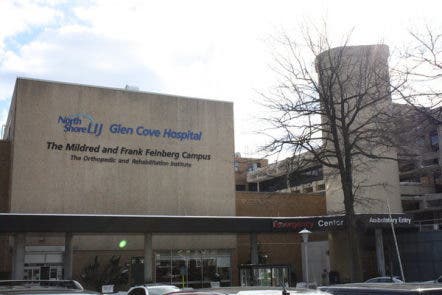
Glen Hove Hospital is preparing to become a temporary specialized treatment center for those affected by the Ebola virus, North Shore-LIJ officials said Thursday. The center would provide 24-hour care to any affected patients, in a specialized, separate unit without disrupting other services at the hospital.
Glen Cove is “ideally situated to serve as an isolated treatment unit and also house medical staff in the event they need to stay on the premises for a sustained period,” according to a North Shore-LIJ news release.
“We looked at all of the facilites across the health system,” a North Shore-LIJ spokesman told Patch. Glen Cove Hospital was selected because of its modern facility, ample space and separate entrance and enough flexibility in its design to accommodate patients and staff in the event of any confirmed cases of Ebola, he added.
Find out what's happening in Oyster Bayfor free with the latest updates from Patch.
The unit will be located in a separate, discreet area of the hospital equipped with a point-of-care lab and a separate entrance and exit.
In 2013, Glen Cove hospital was a target of proposed downsizing, prompting local rallies to maintain the facility as a community hospital. Since then, the hospital’s orthopedic surgery program was relocated to Syosset Hospital and psychiatric program was also moved, but it continues to operate as a full-service community hospital, the NS-LIJ spokesman said.
Find out what's happening in Oyster Bayfor free with the latest updates from Patch.
Glen Cove Mayor Reginald Spinello has been in close communication a hospital official and is receiving updates.
“So far this is what I’ve learned,” the mayor told Patch. “It appears that Stony Brook University Hospital will be the main center for research. A part of Glen Cove Hospital’s third floor, which has a separate entry and exit and a separate ‘point of care’ laboratory, will be used for the care and treatment of a patient. The staff treating the patient would reside in this area of the hospital. As I receive more information I will continue to let the public know.”
Hospital officials will hold a meeting with elected Glen Cove officials to lay out clinical protocols on Tuesday on Oct. 28 at NS-LIJ’s corporate headquarters in Great Neck, the North Shore-LIJ spokesman said.
The health system says its 16 hospitals and more than 400 outpatient facilities in the region can safely evaluate a suspected Ebola patient. Currently North Shore-LIJ is recruiting a volunteer team of critical care experts to provide care as it plans for a center in Glen Cove.
“In light of the public’s anxiety about Ebola, it’s clear that we need to develop a more-permanent solution to meeting public health needs in the event of a major infectious disease outbreak in the future,” said Michael Dowling, president and chief executive officer of North Shore-LIJ, in a statement.
Citing Gov. Andrew Cuomo’s designation of North Shore-LIJ as a regional resource during the Ebola emergency, “we have a responsibility to prepare and protect the communities we serve,” Dowling said.
“The global risk of Ebola is not going to disappear any time soon and the threat of other contagious viruses – such as Severe Acute Respiratory Syndrome (SARS), Middle East Respiratory Syndrome (MERS), the H1N1 virus and Methicillin-Resistant Staphylococcus Aureus (MRSA) – will always be with us,” Dowling added.
The North Shore-LIJ Health System is also pursuing the development of a biological containment unit to boost its preparedness and response to infectious disease outbreaks. Hospital officials have not yet determined the location of this multi-million-dollar facility, which could take as much as 18 months or longer to build.
Dowling said the project would be modeled after the Nebraska Medicine Biocontainment Patient Care Unit and the Serious Communicable Disease Unit in Emory University Hospital in Atlanta, which recently played a national role in caring for Ebola patients.
“North Shore-LIJ has always been at the forefront of efforts to protect our employees, patients, visitors and the community-at-large during times of crisis, as evidenced by our preparedness and response efforts during Superstorm Sandy in 2012, when we admitted about 300 patients evacuated from other New York City and Long Island hospitals, nursing homes and shelters,” he said.
“We are taking that same diligent approach in preparing for any potential Ebola patients who come to our inpatient or outpatient facilities,” he added.
North Shore-LIJ’s clinical and administrative leadership has put together a plan to ensure that any suspected Ebola cases are safely handled, without contaminating health system employees, facilities or other patients, the hospitals said. All North Shore-LIJ facilities have established isolation areas in the event they receive a suspected Ebola patient, and the health system has ambulances ready to transport those individuals to a facility capable of meeting their medical needs.
North Shore-LIJ claims its Ebola prevention protocols go above and beyond those recommended by the US Centers for Disease Control and Prevention. For example, to flag those potentially exposed to infectious disease, security guards are trained to ask everyone arriving at emergency rooms the reason for their visit, and whether they’ve traveled. In addition, the health system has invested $2 million in personal protection gear, the NS-LIJ spokesman said.
The health system has been testing the adequacy of those protocols at every hospital, ambulatory facility and physician practice where patients access services. The health system has already trained thousands of staff on how to wear and remove personal protective equipment.
Get more local news delivered straight to your inbox. Sign up for free Patch newsletters and alerts.