Arts & Entertainment
The (Illustrated) Story of Coffee
An exhibit of paintings by Steve Weinberg at Cafe Grumpy chronicles the coffee's journey from crop to cup.


It takes a lot of energy to travel the world, and then paint its portait. Good thing Steven Weinberg is a coffee lover.
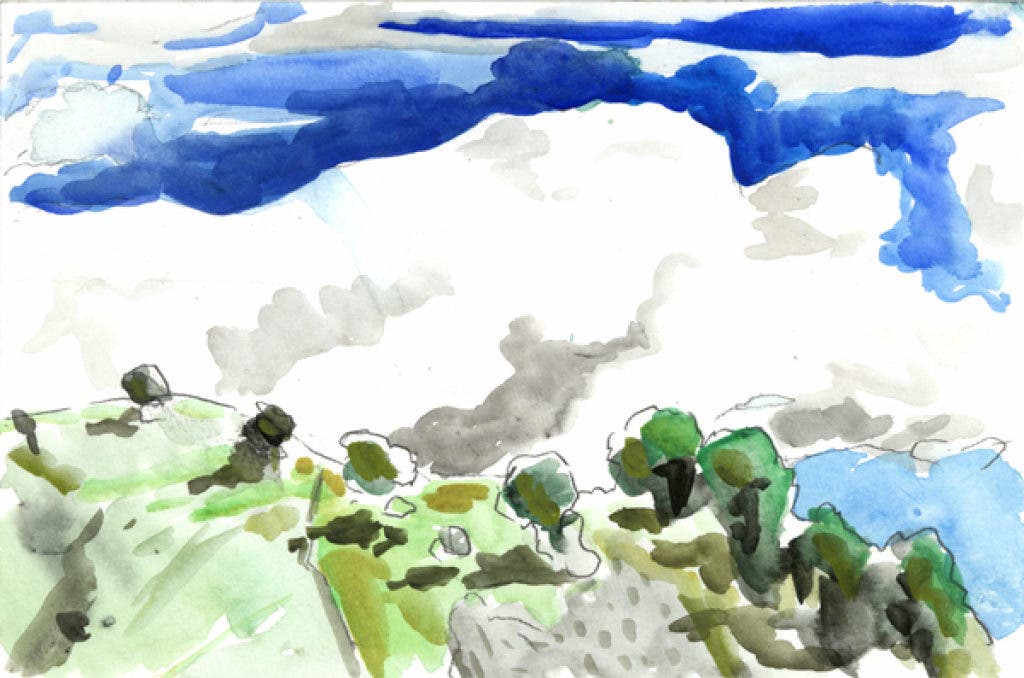
"Gigante," a new exhibit named after the tiny mountaintop village that inspired it, is being served up right now at on Seventh Avenue between 11th and 12th streets, and in a series of twelve watercolor paintings, the exhibit tells the story of the amazing bean.
Inspired by the weathered faces and vast mountaintop views of Gigante, Colombia (as well as his love for coffee), Weinberg says during world travels with girlfriend (Casey Scieszka, ),he realized that he had the desire to make the connection between the coffee he drank at Grumpy and the people on the farms that grew it.
Find out what's happening in Park Slopefor free with the latest updates from Patch.
So he and Scieszka traveled to Gigante, the tiny town farming town in the Huila Department, a place that is literally off the grid—there is no electricity there. The couple spent more than 10 grueling hours on buses and traveling up the mountain on the backs of motorbikes to get to the farm and spend quality time with the locals, who hike up and down the mountain on a daily basis to transport coffee.
The exhibit showcases portraits of the people that supplies Grumpy's Colombian blend (also named Gigante)—where they live, work and play.
Find out what's happening in Park Slopefor free with the latest updates from Patch.
"I really love coffee," said Weinberg. "It seemed like a really good opportunity to go to the source myself."
Grumpy's Gigante, a direct trade coffee, is grown by a relatively small co-op of only 82 total coffee growers, who produce a total of a thousand bags per year. These bags, made of beans carefully and meticulously cultivated by these quiet mountaintop dwellers, begin life as bright red berries which are dried, fermented and roasted, and journey down the mountain in bags on the backs of donkeys.
Weinberg personifies their journey and the people that make it happen through his portraits—the weather battered, but smiling faces of the farmers, the vast mountaineous landscapes that form the backdrop to where they live, the plants and animals.
There is a portrait of one of the farmers sitting and looking off in the distance, tired but content in his day's work. There are portraits of farmer José and his wife Marta.
He describes how the locals, who weren't accustomed to getting outside company very often, didn't know what to make of all if it. So watching him paint Marta's portait bewildered them, and made them laugh.
"They were like, 'ey, Marta!'," he said.
Originally from Washington, Weinberg has been an illustrator for four or five years as well as a painter, and recently collaborated with Scieszka to write and illustrate "To Timbuktu," a chronicle of his travels with her through nine different countries.
Since meeting studying abroad in Morrocco, the couple has since traveled to practically every corner of the world. In "To Timbuktu" their adventures include, teaching English in Beijing, eating at a menuless restaurant in Hanoi, and getting caught in a dust storm in Mali.
And although he and Scieszka have barely unpacked, he's already preparing for a brand new exhibit which will feature new work inspired by Colombia, and will take place in September at the Littlefield art space in Gowanus.
"It's just very inspiring and a really fun time," he said.
Who knew a little black bean had such a big story to tell?