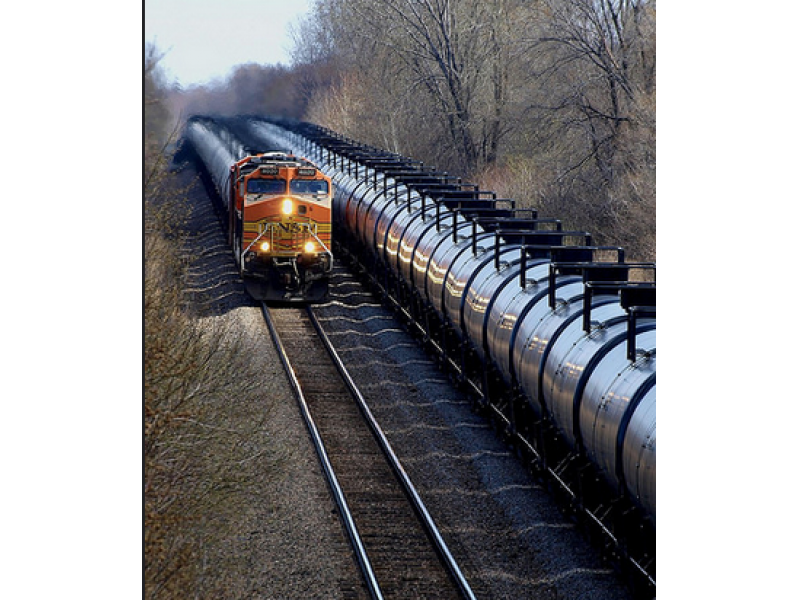
Following a series of out-of-state disasters involving the transport of crude oil by rail, New York State has taken a series of aggressive actions to improve the safety and reliability of the practice, officials said.
Last year the New York State Departments of Environmental Conservation, Transportation and Health, along with the Division of Homeland Security and Emergency Services, and the Energy Research and Development Authority conducted a coordinated review of safety procedures and emergency response preparedness for crude oil shipments. The agencies issued a report in April 2014 containing 27 recommendations for state government, federal government and industry to take to reduce risks and increase public safety in the transport of crude oil.
To date, state agencies have begun to implement all 12 state government recommendations and have completed five. Specifically, New York State has taken 66 actions to better prepare state and local responders in the event of a crude oil incident as detailed in a December 2014 progress report.
The state budget provided for eight new employees at the Department of Environmental Conservation and six at the Office of Fire Protection and Control dedicated to oil spill planning, training and response. The budget also increased fees for oil transported through New York to 13.75 cents per barrel from 12.25 cents for oil imported into the state, and 1.5 cents for transshipped oil, irrespective of whether the oil remains in New York or is transferred on to another state. In-state end users will be exempted from the fee increase and will remain at 12.25 cents per barrel.
Gov. Andrew Cuomo also initiated the hiring of five new Department of Transportation rail safety inspectors, which has allowed the Department of Transportation to increase its capacity to perform rail safety inspections across the state.
Track inspections at the beginning of December:
Find out what's happening in Pearl Riverfor free with the latest updates from Patch.
- CSX Mainline Track Inspection – Macedon to Warners – Federal Railroad Administration track inspectors examined approximately 60 miles of track and 1 switch along the CSX mainline between Macedon and Warners and found one critical joint defect, a missing bolt, which was repaired immediately.
- CSX Mainline Track Inspection – Tappan to Milton – Department of Transportation track inspectors examined approximately 51 miles of track and nine switches along the CSX mainline between Tappan and Milton and found five non-critical defects, including loose bolts, a loose switch point stop and missing cotter pins.
- CSX Mainline Track Inspection – Kingston to Selkirk – Department of Transportation and Federal Railroad Administration track inspectors examined approximately 43 miles of track and five switches along the CSX mainline between Kingston and Selkirk and found 14 non-critical defects, including an insecure switch heel; loose and missing fasteners on guard rails, loose and missing switch bolts, missing cotter pins, a loose switch point stop, and an improper emergency notification sign at a crossing.
- CSX Mainline Track Inspection – North Chili to Macedon – Department of Transportation track inspectors examined approximately 51 miles of track and 39 switches along the CSX mainline between North Chili and Macedon and found two critical defects, including a spike between the base of the rail and the tie plate, and a guard defect at a switch guard, which were repaired immediately. They also found four non-critical defects, including loose bolts, missing cotter pins and an insufficient number of fasteners on a segment of track.
- Kenwood Yard – Department of Transportation inspectors examined approximately two miles of track and 26 switches at the Canadian Pacific-owned Kenwood Yard in Albany and found one critical defect, a worn switch point, which was repaired immediately. They also found six non-critical defects, including loose or missing bolts, switch plates, rail joints and adjustable braces, and a section of track with fouled ballast.
In addition, inspection teams from the New York State Department of Transportation and the Federal Railroad Administration surveyed crude oil tankers at the CSX Corporation-owned Selkirk Yard in Selkirk (Albany County), Frontier Rail Yard in Buffalo (Erie County), and the Canadian Pacific-owned Kenwood Yard in Albany (Albany County).
The inspections focused on track, track hardware and tank car mechanical safety equipment, including wheels and brakes. The teams also performed hazardous materials inspections to ensure that equipment is in line with regulations, including valves, valve closures, and placards that indicate the cargo being shipped. They also checked tank car inspection and pressure test dates.
Find out what's happening in Pearl Riverfor free with the latest updates from Patch.
Get more local news delivered straight to your inbox. Sign up for free Patch newsletters and alerts.