Business & Tech
Hemlock Hill Looks to Expand After Receiving State Grant
The 70-year-old family-owned farm in Cortlandt Manor is one of the few remaining of its kind in the area. The family is working to expand thanks to a state agricultural grant.
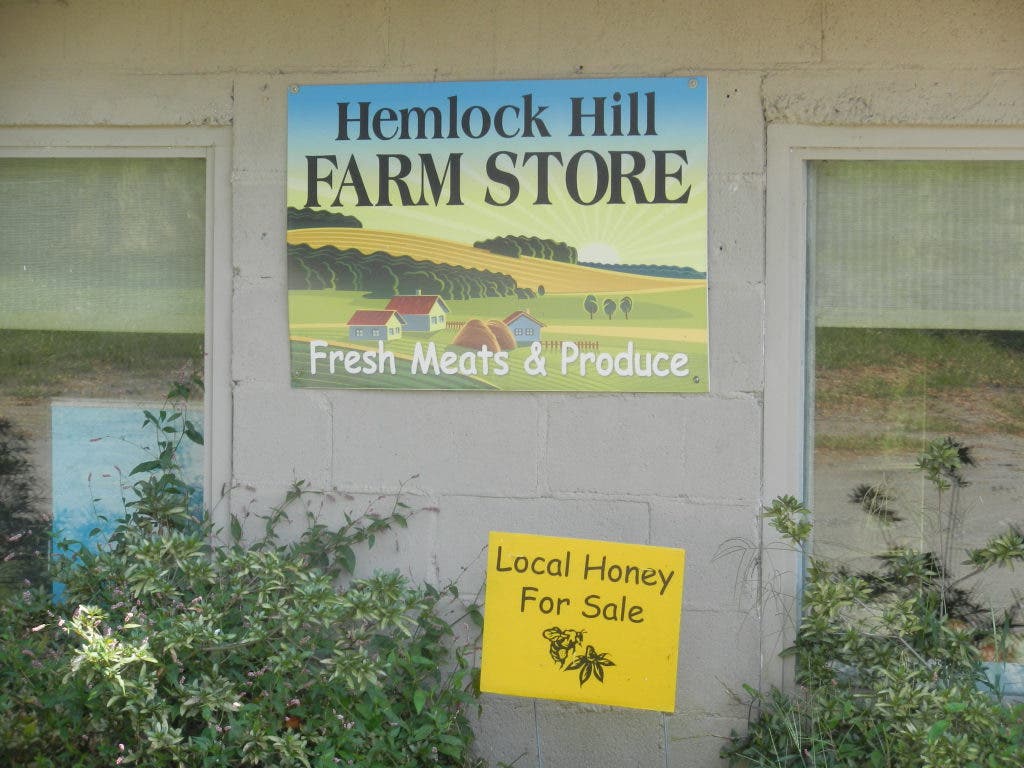


Set upon 120 acres of gently sloping hills and increasingly rare open space, Hemlock Hill Farm in Cortlandt Manor is many locals' go-to place to pick up fresh and organic produce, meat, dairy and honey. The DeMaria family that owns the farm is now working to expand their operations after receiving a Farmland Protection Grant from the New York State Department of Agriculture this summer.
Adhering to the values they grew up with, owner John DeMaria, 78, and his daughter Laura, 30, plan to expand their operations to reach a broader customer base. Having been in the organic food business for decades, the DeMarias see the public’s growing dedication to healthy organic and local foods as a cultural trend to take advantage of.
John learned to farm from his parents who founded Hemlock in 1939. He and his wife Rita have four daughters, Christina, Katie, Lisa and Laura; Laura now helps John run the farm and, in the family tradition, will eventually take over the entire operation.
Find out what's happening in Peekskill-Cortlandtfor free with the latest updates from Patch.
The DeMarias raise chickens, turkeys, ducks and geese, which you can catch frolicking around the grounds and cavorting by ponds. Lambs, goats and cattle also graze leisurely in the open fields. There are also pigs, rabbits, quail, and bees, which are used to make honey.
The DeMarias do not feed their animals hormones or antibiotics and have a store on site where the public can purchase any of their meats, cheeses and produce. During the harvesting seasons visitors are allowed to pick their own vegetables in the two gardens.
Find out what's happening in Peekskill-Cortlandtfor free with the latest updates from Patch.
Today, Hemlock is a livestock farm but decades ago, like many farm families at the time, the DeMaria’s sold milk to the dairy in Peekskill and apples to the cider mill. They also plowed and baled hay, and grew corn for their neighbors.
“I always loved the farm as a child. There used to be a lot of farms around here, mostly dairy farms, a few fruit farms and chicken farms,” said John DeMaria.
“We used to have an apple orchard, but we do not have too many fruit trees anymore. When they started to develop around here, the dairy left so there was not a market for that anymore. Most of the farmers converted to something else or moved upstate to places like Binghamton and Duchess County.”
In the late 1950s, when many of the neighboring farms started to sell to developers, the DeMarias were determined to hold on to Hemlock Hill. John’s father became terminally ill in 1957, causing John to receive an honorable discharge from the U.S. Army to return home to manage the farm.
Using his Cornell University education and skills learned while growing up as a farm boy, John implemented a few changes. He started raising hogs and selling to the market. He built a butcher shop on the farm and began to sell his products directly to the public. Hemlock still slaughters on site and sells directly to the public.
Today, Laura, who will eventually take over the business, reflects on her family’s struggle to hold on to the land, which has included the constant threat of foreclosure and difficulty with acquiring farm equipment.
“Every day the farm needs supplies that are hard to come by in this area,” Laura said. They often turn to upstate New York and Pennsylvania farms for the equipment they need.
But the DeMarias are now seeing a fruitful future, thanks to a grant received from the Farmland Protection Implementation Grant Program of the New York State Department of Agriculture and Markets in June. Through the program, Westchester County officials signed an agreement with John to purchase the conservation easement for the land, which sits on the Croton Reservoir watershed. The agreement prevents development of the land, protects the drinking water supply and allows for the operation of the farm.
The DeMaria family considers the agreement a boon to their operation and a hard earned victory.
“Hemlock Hill is important to the community because we are one of the last few producing privately owned farms. We have a lot of customers who are happy to have us here,” said John.
“Plus open space is important. We have enough houses.”
In addition to the grant, the DeMarias have recently paid off financial debt that John inherited when he was younger, “which allowed us to pay off our mortgages,” Laura said.
Laura points out that many people appreciate the farm because, although they can shop at places like Whole Foods for organic food, the products at those stores are mass-produced.
“We don’t mass produce here. We raise about 5,000 chickens at any given time and a hundred cattle. It really is not a lot.”
Organic is a label that the DeMarias take seriously, and they follow many government mandates in order to offer truly organic products that fulfill all state requirements
“There are many rules and we have to pay to follow them, which results in us having to raise our prices.”
Laura says that farmland grant will help Hemlock provide wholesome food to the community by enabling the family to make some improvements.
They plan to increase the number of businesses to which they sell, obtain a USDA slaughter license, and upgrade the slaughtering facility on site.
Currently, Hemlock Hill does custom slaughtering where the entire animal is butchered for one customer’s use.
They also hope to start obtaining cattle directly from breeders instead of at auctions. Laura would eventually like to open another store location off premises so they can expand their customer base.She also sees room for increased farming and educating the public on organic farming.
“There is a whole food movement now. People are starting to wake up and they want to know where their food is coming from,” Laura said. “I think we can educate people on this.”
Laura’s advice to people seeking organic choices is to go beyond mainstream sources and not just rely on an organic label.
“Do your research. Look in your back yard. You might just find a farm there.”
In Peekskill and Cortlandt’s case, you definitely will. Hemlock Hill farm is located on Croton Avenue. For more information visit their website, http://www.hemlockhillfarm.com/