Neighbor News
America at 250: Broadway, A National Treasure
Broadway Math and the real economic lessons hiding behind the curtain.

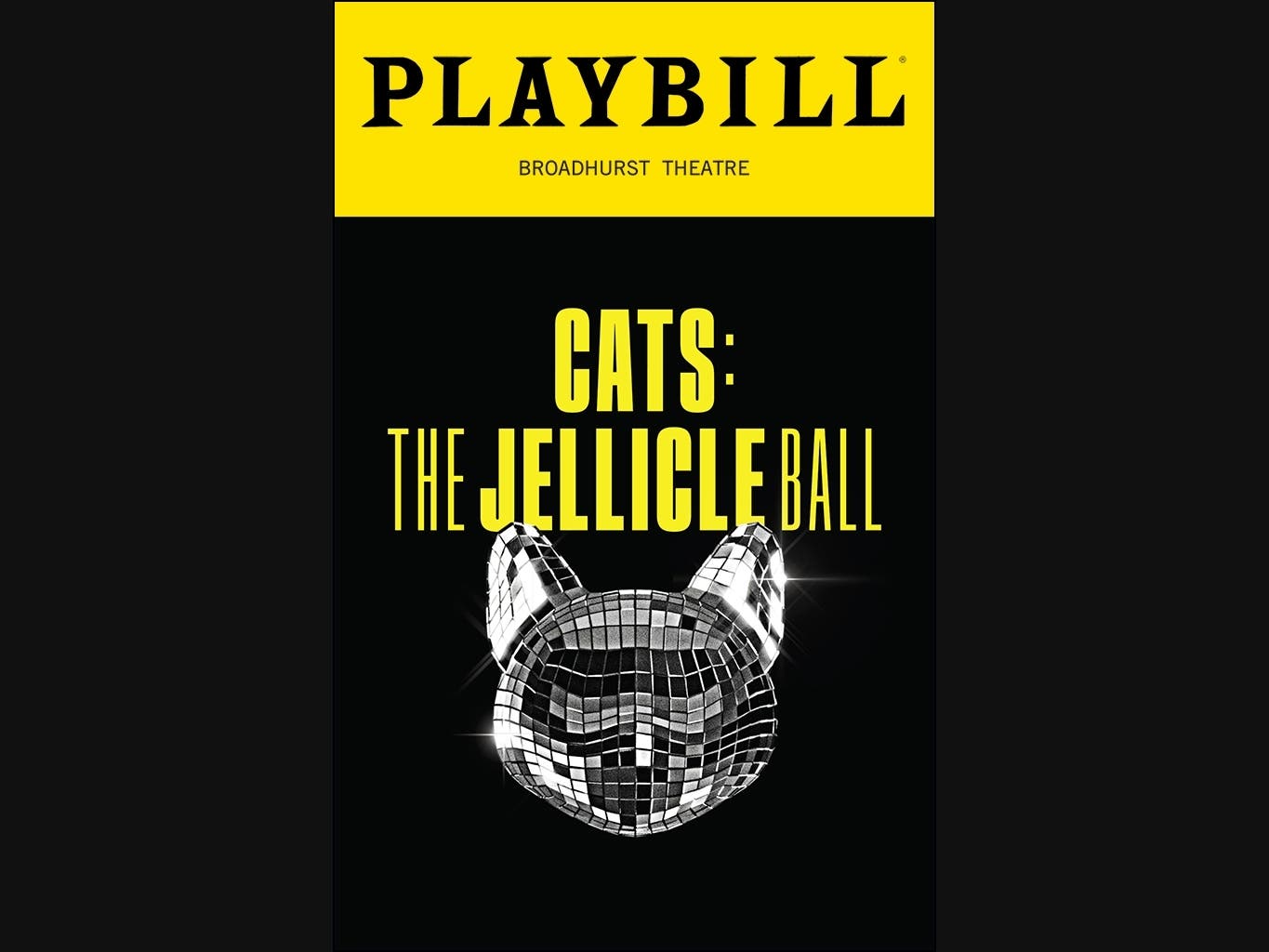
I love Broadway, and I thought I understood what a successful Broadway show looked like. People wanted to see it; critics liked it; awards followed; and, most important, night after night, people filled the theater. Then I read Naveen Kumar's New York Times essay about Cats: The Jellicle Ball, a reimagining of Andrew Lloyd Webber's Cats through the lens of New York ballroom culture. The production had received strong reviews, won three Tony Awards (Best Direction, Best Choreography, and Best Costume Design), and played to houses that were more than 90 percent full.
And after a 20-week run, 9 weeks after the Tonys, it closed.
That seemed strange enough to send me down another one of my rabbit holes. How can you sell almost everything you have and still not make enough money to stay in business? It turns out Broadway offers a surprisingly good answer, and a pretty good economics lesson along the way.
Find out what's happening in Pelhamfor free with the latest updates from Patch.
A Full Theater Is Not the Same as a Profitable Theater
We naturally think about Broadway the way we think about restaurants, baseball games, or almost any other business with seats. If most of the seats are filled, business must be good. But occupancy tells us only how many seats are occupied. It does not tell us what people paid for them, and on Broadway, that distinction matters enormously.
A Broadway theater has a fixed number of seats and performances. Once the curtain rises, an empty seat has no future value. You cannot put Tuesday night's unsold seats back on the shelf and sell them on Wednesday. Economists call that perishable inventory, and airlines and hotels face much the same problem. An empty airline seat disappears when the plane leaves the gate, an empty hotel room disappears when the night passes, and Broadway's inventory disappears at roughly curtain time every performance.
Find out what's happening in Pelhamfor free with the latest updates from Patch.
That creates Broadway's pricing problem. A producer would rather sell an otherwise empty seat for $80 a day or two before a performance than receive nothing. Still, if too many seats have to be sold for $80 when the economics of the production require substantially more, the theater can look full while the production loses money. The measure is not simply attendance but something closer to average realized ticket yield, or how much revenue each occupied seat actually produces.
The Jellicle Ball averaged roughly 92.8 percent capacity, with an average paid admission of about $108.58. That figure is the average amount actually paid across the production's mix of higher-priced and lower-priced seats, which is why it tells us more about financial yield than the advertised price of any particular seat. Ironically, those are still numbers many businesses would envy. Yet Kumar reported that the production cost is close to $1 million per week. So, once those numbers are placed side by side, the full houses begin to look less profitable.
Broadway's Million-Dollar Week
Broadway has an unusually rigid cost structure. Entertainment attorneys at Loeb & Loeb have estimated that a major musical can carry fixed weekly operating costs of roughly $650,000 to $800,000 before theater rent, with theater rent itself often adding another 6 to 7 percent of weekly gross receipts.
We know that these costs do not disappear because Tuesday's audience is smaller than Saturday's. Actors, musicians, stagehands, wardrobe crews, technicians, managers, and front-of-house staff still have to be paid. The scenery still has to move, the lights still have to come on, and the performance still has to happen.
This is where Broadway begins to behave differently from many businesses. The cost of allowing one additional person to sit in an otherwise empty seat is almost nothing, but the cost of putting on the performance in the first place is enormous. That difference between very high fixed costs and very low marginal costs helps explain something that otherwise seems irrational: Broadway producers discount tickets even when they desperately need more revenue.
The seat will disappear whether someone buys it or not, so Broadway has developed an elaborate system to capture varying levels of willingness to pay. There are premium seats, regular-priced seats, promotional discounts, group tickets, TKTS, rush tickets, lotteries, and standing room. The person sitting next to you may have paid considerably more or considerably less than you did for essentially the same two and a half hours of theater.
Economists call this price discrimination. Broadway calls it selling tickets.
Then Something Remarkable Happened
The final weeks of The Jellicle Ball make the economics especially revealing. According to Broadway League data, during the week before its closing week, the production grossed approximately $1.406 million and drew 9,441 people. During its final week, it drew 9,428.
Almost the same number of people came to the theater, yet the final week grossed approximately $1.828 million.
The difference was the price. The implied average paid admission rose from roughly $149 to nearly $194, while attendance barely changed. In other words, the real economic event was not that thousands of additional people suddenly decided to attend. Roughly the same number of people were willing to pay considerably more.
The closing announcement had changed the product. Before the announcement, a potential customer could think, "I'd like to see that sometime." Once the end date was fixed, the choice became, "See it now, or perhaps never see this Broadway production at all." Future supply disappeared, scarcity increased, and willingness to pay rose with it.
It is difficult to imagine a cleaner demonstration of supply, demand, and scarcity taking place in real time. More importantly for our original puzzle, it shows why capacity alone can be misleading. The theater was full before and afterward. What changed was the financial yield of those seats.
What About the $18 Million?
There is another number that makes the closing seem puzzling. The Jellicle Ball reportedly cost about $18 million to bring to Broadway. If you have spent that much putting a production together, why close it after only a few months rather than keep going and try to recoup the costs?
Because the $18 million has already been spent. Economists call it a sunk cost, and once the production has opened, the rational decision about whether to perform another week should not depend on how much was spent mounting the show months earlier.
The question is: Will the expected higher revenue from another week exceed the lower cost of operating another week? If not, then another week's $900,000 in revenue against $1 million in operating costs does not recoup the original production investment; it obviously increases the loss.
Broadway, therefore, contains one of economics' most painful lessons. Sometimes walking away from a large investment is more rational than continuing to protect it.
Why Does Broadway Keep Getting More Expensive?
This problem did not begin with Cats. In 1966, economists William Baumol and William Bowen identified something peculiar about the performing arts in their landmark study, Performing Arts: The Economic Dilemma (there were a lot of Theater Management majors in my MPA economic courses). Productivity and technology improvements transform many industries. A factory can automate production; software can allow one employee to accomplish work that once required several; and John Deere allows a farmer to cultivate far more land than earlier generations could manage. Live performance is a different animal.
A string quartet playing Beethoven still requires four musicians, and a Broadway musical cannot solve rising labor costs by asking the actors to perform twice as quickly. Workers in the arts still need wages that compete with wages in the rest of the economy, even though the fundamental productivity of live performance changes very little. This became known as Baumol's Cost Disease (the Baumol effect). It describes how wages rise in low-productivity, labor-intensive jobs to compete with high-productivity industries. Because human-driven sectors like healthcare, education, and the arts cannot easily increase output or automate tasks without sacrificing quality, their labor costs and prices rise significantly over time.
Over the decades, it has created relentless upward pressure on the cost of producing live art. Broadway can respond by raising ticket prices, finding premium buyers, reducing expenses where possible, developing shows that run for years, or receiving some form of outside support. In practice, my best guess is that it relies on some combination of all of them. If those rising costs cannot be offset through productivity gains, then some combination of higher ticket prices, outside support, or lower returns to investors eventually has to absorb the difference.
The Strange Health of Broadway
Here is where the story becomes more interesting because Broadway itself is not collapsing. The Broadway League reported that the 2025–26 season generated approximately $1.91 billion in ticket sales and drew roughly 14.6 million admissions. Those are nominal dollars, not adjusted for inflation, so the headline figure should not be read by itself as proof that Broadway's underlying economic health has improved by the same amount. That means we have to hold two seemingly contradictory ideas at the same time. Broadway can be financially healthy as an industry while individual Broadway productions remain extraordinarily fragile.
The business has always been risky. Even in strong pre-pandemic years, only a minority of productions fully returned their investors' money. The economics, therefore, resemble those of venture capital more than those of a conventional retail business. Many investments fail, a smaller number succeed, and an extraordinary hit can succeed for years or even decades.
That helps explain the importance of shows such as The Lion King, Wicked, and Hamilton. Their outsized success helps sustain investor appetite for a market in which most new productions face far less certain outcomes. The portfolio works because the possibility of an extraordinary winner helps justify accepting numerous failures.
But rising costs introduce another question. What happens when the cost of failure becomes so high that rational investors become increasingly reluctant to take the risk in the first place?
For inspiration, turn the calendar back to these three examples:
·The Producers (1967 & 2005). This classic satire is entirely predicated on Broadway math. Timid accountant Leo Bloom realizes a producer can make more money with a definitive flop than a hit. Since nobody audits a failing play, they raise $2 million from hundreds of elderly investors for a show that only costs $60,000 to produce, planning to pocket the rest.
·The Muppets Take Manhattan (1984). The plot highlights the struggle of securing a Broadway budget. After being swindled by a phony producer, Kermit discovers the harsh reality of "capitalization" when a legitimate producer agrees to back their show, but only if they can secure outside investments to cover the weekly theater overhead.
·All That Jazz (1979). Directed by Bob Fosse, this semi-autobiographical film features stressed-out money men keeping a close eye on mounting rehearsal costs and over-budget set designs. The plot shows the backing producers taking out a life insurance policy on the workaholic director, realizing they would make a massive profit if he died before opening night!
The Cost of Playing It Safe
The original Cats was hardly an obvious commercial proposition. A nearly plotless musical based on poems by T.S. Eliot, populated by adults dressed as cats, does not sound like something created by a focus group. It ran on Broadway for 18 years.
Broadway history is filled with similarly improbable ideas. Rent, Hamilton, and A Chorus Line all contained elements that could easily have looked risky before audiences embraced them. For someone who is not creative, that is one of the strange features of creative markets. Nobody knows with certainty which strange idea will become the next obvious idea.
As production costs rise, investors may rationally prefer familiar intellectual property, famous performers, revivals, and concepts with established audiences. From an individual investor's perspective, that makes perfect sense. From Broadway's perspective, however, excessive caution creates another kind of risk. An industry built on discovery can eventually become less willing to discover.
Broadway's Value Does Not Stop at the Box Office
There is another reason society might care about this beyond the investors who lost money on The Jellicle Ball. Broadway creates economic activity that Broadway producers themselves cannot capture. In its study of the 2018–19 season, the Broadway League estimated that Broadway contributed $14.7 billion to New York City's economy and supported approximately 96,900 jobs. In that same season, 65 percent of Broadway admissions came from visitors from elsewhere in the United States and from abroad.
Those visitors sleep somewhere, eat somewhere, use transportation, shop, and often stay in the city for several days. The Broadway producer does not receive a percentage of the restaurant bill after the show or a share of the hotel room booked by someone who came to New York partly because of Broadway.
Economists call benefits like these positive externalities. Someone creates value that spills beyond the transaction in which it was created. That complicates our Broadway equation again. A production may fail to generate sufficient private returns for its investors while still creating economic, artistic, or cultural value for others.
Who Should Pay for Culture?
New York already recognizes some of this through tax incentives for theatrical production. Britain has made a different policy choice through Theatre Tax Relief, which provides substantial support for qualifying theatrical productions.
Neither of these models offers an obvious answer. Public support raises questions about who receives assistance, who decides which productions qualify, and why taxpayers should subsidize a commercial entertainment business. Too much government protection can also weaken the financial discipline that forces producers to respond to audiences.
But the opposite question deserves to be asked as well. If cultural production is left almost entirely to private investors and market pricing, what kinds of work will those economics encourage, and what kinds will they make increasingly difficult to produce?
That is not an argument that every Broadway production deserves to survive. Nor is a Broadway closing the same thing as a cultural work disappearing. A show may continue Off Broadway, tour the country, move to another city, produce a cast recording, license future productions, or find another life entirely.
The narrower and more interesting question is what kinds of culture Broadway's particular cost structure can sustain.
America at 250
This is where my Broadway rabbit hole unexpectedly brought me back to stuff I keep encountering while thinking about America at 250. For instance, we talk about American institutions as though they simply appeared and then became permanent parts of national life. As we have examined in earlier articles, they did not; they are structures built from choices about who pays, who benefits, who takes risks, how workers are compensated, and what society considers worth sustaining.
Broadway is one of those structures. It is art, tourism, employment, real estate, organized labor, private investment, and government tax policy, all operating simultaneously inside a few dozen theaters in Manhattan.
The market did not necessarily fail The Jellicle Ball. No, no, no, as if on cue, the market worked exactly as markets are supposed to work (-: Audiences demonstrated how much they were willing to pay; producers compared that revenue with their costs; investors absorbed the risk; and when the expected economics no longer justified another week, the production closed.
The more interesting question comes after that calculation. The things a society considers valuable and the things a private market can profitably produce are not always identical, and recognizing that difference does not require us to reject markets or assume that government has a better answer.
That may be the real economics lesson hiding behind a Broadway curtain. Markets are remarkably good at answering the question we give them: what can be produced profitably under these conditions?
The harder question belongs to us. Are those the conditions we want?