Neighbor News
America at 250: The Colonies Came of Age in the Age of Reason
How habits of observation, evidence, and consent helped turn British colonies into an American republic.

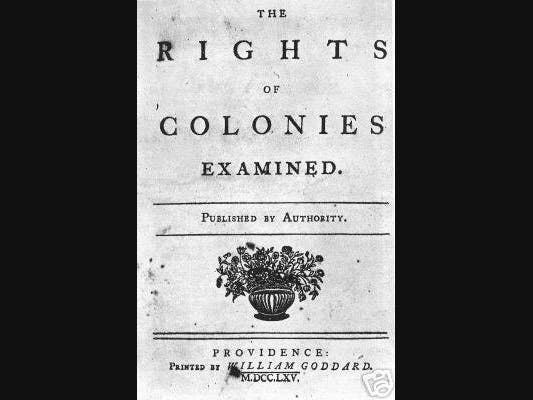

The American Revolution did not happen beside the Enlightenment. It happened inside it. The same century that taught educated Europeans and Americans to study nature through observation, measurement, experiment, and reason also taught them to examine power in a radically new way. Authority was no longer something to be accepted simply because it had been inherited from antiquity. It could be questioned. It could be tested against evidence. It could be judged by whether it served human liberty, public order, and the consent of the governed.
This is why the American founding belongs not only to military history, constitutional history, or patriotic memory. It belongs fundamentally to intellectual history. As we mark the nation's 250th anniversary, we are looking back at a political coming-of-age shaped by a generation taught to believe that both nature and government could be understood, improved, and, if necessary, redesigned. The ideas did not make the Revolution inevitable, but they made it imaginable.
I. The Enlightenment Teaches a Habit of Mind
Find out what's happening in Pelhamfor free with the latest updates from Patch.
To understand why the revolutionary generation acted as it did, one must look at the tools its members kept on their desks. They lived in a world of instruments, maps, pamphlets, diaries, almanacs, and weather logs. They were obsessed with tracking reality, treating the Enlightenment not just as a collection of abstract theories, but as a practical method for making sense of disorder.
When Sir Isaac Newton demonstrated that the universe operated according to predictable, discoverable mathematical laws, he did more than advance physics. He helped change the way educated people imagined the world. Nature was not merely mysterious or chaotic. It could be studied. It could be measured. It could be understood. That insight had political consequences. If nature could be understood through laws, perhaps human society could be examined through reason as well.
Find out what's happening in Pelhamfor free with the latest updates from Patch.
John Locke applied this kind of reasoning to political authority, arguing that governments derive their legitimacy from the consent of the governed rather than divine right. Charles-Louis de Secondat, Baron de La Brède et de Montesquieu, analyzed the mechanics of power, emphasizing the importance of separating the branches of government to preserve liberty and institutional balance. These ideas taught the same underlying lesson: inherited authority was not beyond examination. The world was legible if one studied it carefully enough.
In the American colonies, this reasoning became more than philosophy. It became a survival tool. Colonists lived across a vast, unpredictable continent shaped by dense forests, uncertain weather, frontier conflict, fragile economies, and long distances. To navigate it, they had to become close observers of their environment.
When Benjamin Franklin founded the American Philosophical Society in 1743, he dedicated it to the promotion of useful knowledge. When Thomas Jefferson filled his journals with observations of weather, plants, and seasonal change, or when George Washington recorded daily conditions at Mount Vernon, they were practicing a deeply ingrained cultural habit. Disciplined observation of the world became one of the intellectual habits that made disciplined governance imaginable.
II. The Colonial Laboratory
America became a powerful testing ground for Enlightenment ideas because colonial society, while deeply unequal and bound to British law, was less fixed than much of the Old World. There was no titled aristocracy on the European model, and colonial institutions were still young enough to be argued over, adapted, and rebuilt.
The colonies became a laboratory for institutional design. Through local assemblies, town meetings, newspapers, pamphlets, committees, voluntary associations, religious communities, trade networks, and scientific societies, Americans did not simply borrow European philosophy; they translated it into daily practice.
We see this clearly in how they approached the physical continent. When European naturalists claimed that America's climate was swampy, inferior, or degenerate, American observers did not simply answer with patriotic rhetoric. Jefferson, Madison, Franklin, and others treated climate as a subject to be answered through evidence. They gathered observations, recorded temperatures, studied plants and animals, and tried to prove that the American environment could be understood on its own terms.
Of course, this Enlightenment language of liberty existed alongside slavery, Indigenous dispossession, gender exclusion, and deep inequalities that the founding generation often failed to confront. That contradiction does not weaken the story. It makes it more honest.
The same generation that spoke of natural rights also built a republic that denied those rights to many people. The same culture that prized reason and evidence often used both selectively. The Enlightenment gave Americans a language of liberty, but it did not guarantee that they would apply it fully or justly.
Still, the habit of mapping a coastline, measuring a storm, tracking a crop, or recording a public grievance trained the colonial mind to expect order, accountability, and explanation. Americans were learning to test authority against evidence. They were turning abstract reason into concrete practice.
III. Political Crisis Turns Ideas into Action
The critical acceleration occurred between 1774 and 1776, when the intellectual and political timelines fused into a single revolutionary moment.
When the British Parliament attempted to impose taxes and policies without colonial representation, it was not merely a matter of triggering an economic grievance. It violated the colonists' expectations of consent, rights, and legitimate authority. The imperial crisis forced an immediate operational response. The colonists did not just riot. They organized.
That organization depended on communication. The Revolution was carried not only by armies and assemblies, but by letters, newspapers, pamphlets, petitions, sermons, broadsides, and committees. Ideas moved across distances because colonists built networks capable of carrying them. In that sense, the Committees of Correspondence were more than instruments of protest. They were Enlightenment infrastructure: systems for gathering information, comparing grievances, testing arguments, and turning scattered local anger into a shared political cause. They convened the Continental Congress to coordinate a continent-wide response. They used newspapers, broadsides, sermons, petitions, and pamphlets to turn scattered grievances into a shared political argument.
Thomas Paine's Common Sense captured this transformation with unusual force. Paine used plain language and sharp logic to argue that monarchy was unreasonable, hereditary rule was absurd, and an island should not permanently govern a continent. His pamphlet did not invent the Revolution, but it gave ordinary readers a way to see independence as common sense.
By the time Thomas Jefferson recorded weather observations in Philadelphia during the summer of 1776, the gesture belonged to a broader world of disciplined attention. The author of American independence was taking the measure of the physical world while helping to reshape the political one. To his generation, measuring a storm and constructing a republic belonged to the same discipline: meeting disorder with observation, reason, and design.
IV. From Ideals to Institutional Design
The ultimate achievement of the American Enlightenment came a decade later at the Constitutional Convention of 1787. This was the moment abstract political philosophy was converted into a durable institutional design.
The delegates did not try to build a utopia. They acted more like political engineers than dreamers. They took Montesquieu's separation of powers and turned it into the architecture of the federal government. They took Locke's idea of consent and placed it inside a functioning electoral system. They built checks and balances, federalism, representation, and a mandatory national census into the republic's structure. The Constitution was not only a statement of ideals. It was a system designed to manage power.
That design was imperfect from the start. It compromised with slavery. It excluded women from formal political power. It left Indigenous nations exposed to expansion and dispossession. It did not resolve the Revolution's deepest contradictions. But it did reflect an Enlightenment confidence that political power could be studied, divided, restrained, balanced, and institutionalized. The Constitution became a durable framework for managing the unpredictable currents of human nature, drafted by a generation trained to believe that disorder could be studied, anticipated, and governed.
V. A Legacy of Attention
By the time Thomas Jefferson died on July 4, 1826, exactly fifty years to the day after the adoption of the Declaration of Independence, the world that had produced the Revolution was already passing into history. The Enlightenment era was yielding to a new century shaped by Romanticism, emotional expression, industrialization, and new forms of political conflict.
The Enlightenment did not solve every human contradiction, nor did it cure the young nation of its founding flaws. But it did give the revolutionary generation a language, a method, and a character:
·Observe carefully.
·Argue publicly.
·Test authority against evidence.
·Build durable institutions.
·Trust that human beings, however imperfectly, can use reason to confront disorder.
Seen this way, the painstaking weather logs kept by the founders take on a much grander meaning. They were part of the same Enlightenment habit that shaped pamphlets, committees, congresses, constitutions, and systems of self-government. They were not merely watching the sky. They were practicing a way of seeing the world.