Neighbor News
America at 250: The Discipline of the 0.4%
What the Knicks' NBA Championship Parade Revealed About America at 250

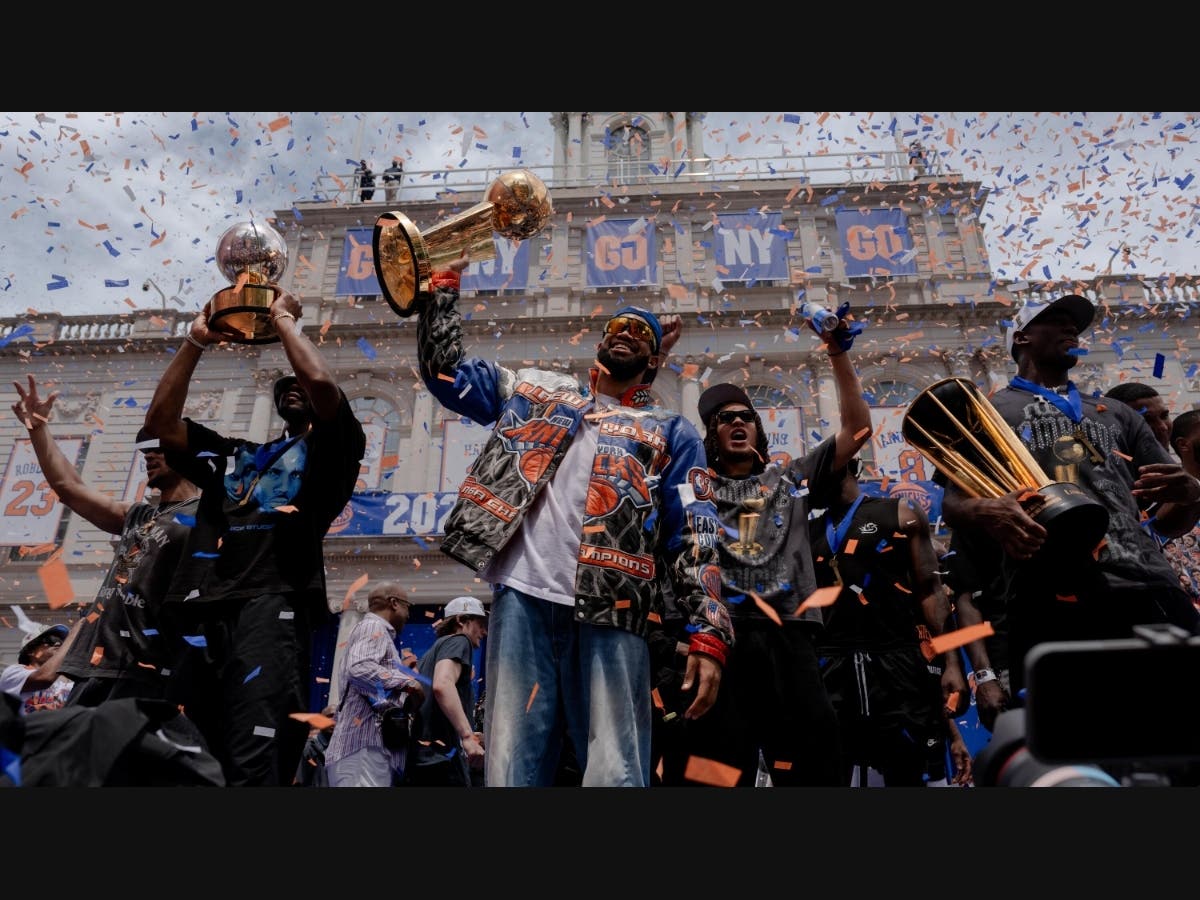

Standing on the steps of City Hall, surrounded by a sea of orange and blue, Mayor Zohran Mamdani reminded New Yorkers of a statistic that should have ended the basketball season. Eight days earlier, with nine minutes and 33 seconds remaining in the fourth quarter of Game 4 of the NBA Finals, the New York Knicks trailed the San Antonio Spurs by 20 points. The predictive models, analytics engines, and sports betting algorithms all reached the same cold conclusion: New York had just a 0.4 percent chance of winning the game.
The crowd at City Hall already knew what happened next. They had watched the improbable comeback, witnessed the series turn, and were now celebrating a championship 53 years in the making. But as the mayor spoke, it became clear that he was not only talking about basketball. He was talking about the space between probability and action, focusing on the exact moment when people decide whether the odds are allowed to determine what happens next.
As the United States approaches its 250th anniversary, that question feels unexpectedly familiar. We arrive at the Semiquincentennial surrounded by civic fatigue, institutional cynicism, and a growing sense that many of our systems are too strained to repair. Yet in Lower Manhattan, on streets layered with revolutionary memory, the mayor's rhetorical turn offered a useful lens for thinking about the American story. He took a mathematical probability and transformed it into a civic virtue, putting language around one of the defining habits of American life.
Find out what's happening in Pelhamfor free with the latest updates from Patch.
The Inevitability Trap
The greatest flaw in how we teach and remember history is that we almost always write it backward. We know the ending. We know the Continental Army defeated the British Empire, the Constitution survived the summer of 1787, the Union held in 1865, and the Civil Rights Act was passed in 1964. Because these milestones are now carved into monuments and textbooks, we often project inevitability onto them, treating them as if they were bound to happen when they were not.
If we look closely at the mechanics of how this nation was built, a more demanding truth emerges: America did not survive because people believed. America survived because people acted before they had a rational reason to believe.
Find out what's happening in Pelhamfor free with the latest updates from Patch.
That reality shifts the conversation away from vague optimism and toward something more rigorous. Hope is a discipline, not a feeling. It is the daily, often thankless work of acting as if a better outcome is possible, even when the evidence is incomplete, the systems are fragile, and the odds appear unforgiving. The institutions that built this country were not forged by people certain of victory; they were built by people who treated action as a responsibility, even when success remained highly uncertain.
A National Habit of Building Before Belief
This discipline is evident across the republic's foundational building blocks.
Benjamin Franklin and the Continental Congress did not help build a postal network because independence was a safe bet. They built it because independence would be impossible without communication, constructing the infrastructure a nation would need before the nation itself fully existed.
The delegates who gathered in Philadelphia in 1787 were not operating with confidence that history would reward them either. The Articles of Confederation exposed deep weaknesses; Rhode Island refused to attend; regional interests collided; and the convention nearly collapsed more than once. Yet the delegates kept negotiating, revising, compromising, and building. That was not optimism; it was disciplined institution‑building in the dark.
Similarly, George Washington did not accept the presidency because the new republic was secure. He accepted it because the republic was fragile, the office itself was an experiment, and the country was young, divided, indebted, and untested. Stewardship meant stepping forward when failure remained a real possibility.
The Civil Rights Movement was not sustained by certainty either. Its achievements were built through decades of organizing, sacrifice, legal strategy, moral pressure, and physical courage. Citizens acted long before the political weather shifted, refusing to wait for the odds to turn in their favor before demanding that the nation live closer to its own promises.
Across all of these examples, the pattern is not that success was assured, but that people refused to treat probability as fate. The 0.4 percent stops being a mathematical outlier and becomes a civic habit. And that habit did not disappear into the archives. It still shows up in the civic language of American cities.
The Wager of the Long Shot
That brings us back to New York City and to the message echoing from the steps of City Hall.
When Mayor Mamdani asked, "What is New York if not 99.6 percent of the world stacked against you?" he was tapping into a deeply familiar civic identity. He was describing the startup founder working from a cramped apartment, the artist juggling three jobs, the first‑generation college student navigating an unfamiliar system, the immigrant entrepreneur betting everything on a new neighborhood, and every family trying to stay in a city that constantly tests whether they can afford to remain. New York is a city full of people who understand that the odds are real, but not final.
The mayor's speech also kept that idea grounded in the economics of daily life. The 0.4 percent was not only a metaphor for championships or revolutions; it was the space where people make choices under constraint. A player takes less money, giving the team room to build. A family tries to make rent in a city that keeps getting more expensive. A student keeps showing up when the system feels unfamiliar. An immigrant entrepreneur risks scarce savings on a storefront because the alternative is surrender.
In that sense, the 0.4 percent is not fantasy. It is decision‑making under pressure, the disciplined choice to keep investing effort when the expected return appears irrational.
That is not only a New York trait; it is one of the core premises of the American experiment. As we mark 250 years of this complicated, unfinished republic, the lesson should not be a self‑congratulatory celebration of past outcomes. The more important story lies in the behavior that occurred before the outcomes were known.
Closing Thoughts
The lesson of American history is not that improbable outcomes always happen. They often do not. The lesson is that some outcomes become impossible the moment people stop acting as if they might still be possible. That is what made the mayor's remarks resonate beyond sports. He was not celebrating a championship; he was naming a civic behavior. The American experiment began in 1776 as a wager that the improbable could become real. Two hundred fifty years later, the question is whether we still have the discipline to act before success appears rational.