Neighbor News
America at 250: How a Republic Introduces Itself
Texas's new reading list reveals how children begin learning about the American Revolution long before they formally study it.

Before children can study a revolution, they first have to recognize a nation.
In a Texas kindergarten classroom, George Washington does not first appear as commander of the Continental Army, presiding officer of the Constitutional Convention, or the nation's first president. He arrives through a picture book and a story about a cherry tree. He is not yet a figure to be analyzed or debated. He is simply someone associated with leadership and honesty.
A year later, Benjamin Franklin enters the child's world, not as a diplomat bargaining in Paris, but as an eccentric inventor experimenting with electricity. Paul Revere arrives as a man on horseback with a memorable name, while "Yankee Doodle" provides part of the cultural soundtrack.
Find out what's happening in Pelhamfor free with the latest updates from Patch.
By second grade, the scope broadens just enough to introduce the young protagonist of Nathaniel Benchley's Sam: The Minuteman. The story brings the Revolution down from the height of marble monuments and places it within the life of a family and a village.
When Texas recently approved a statewide reading list specifying nearly 200 required texts from kindergarten through twelfth grade, public debate followed a familiar script. Critics saw political maneuvering and worried about what had been excluded. Supporters saw a restoration of classical literature, shared knowledge, and traditional virtues.
Find out what's happening in Pelhamfor free with the latest updates from Patch.
Beneath that ideological crossfire, however, lies a much quieter and older mechanism of civic design. Viewed across six school years, the list is not merely a collection of books. It is an architecture of civic memory. Fifth grade is where Texas formally turns its curriculum toward the American Revolution, but the historical bullpen has been warming up for years.
Recognition Before Interpretation
For much of human history, political identity was connected to blood, land, dynasty, or crown. A person belonged to a kingdom because previous generations of the family had belonged to it.
The American republic rested on something different. Unlike monarchies, whose legitimacy traditionally depended upon inheritance and dynasty, the United States rested on an argument. It claimed that legitimate government arose from natural rights, popular consent, and the authority of the governed.
Arguments are not passed down genetically. They have to be taught, and that teaching cannot begin with critical analysis. An eleven-year-old cannot be expected to understand colonial taxation, Enlightenment philosophy, constitutional government, or the enormous gamble of 1776 if the names, places, and moral vocabulary of the period feel completely unfamiliar.
This is where we often misunderstand how education works. We focus endlessly on selection, asking which books make the list and which are left out, while giving far less attention to sequencing.
A curriculum is not just a list of texts. It is a timeline of cognitive readiness. It chooses the order in which understanding becomes possible. Before children can make sense of a system, they need characters. Before they can evaluate an argument, they need familiar stories. Recognition must precede interpretation.
By the time Texas students reach the Revolution in fifth grade, they are no longer meeting a room full of strangers. They are returning to familiar names whose stories have gradually become connected.
When the Stories Become a Revolution
In fifth grade, the isolated picture books, biographies, poems, and nursery rhymes begin to form an overarching political drama.
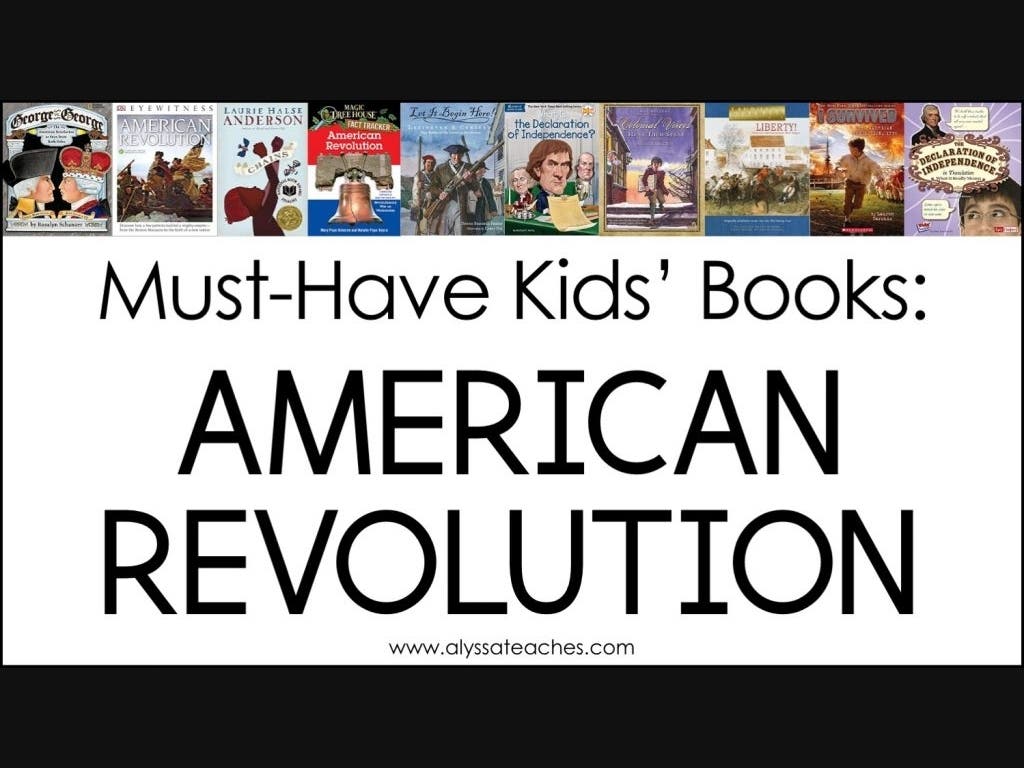
Students read Patrick Henry's "Give Me Liberty or Give Me Death" speech. They encounter an explanatory version of the Declaration of Independence, the Mayflower Compact, and a book about the creation of the Constitution. Longfellow's "Paul Revere's Ride" transforms the familiar first-grade figure into the central character of a sweeping national poem.
The people have been introduced, and the language has begun to sound familiar. The symbols now acquire historical meaning. Individual stories start to connect to political ideas, and political ideas begin to connect to a revolution.
Watching this sequence unfold reveals a fundamental aspect of how civic memory operates. Fifth grade is not where children begin learning about the American Revolution. It is where they finally begin studying something they have been learning for years.
Before children study the American Revolution, they begin learning about America.
That does not mean they have learned the whole country, much less the whole history. They have begun recognizing a particular civic inheritance through names, stories, documents, symbols, and memorable phrases. They have been given the first pieces of a national vocabulary.
A Foundation Built for Complexity
Recognizing this mechanism does not require us to praise every choice on a state reading list. In fact, understanding how educational scaffolding works forces us to ask a more difficult question about its design.
Every early introduction requires simplification. A seven-year-old cannot absorb the nuances of the Constitution of 1787, the divisions within the colonies, or the competing interests surrounding independence. Washington may begin as a moral example before later being understood as a gifted leader, a cautious politician, a slaveholder, and a deeply complicated historical figure.
The danger of early scaffolding is not that it simplifies. It has to simplify. The danger arises when the initial framework is constructed too rigidly to accommodate what students will eventually learn.
If the story handed to a young child is too brittle, it may shatter when fuller history arrives. When students later confront the contradiction between revolutionary liberty and slavery, or the consequences of independence for Native nations, an overly fragile founding story can collapse into disillusionment.
A civic story should not collapse when complexity arrives. It should be built to absorb it. A well-designed civic foundation is not intended to protect children from difficult history forever. It should give them enough familiarity and confidence to confront that history honestly as they grow.
The measure of early civic storytelling is whether the first introduction to the nation can mature into an enduring and truthful relationship with its past. Early stories do not need to tell children everything at once, but they must leave room for everything that should eventually follow.
The cherry tree can serve as an initial handshake with someone named Washington, but it cannot be the last word about him. Paul Revere can first arrive as a heroic rider, but later students should be able to ask what Longfellow changed, what he emphasized, and why the poem became more memorable than the complicated historical event it describes.
Simplification and truth are not necessarily enemies. They can be stages of development, provided the early story remains open enough to mature as the student does.
The Republic in the Classroom
As America marks its 250th anniversary, we are routinely tempted to look for the machinery of self-government in highly visible places: Supreme Court rulings, presidential elections, congressional battles, and constitutional disputes.
A republic is sustained by quieter institutions as well. It lives in the patient, multiyear process of populating young minds with shared reference points, so that when citizens eventually enter the public square to disagree, as they inevitably will, they are at least able to speak some common civic language.
This does not require every child to interpret the founding in the same way. A shared inheritance is not the same thing as a mandated conclusion. Students can encounter the same Declaration and ask different questions about its promises, contradictions, achievements, and failures.
The purpose of shared civic memory is not to eliminate disagreement. It is to give disagreement a common subject. A constitutional republic does not need every citizen to reach the same conclusion, but it does depend upon citizens understanding enough of the same story to make their differences intelligible to one another.
Nations are not inherited automatically. They are introduced, one story at a time, to children who arrive as strangers to the past.
The endurance of the American experiment depends not only on constitutional mechanics but also on our willingness to introduce each generation to a shared inheritance and then trust them to understand it more deeply as they grow. A republic renews itself whenever its children move from recognizing the national story to examining it, questioning it, and deciding what its unfinished promises require of them.