Neighbor News
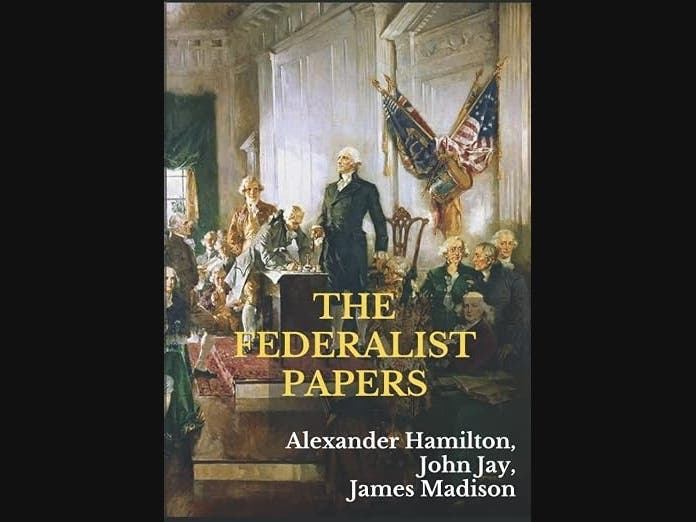
America at 250: Madison vs. Hamilton, The Federalist Papers, 2026 Edition
California vs Defense Production Act (DPA): The Sable Pipeline Fight as a Constitutional Stress Test


I. The 2026 Fault Line: A Crisis the Founders Would Recognize
The helicopters arrived before dawn, thudding low over the Santa Barbara coastline and settling near a cluster of rust-red offshore platforms that had been largely dormant for more than a decade. Within hours, the federal government announced an extraordinary move: invoking the Defense Production Act (DPA) to force the immediate restart of the Santa Ynez Pipeline System. The infrastructure is owned by Sable Offshore Corp. This Houston-based energy firm purchased ExxonMobil's idled Pacific assets with the explicit and fiercely resisted goal of pumping crude through the same network responsible for California's 2015 Refugio Beach oil spill.
Washington framed the decision entirely in the language of wartime necessity. Conflict in the Middle East had constricted global oil flows through the Strait of Hormuz, and California, which imports more than 60 percent of its refined crude from overseas, suddenly appeared to be the weakest link in the nation's energy chain. Federal officials warned that a prolonged supply shock threatened not only the civilian economy of the West Coast but also the operational readiness of Pacific-facing military installations.
Find out what's happening in Pelhamfor free with the latest updates from Patch.
California's response was immediate and defiant. State regulators issued cease-and-desist orders. County prosecutors filed criminal charges. The attorney general sought emergency injunctions, while local activists revived raw civic memories of both the 1969 and 2015 ecological disasters.
What looked at first like a familiar partisan fight over a pipeline quickly revealed itself as something older and deeper. Once the vocabulary of carbon intensity and coastal permitting is stripped away, the shape of the conflict becomes unmistakable. This is the oldest unresolved tension in the American constitutional order: who decides in a crisis, the national government or the states.
Find out what's happening in Pelhamfor free with the latest updates from Patch.
The Founders would recognize this fight instantly.
II. The Hamiltonian Position: National Power in an Emergency
Alexander Hamilton believed that a republic incapable of decisive action in a crisis was a republic destined to fail. In Federalist No. 23, he wrote that the federal powers to provide for the common defense "ought to exist without limitation" because no one could foresee the variety of national emergencies the country might face.
To Hamilton, national survival was the supreme law of the Union. The purpose of replacing the Articles of Confederation with a stronger federal framework was to ensure that local interests could not paralyze the collective defense.
The federal government's 2026 invocation of the Defense Production Act is a Hamiltonian act. In its filings, the Department of Energy argues that the Iran war constitutes a national security emergency. Under this view, domestic energy infrastructure is not merely private property or a local utility. It is a critical instrument of defense production.
The Department of Justice leans heavily on the Supremacy Clause. Federal lawyers argue that when the President determines that a domestic supply failure jeopardizes national defense, federal directives preempt any conflicting state environmental regulations, land-use laws, or county safety permits. The rationale is clear: California's refusal to permit pipeline repairs compromises the security of the entire nation. In the Hamiltonian worldview, a localized environmental veto cannot dictate the terms of national survival.
III. The Madisonian Position: State Sovereignty and Police Powers
James Madison, by contrast, designed a system in which the states retained sovereignty over the everyday lives, liberties, and properties of their citizens. In Federalist No. 45, he drew a sharp boundary between the two spheres. The federal government would handle external affairs such as war and foreign commerce. The states would retain authority over the internal order, improvement, and prosperity of their people.
This is the foundation of what legal scholars call the police powers: the inherent authority of a state to protect health, safety, welfare, and the environment.
California's counterattack is classic Madison. The state does not challenge the federal government's authority to wage war. It defends its jurisdiction over its own physical territory. The Sable pipeline crosses state-owned parkland and coastal waters. Its easements through Gaviota State Park expired in 2016. Local courts have issued valid injunctions. The California Coastal Commission has levied millions in fines. The Santa Barbara District Attorney has filed criminal charges based on local safety violations.
California's position is structural rather than ideological. A wartime manufacturing statute cannot rewrite state property lines, erase local trespass laws, or compel a state to absorb environmental risk against its will. To a Madisonian, the Defense Production Act order looks like the very consolidation of federal power the Constitution was designed to restrain.
IV. The Youngstown Shadow: Emergency Power Has Limits
Because the Constitution does not explicitly define where federal emergency power ends and state authority begins, American courts have long turned to historical precedents to referee this boundary. The Sable pipeline fight sits directly under the shadow of Youngstown Sheet & Tube Co. v. Sawyer (1952), the steel seizure case.
When President Truman attempted to seize the nation's steel mills during the Korean War, the Supreme Court declared the action unconstitutional. Justice Robert Jackson's three-part framework remains the gold standard for evaluating emergency executive action.
| Jackson's Framework | Source of Executive Authority | Level of Constitutional Power |
| Category 1 | The President acts pursuant to an explicit or implied authorization of Congress. | Highest: Includes all executive power plus all legislative power. |
| Category 2 | The President acts in the absence of a congressional grant or denial of authority. | The Twilight Zone: Dependent on the imperatives of events rather than abstract theories. |
| Category 3 | The President acts in defiance of the expressed or implied will of Congress. | Lowest: Executive power minus any constitutional authority of Congress over the matter. |
California courts are already signaling that the 2026 Defense Production Act order falls into Jackson's second or third category, the zones where presidential power is weakest. State legal analysts argue that while Congress authorized the executive to prioritize military contracts under the DPA, it did not authorize the President to override state environmental law or dismantle the statutory framework of cooperative federalism.
The question now before the courts is a modern version of Youngstown. Does wartime necessity give the President the power to override state property rights and environmental regulations? That is the billion-dollar constitutional question.
V. The Structural Insight: Distribution and Concentration
The Sable pipeline fight exposes a deeper paradox at the heart of American governance.
America's constitutional system was built to distribute power. Modern energy systems were built to concentrate it.
The design of 1787 fragments authority across three branches of the federal government, divides it again between Washington and the fifty states, and disperses it further to counties, coastal commissions, and local zoning boards. This distribution of power was engineered to prevent tyranny, slow unilateral action, and force consensus.
A modern continental energy network requires the opposite. It demands uniform standards, central enforcement, and uninterrupted flow. A pipeline cannot function if its operation changes with every shift in local politics or regulatory philosophy.
When these two architectures collide, the resulting friction is not a symptom of political polarization. It is structural. The system is operating exactly as designed. Two valid constitutional principles, national security and state police power, are locked in an institutional tug of war, and the judiciary must serve as the referee.
VI. America at 250: The Constitution Under Pressure
As the United States marks its semiquincentennial, national discourse is often dominated by anxieties about institutional decay and systemic breakdown. It is easy to interpret every intense conflict as evidence of a failing republic. The Sable pipeline fight offers a different story.
The Constitution is not failing. It is being tested exactly where the Founders expected it to strain, and it is holding.
Hamilton and Madison are still arguing their case along the Santa Barbara coastline. The federal executive is still asserting national necessity. The states are still defending their sovereignty. The courts are still applying centuries-old precedents to twenty-first-century infrastructure.
This is not dysfunction. This is the design. At 250 years, the American Constitution is doing exactly what it was built to do: forcing a vast republic to resolve its hardest questions through law rather than force.