Neighbor News
America at 250: Raise a Glass to Freedom
Taverns, Alcohol, and the Civic Infrastructure of the American Revolution


America was not only written into existence on parchment or defended into existence on battlefields. Before it became a formal republic, it had to become a shared political project. That work happened in Congress, in print shops, in churches, in ports, and in homes. It also happened in taverns.
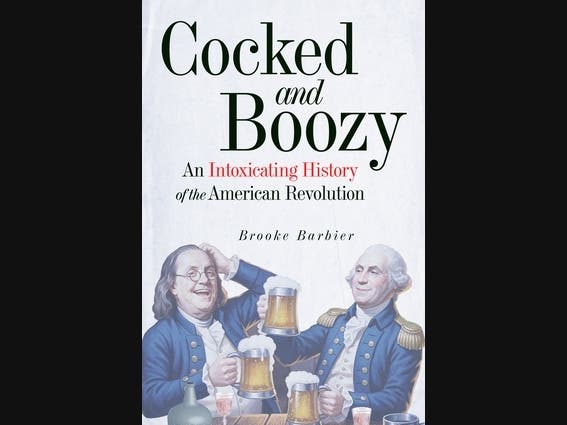
This reflection draws on Brooke Barbier's Cocked and Boozy: An Intoxicating History of the American Revolution and on recent coverage of Revolutionary-era tavern culture, including a New York Times travel feature on historic taverns where Americans can still encounter the atmosphere of 1776. The subject is lively, but the underlying insight is serious: taverns were part of the civic infrastructure that enabled revolutionary politics.
Historians have often treated alcohol as anecdote rather than analysis, but Barbier's work suggests that drink was a structural force in the revolutionary world. It shaped politics, sustained relationships, supported local economies, and helped British subjects begin to imagine themselves as Americans.
Find out what's happening in Pelhamfor free with the latest updates from Patch.
At first glance, alcohol may seem like a light subject for the semiquincentennial. But in the eighteenth-century colonies, taverns were not recreational sidelines. They were operational nodes in a world without mass media, political parties, or modern communication systems. They served as meeting places, business centers, newsrooms, informal debating halls, and civic gathering points for men who might otherwise have remained separated by occupation, status, or region.
That history is not only preserved in books. It is still visible in places that Americans can walk into today. A recent New York Times travel feature highlighted Revolutionary-era taverns such as Fraunces Tavern in Lower Manhattan, the '76 House in Tappan, New York, Warren Tavern in Boston, and A Man Full of Trouble in Philadelphia. The appeal of these places is partly atmospheric: old beams, low ceilings, historic rooms, colonial names on menus. But their deeper significance is civic. They remind us that the Revolution was not only argued in formal halls. It was also formed in rooms where travelers brought news, local people exchanged rumors, political leaders tested ideas, and ordinary conversation helped turn imperial policy into public grievance.
Find out what's happening in Pelhamfor free with the latest updates from Patch.
Alcohol was also an economic infrastructure, and that economy carried its own moral contradictions. Rum production depended on molasses, and molasses was tied to Atlantic trade networks built on enslaved labor. Parliament's efforts to regulate molasses, foreign rum, and related imports through measures such as the Sugar Act did not merely touch drinking habits. They touched commerce, labor, smuggling, imperial enforcement, and colonial identity.
These economic pressures did not remain abstract. They were debated, interpreted, and amplified in taverns, where imperial policy became lived experience. In that sense, the tavern was not only a place where people drank. It was one of the places where policy became politics.
The politics of the Revolution depended on such spaces and systems. Before people could support a common cause, they had to hear a common story. Before they could act collectively, they had to develop confidence that others shared their frustrations. Before resistance could become a movement, a private complaint had to become a public grievance.
The tavern helped make that possible because it was a space for repeated contact. Taverns were persuasive not because they were orderly, but because they were habitual. People returned to them, argued in them, and absorbed political cues from familiar faces.
This does not mean taverns were democratic in the modern sense. They were not. They reflected the exclusions and hierarchies of colonial society. Race, class, gender, and respectability shaped who could enter, who could speak, and whose voice carried weight. The public life that formed there was powerful, but not universal.
That tension is part of the story. It reminds us that the Revolution was made by human beings embedded in real social systems, systems that could generate solidarity and imagination, but also reproduce exclusion and disorder.
Barbier notes moments when alcohol temporarily lowered class boundaries, including a 1769 gathering organized by Samuel Adams that brought legislators and tradesmen into the same political conversation. These encounters did not erase hierarchy, but they created social proximity. In revolutionary politics, that mattered. People did not have to become equal to become coordinated.
Alcohol carried the same contradiction. It could bring people together, loosen social barriers, and foster shared identity. It could also undermine discipline, judgment, and military effectiveness. The revolutionary world was not purified by its ideals. It was full of human weakness, competing interests, social boundaries, and practical risks.
That contradiction could become dangerous. Alcohol did not create every revolutionary grievance, but it could intensify the response. During the Stamp Act crisis, resentment toward imperial taxation, economic distress, suspicion of royal officials, and drink sometimes combined into mob action. The destruction of Thomas Hutchinson's house showed how quickly civic anger could move beyond disciplined protest.
The same social energy that helped organize resistance could also overwhelm restraint. Mobilization was necessary to the Revolution, but mobilization was not the same as self-government. That distinction would become one of the central challenges of the American experiment.
That is precisely why the tavern is a useful lens. The American Revolution was not only a conflict over taxation, representation, sovereignty, or imperial power. It was also a problem of mobilization. How do scattered colonies begin to imagine themselves as part of a common political project? How do merchants, artisans, farmers, lawyers, printers, soldiers, and local leaders begin to act in concert?
Nor was colonial opinion fixed or unanimous. Many residents remained loyal, indifferent, or uncertain, which made informal spaces of persuasion and pressure even more important. Taverns and public houses did not simply express a settled revolutionary consensus. They helped create, test, and shift political commitments over time.
The answer was not one institution. It was an ecosystem. The Continental Congress mattered. Pamphlets mattered. Committees of correspondence mattered. Militias mattered. Churches mattered. Newspapers mattered. So did the informal spaces where people gathered often enough to trust, argue, persuade, and organize.
Even the Continental Congress relied on tavern space. Delegates met informally after hours in Philadelphia's public houses, where radicals such as John Adams could test arguments for independence in ways the formal chamber did not permit. Revolutions rarely hinge on a single speech. They hinge on repeated conversations in semi-private spaces.
The tavern was not simply a backdrop to the Revolution. It was one of the places where scattered grievances became shared information, where shared information became political confidence, and where political confidence became organized resistance.
That matters because revolutions are rarely made only through official proceedings. They also require informal persuasion, repeated contact, and the gradual conversion of uncertainty into commitment. Before independence could be declared, it had to become thinkable. Before it could become thinkable, it had to be discussed.
Even political leadership could emerge from that world. Patrick Henry, later remembered for revolutionary defiance, had worked as a tavern keeper before entering law and politics. The detail is more than a colorful biography. It reminds us that the line between ordinary public life and formal political life was more porous than later memory often allows.
That is why the subject belongs in an America at 250 series. The question is not whether the founders drank. Many did. The more important question is how political life forms before it becomes constitutional life. A republic cannot be designed only from above. It must also be built from below, through habits of association, information-sharing, argument, trust, and participation.
The Revolution eventually produced formal institutions: declarations, constitutions, legislatures, courts, executives, and armies. But beneath those institutions was a less formal civic world. People had to gather before they could govern. They had to talk before they could deliberate. They had to recognize one another as political actors before they could imagine themselves as citizens.
That connection is not only historical. As the semiquincentennial approaches, public history projects are finding new ways to connect Americans to the founding era through taverns, recipes, historic sites, and the Revolutionary-era drinking culture. The New York Public Library and TALEA Beer Co., for example, have created a Liberty Lager inspired by George Washington's own small beer recipe. The project is charming, but it also points to something larger. Public history works best when it gives people an entry point into the past. A drink, a recipe, a tavern, or a table can become more than nostalgia when it opens a conversation about how civic life was actually formed.
At 250, that may be the more enduring lesson. We live in an age of constant communication, but not always civic connection. Americans argue all day, but often through platforms designed for speed, outrage, and performance rather than trust, persuasion, or shared responsibility. We have more information than the founding generation could have imagined, but fewer common spaces where disagreement can become civic formation rather than permanent division.
The lesson of the revolutionary tavern is not that liberty requires alcohol. It does not. Nor is the lesson that colonial taverns should be romanticized. They were limited, unequal, and often disorderly places.
The lesson is that democracy requires civic infrastructure. It requires places where people encounter one another, exchange information, test arguments, build trust, and translate frustration into organized public action. In the eighteenth century, taverns helped serve that function. They were imperfect spaces for an imperfect revolution, but they helped create the conditions for political identity to become collective action.
So, at 250, raise a glass if you like. Visit the old taverns, admire the beams, read the plaques, and enjoy the stories of Washington, Adams, Hamilton, Lafayette, and the travelers who passed through those rooms. But the deeper toast belongs to something less decorative and more durable: the public life that made a revolution possible.
America was born of ideals, but ideals do not move on their own. They need institutions. They need people. They need networks. They need gathering places. In the eighteenth century, taverns helped provide them. At their best, they turned conversation into confidence, argument into organization, and grievance into common cause.
Take the Cocked and Boozy quiz to determine your American Revolution Drinking Buddy