Neighbor News
America at 250: The World That Made the American Revolution Possible
How a war remembered as national independence was shaped by a global crisis of empire, liberty, slavery, and power.


In Ken Burns' documentary The American Revolution, a moment in Episode Five, "The Soul of All America," stayed with me long after I watched it. The episode covers the winter at Valley Forge, the reorganization of the Continental Army, and the British decision to abandon Philadelphia. What struck me was not only the hardship or the battles. It was the explanation of why the British were leaving. Once France entered the war, Britain was forced to divert troops and ships to defend other parts of its empire. Spain soon followed, and the pressure on Gibraltar, the Caribbean, and the Gulf Coast increased. The war in North America was no longer the center of British strategy. It was one theater inside a global conflict. That framing shifted how I understood the Revolution. It suggested that the outcome in North America was shaped by events far beyond it.
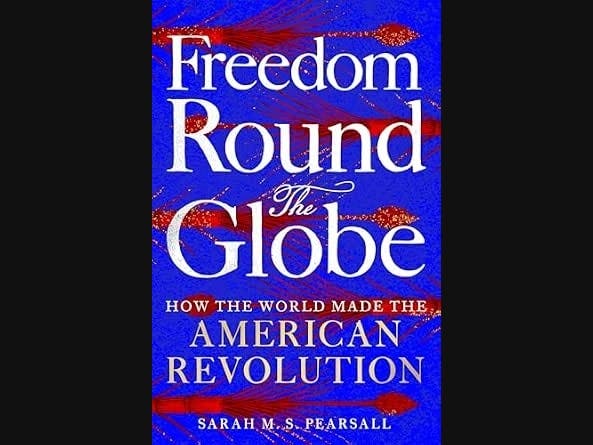
That idea stayed with me. When I later read the New York Times review of Sarah M. S. Pearsall's Freedom Round the Globe, the connection became clear. Pearsall argues that the American Revolution unfolded inside a world already strained by imperial competition, commercial extraction, slavery, and contested ideas of liberty. Her work gave shape to the instinct that Episode Five had triggered. The Revolution was not a self-contained story. It was part of a wider imperial crisis. The global pressures that shaped British decision-making were not background noise. They were part of the war's structure.
That realization sent me back to the Revolution with a wider lens. My America at 250 series has focused on the internal mechanics that made the Revolution function. Independence required taverns, postal roads, committees, militias, credit networks, public rituals, and the political imagination of ordinary people. These were the systems that allowed a fragile coalition of colonies to mobilize, coordinate, and sustain a war against the most powerful empire of the eighteenth century. The Revolution worked because these systems worked.
Find out what's happening in Pelhamfor free with the latest updates from Patch.
But if internal systems explain how the colonies survived, Pearsall's global frame explains why Great Britain faltered. Britain was not fighting a single war. It was managing simultaneous crises in India, the Caribbean, Europe, Florida, and Indigenous homelands across North America. These pressures shaped British strategy, diverted British resources, and altered the balance of power, thereby making American independence possible. The Revolution's internal anatomy depended on a global circulatory system that limited what Britain could do and expanded what the colonies could attempt.
The language of liberty was not sealed inside Philadelphia. It circulated across the British Empire and beyond. Indigenous nations resisted British expansion with their own claims to sovereignty. Enslaved people in the Caribbean articulated visions of freedom that challenged the foundations of imperial rule. Indian subjects protested East India Company taxation. Women in Edinburgh debating societies argued for their own place in political life. German conscripts pressed into imperial service questioned the legitimacy of the conflicts they were forced to fight. These actors did not share a single definition of liberty. They used the same vocabulary to pursue different futures. The Declaration of Independence entered this contested world rather than creating it.
Find out what's happening in Pelhamfor free with the latest updates from Patch.
Ultimately, Britain's defeat at Yorktown cannot be separated from its commitments in India, its losses in the Caribbean, its siege at Gibraltar, or its diplomatic entanglements in Europe. Global constraints on British power shaped the American victory. The thirteen colonies declared independence in a world already arguing over empire, coercion, commerce, slavery, sovereignty, and freedom.
If earlier essays in this series have examined the systems that allowed the Revolution to function from within, this wider frame asks us to see the imperial world that made those systems matter. The 250th anniversary should not shrink the Revolution into a national origin story. It should enlarge it into a global systems story. The Revolution was no less American because it was global. It was more historically real. The world that made the Revolution possible is part of the story America should recover at 250.