Neighbor News
The Price of Passion: Together, Together at MSG
What a Harry Styles Residency Teaches Us About Modern Concert Economics

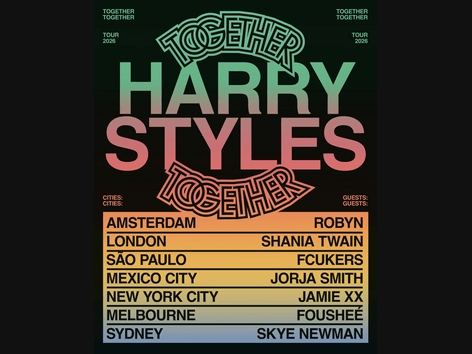
One fan found a $201 ticket through an official waitlist. Another paid $548 for a seat and $670 for travel, not to mention her outfit. A third donated plasma to help make attending possible. Another put tickets on a credit card, hoping to "figure it out later in life."
Those were among the people music reporter Ben Sisario interviewed for his September 28 New York Times article, "What's a Concert Worth? Ask a Harry Styles Fan?" His reporting on Styles's ongoing 30-night Madison Square Garden residency, scheduled from August 26 through October 31, offers a useful lens for thinking about concert economics (in an earlier piece, we looked at Broadway Math). Behind each ticket was a decision about money, time, uncertainty, and what someone was prepared to give up to be there.
It is easy to look at these prices and ask whether concerts have become too expensive. The more revealing questions are how people get in, who receives the money, and what attending actually costs.
Find out what's happening in Pelhamfor free with the latest updates from Patch.
Who Gets In?
Across the announced residency, approximately 540,000 seats were available. Ticketmaster told Sisario that 11.5 million people registered for presale access and that its shopping queues recorded 16 million entries. Some fans also seek tickets for multiple nights, so the residency's total capacity does not translate into the same number of individual attendees.
Those figures show extraordinary interest. They don't tell us how many tickets people would buy at any particular price. Registering before prices are disclosed is different from agreeing to pay $500, and queue entries need not represent distinct buyers. Still, the practical problem was clear: far more people tried to gain access than seats were available.
Find out what's happening in Pelhamfor free with the latest updates from Patch.
For those 30 nights, capacity was effectively fixed. Higher prices could not put another row inside Madison Square Garden. Some mechanism had to determine who would attend. Thirty shows also complicates the familiar response that an artist should perform more often. This is already a substantial commitment of performances at one venue. Yet the reported interest still dwarfed the available seats. Expanding capacity can ease scarcity without eliminating the difficult choices about who gets access and at what price.
Price was one mechanism. Queues, timing, information, persistence, and luck were others. A fan could spend more money to find a resale ticket or spend more time watching for an affordable opening; neither approach guaranteed success. Lupe Labra Valencia, a Harlem resident, told Sisario that 284,000 people were ahead of her in a Ticketmaster queue. She encountered platinum seats priced as high as $1,002, then joined the official waitlist and eventually bought a $201 seat with an excellent view. Her experience illustrates something a ticket price alone misses. Access can depend on knowing where else to look and being able to wait. That effort has a cost, even when it never appears on a receipt.
A ticket market responds to what people will and can pay; it cannot tell us how much the music means to them. A devoted fan with limited income may attach more personal significance to attending than someone who can purchase an expensive seat without a second thought. Purchasing power makes access easier, but it is an imperfect measure of attachment.
Who Gets Paid?
When a ticket sells for hundreds of dollars, the next question is where that money goes. Different seats are different products. An upper-level seat, a floor ticket, and a package with VIP benefits don't have to cost the same. Some price differences reflect the view, location, or amenities being purchased.
Dynamic pricing adds another consideration: prices can change as demand changes. Sellers may use it to capture more of what buyers are willing to pay during the original sale. Sisario discusses this as an industry practice, but his article does not establish how individual Styles ticket prices changed during the sale. The underlying incentive is straightforward. If a ticket sells initially for $100 and a broker can resell it for $500, the broker can capture the difference after fees and costs. Artists and promoters have a financial reason to bring the original price closer to what buyers will pay.
That creates a difficult affordability problem. A lower original price can help a fan who buys directly. It can also create a profitable opportunity for a reseller. Raising the original price may reduce that opportunity while making the ticket harder for the fan to afford. Resellers take risks, too. Asking prices don't guarantee sales, and an unused ticket's admission value expires when the performance ends (or at least sometime between the opening and the encore). As the date approaches, a seller may accept less to avoid being left with nothing (sunk cost). Prices can also rise if available tickets become harder to come by (scarcity).
María Boscán, the fan who paid $548 for her seat, waited until a week before her show, when resale prices had begun to fall. Patience worked for her. Another buyer might wait and find that the remaining options have become more expensive. None of these prices tell us the artist's profit. Ticket revenue must support the production and the businesses involved, including staging, staffing, venue operations, and other expenses. Determining who receives how much requires contractual and cost information that Sisario's article does not provide.
His reporting does identify a gap between pricing responsibility and public blame. Artists approve ticket prices, yet fans often direct their frustration toward Ticketmaster. A discussion of affordability should account for the decisions made throughout that relationship.
What Does Attending Really Cost?
For Boscán, the ticket and travel together came to $1,218, excluding her outfit. That was already closer to the cost of a short vacation than a single evening's entertainment. Travel, lodging, meals, and merchandise can all add to the price of being there. So can financing. A credit card paid in full need not add interest, but a balance carried forward can make the eventual cost substantially higher.
Economists call the alternatives we give up opportunity costs. Money spent on a concert cannot also pay down debt, remain in savings, or fund another outing. Time spent pursuing tickets cannot be spent elsewhere. Additional paid work can expand a budget, but it also requires additional effort.
Sisario's interviews make those tradeoffs visible. Alexis Hambleton described donating plasma to make attending possible. Baylee Kampiak acknowledged relying on credit cards and hoping to work out the consequences later. Their choices reveal how strongly they wanted to attend, without establishing whether the spending would remain manageable. The sales process can complicate that calculation. Sisario reports that prices were not disclosed before the initial sale. Fans learned seat prices only after entering a highly competitive process, when the possibility of missing out was already immediate. Labra Valencia described the experience as encouraging panic buying, although she ultimately found her ticket through the waitlist.
That account raises a question about how much time and information buyers have to make considered decisions. Scarcity is real. So is the pressure it can bring.
The benefits deserve attention alongside the costs. Writing in The Georgetown Independent, Alexandra Villasmil described leaving Styles's September 4 show with gratitude, excitement, and immediate nostalgia. The performance changed her opinion of his new album, and the crowd gave her a sense of community. Her account helps explain what someone may be purchasing beyond admission: the performance, the shared occasion, and a memory that lasts after the evening ends.
Those benefits belong in the economic calculation, too. A recording offers access to the music, but being present can provide something a listener values differently. That helps explain why a fan might willingly devote substantial money to attending. Whether the purchase fits comfortably within that person's finances remains a separate question. The fans Sisario interviewed generally expressed satisfaction with what they had spent. That deserves to be taken seriously. So does the fact that interviews with concertgoers largely leave out people who could not afford to attend.
The Choices Behind the Seat
Scarcity creates tradeoffs and higher prices. Some fans commit more money, some devote more time, and some draw on future income. Others reach a limit and decide to stay home. Economics helps explain those decisions without settling what a concert ought to cost. It shows how access is allocated and how the same price can carry very different consequences for different households.
The market ultimately allocates seats through a combination of purchasing power, timing, information, and persistence. But the stories Ben Sisario collected remind us that a ticket is more than a seat in an arena. It is the visible endpoint of a series of economic choices about what people value, what they can afford, and what they are willing to sacrifice for an experience they believe is worth having.
Source: Ben Sisario, "What's a Concert Worth? Ask a Harry Styles Fan?", The New York Times, September 28, 2026.
Residency dates: Madison Square Garden Entertainment's August 26, 2026 announcement.
Additional source: Alexandra Villasmil, "Together, Together Tour: You Will Always Be Famous", The Georgetown Independent.