Neighbor News
America at 250: When did Americans actually become Americans?
Tracing the 250-Year Debate Over Who Belongs to "We the People"

America has spent 250 years answering an important question:
Who belongs?
That question appears in different forms:
Find out what's happening in Pelhamfor free with the latest updates from Patch.
1776 — "one people"
1787 — "We the People"
1857 — Dred Scott
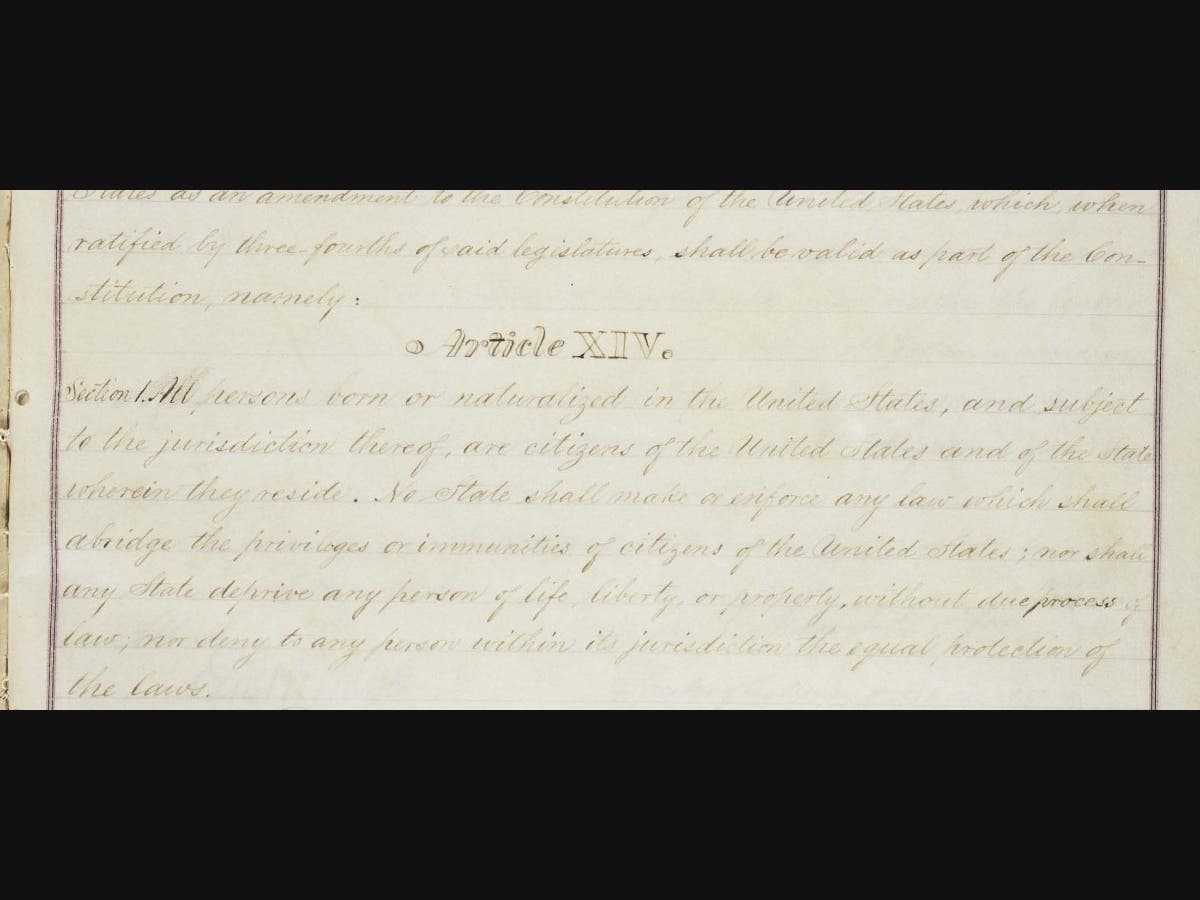
1868 — the Fourteenth Amendment
1898 — Wong Kim Ark
2026 — Trump v. Barbara
So Tracing the 250-Year Debate Over Who Belongs to "We the People" is really our shorthand for tracking the institutional conversation across those milestones.
Find out what's happening in Pelhamfor free with the latest updates from Patch.
In just a few days, the United States will mark its 250th birthday. Across the country, there will be parades, fireworks, speeches, and readings from the Declaration of Independence. We will remember the moment thirteen colonies declared themselves "one people" and announced to the world that they intended to govern themselves.
Yet amid the celebration, one question receives surprisingly little attention: when did that "one people" actually become Americans? The answer is more complicated than July 4, 1776.
The Declaration of Independence announced the creation of a new nation. The Constitution created a new government. But neither document fully answered one of the most fundamental questions any republic must confront: who belongs to the political community?
Put another way, 1776 declared a people, 1787 organized a government, and 1868 forced the nation to define citizenship in constitutional terms.
The Supreme Court returned to that question yesterday in Trump v. Barbara, a case concerning birthright citizenship under the Citizenship Clause of the Fourteenth Amendment. The legal dispute centered on the meaning of the phrase "subject to the jurisdiction thereof." Beneath the legal arguments lay a much older American story, one stretching from the Revolution through Reconstruction and into our own time. The debate is not simply about immigration. It is about constitutional identity.
The Declaration's claim that Americans were "one people" was a political statement rather than a legal definition. It asserted unity against imperial authority. It did not specify who counted as part of those people. The Constitution's opening words, "We the People," carried similar force. They announced that sovereignty rested with the public rather than the Crown. They did not define the boundaries of that public. The Founders created institutions before they fully defined the membership those institutions were meant to serve.
Before Americans were citizens, they were subjects of the Crown. Under English common law, people born within the sovereign's protection generally owed allegiance to the Crown. The American Revolution rejected monarchy, but it did not discard every legal tradition inherited from England. Many principles of the common law remained part of the new nation's legal foundation, including longstanding ideas about allegiance, sovereignty, and political membership. Independence transformed subjects into citizens, but it did not completely define national citizenship.
That omission is easy to overlook because the Constitution repeatedly refers to "citizens of the United States." Presidents must be natural-born citizens. Senators and representatives must meet citizenship requirements. Yet the Constitution largely assumed citizenship already existed. It organized the machinery of republican government without fully explaining who belonged within it. "We the People" remained an aspiration rather than a settled category.
For decades, that constitutional silence remained manageable. Individual states exercised significant authority over civic life, and many Americans assumed they already understood who belonged to the nation. As the United States expanded westward, welcomed immigrants, and struggled with the contradiction of slavery in a republic founded on equality, that assumption became increasingly fragile. The idea of "one people" became harder to sustain when millions of people lived within the nation's borders without equal claim to national citizenship.
The constitutional crisis reached its breaking point with the Supreme Court's decision in Dred Scott v. Sandford. The Court held that people of African descent could not be citizens of the United States under the Constitution. Whether viewed as a constitutional interpretation or a moral failure, the decision exposed the consequences of leaving the question of national citizenship unresolved. It fractured the meaning of "We the People" by excluding an entire class of Americans from the national community.
The Civil War forced the nation to confront that unfinished work. During Reconstruction, Congress adopted the Fourteenth Amendment. Its Citizenship Clause established a national constitutional rule of citizenship and rejected the idea that political membership could be denied on the basis of ancestry. Reconstruction did more than abolish slavery and guarantee equal protection. It completed an essential part of the constitutional project that the Founding generation had left unfinished. It gave legal content to the Declaration's "one people" and constitutional meaning to "We the People."
That is why Trump v. Barbara matters in this America at 250 moment. The Court did not merely decide a dispute over an executive order. It returned to a question that has followed the nation from its beginning: how does a republic define who belongs?
The justices sharply disagreed over history, constitutional interpretation, and the meaning of the Citizenship Clause. They examined English common law, Dred Scott, Reconstruction, the Civil Rights Act of 1866, the Fourteenth Amendment, and United States v. Wong Kim Ark. Their conclusions differed in important ways. Yet the opinions collectively show that modern constitutional debates rarely begin in the present. They are conversations across generations.
The Declaration, the Constitution, the Civil War, Reconstruction, and later Supreme Court decisions remain active participants in our public life because they continue to shape the institutions we inherit. As the United States approaches its 250th birthday, that may be the larger lesson. The Declaration announced a people. The Constitution organized a government. The Fourteenth Amendment gave the nation a constitutional definition of national citizenship.
Each generation since has inherited the responsibility of interpreting what those decisions mean. That is not evidence that the American experiment has failed. It is evidence that constitutional self-government asks every generation to revisit questions its founders could not fully answer.
Perhaps that is one of the enduring lessons of America at 250. The Revolution gave us independence. The Constitution gave us institutions. Reconstruction helped define the political community that those institutions were created to serve. Two hundred fifty years after the Declaration of Independence, Americans are still asking what it means to belong to "We the People." The fact that we continue asking that question is not a weakness of the Constitution. It is part of the constitutional conversation that has shaped the republic from its beginning.