Politics & Government
Nuclear Regulatory Commission: Why a 10-Mile Zone around Indian Point
Disaster Accountability Project urges a 50-mile zone and the NRC responds.


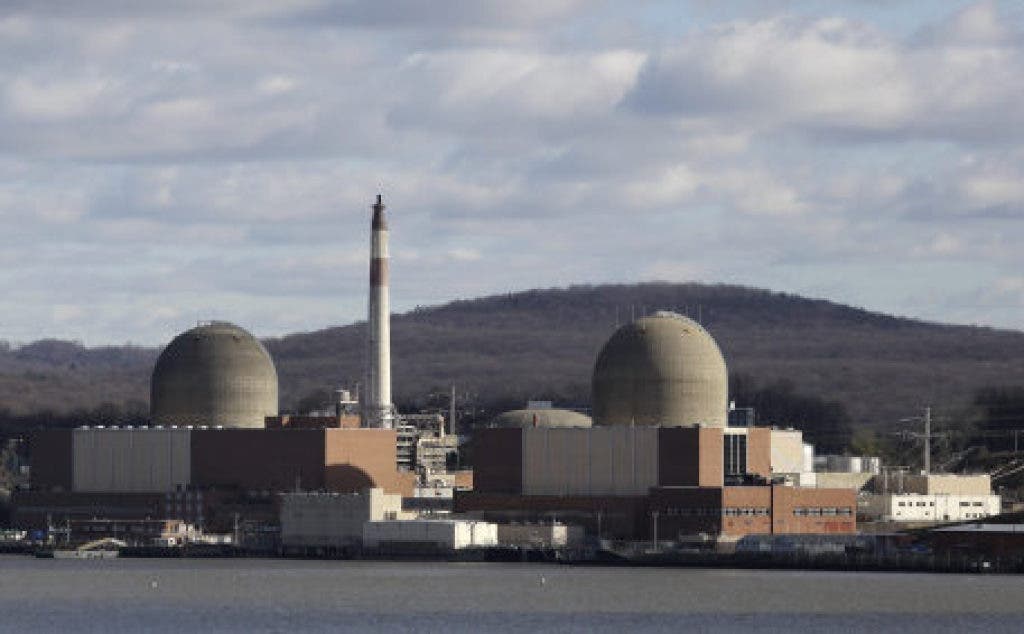
An advocacy group called the Disaster Accountability Project issued reports April 14 about five nuclear power plants near large population centers in the U.S.—including Indian Point in Buchanan.
The DAP recommended that emergency plans be put in place up to 50 miles out from each so that local and regional governments would be more prepared for large-scale evacuations.
There are 1.7 million people in Putnam, Rockland, Westchester and Orange counties inside the 10-mile zone around Indian Point. They receive annual instructions about emergencies and evacuation.
Find out what's happening in Pleasantville-Briarcliff Manorfor free with the latest updates from Patch.
There are 20 million in a 50-mile-radius of the plants.
The Nuclear Regulatory Commission responded with a statement April 17, explaining the basis for the 10-mile zones.
Find out what's happening in Pleasantville-Briarcliff Manorfor free with the latest updates from Patch.
The NRC said nuclear power plants are required to have plans and conduct exercises for larger scale evacuations. In addition, NRC researchers have studied the phenomenon known as “shadow evacuations,” defined as evacuations by persons outside of any officially declared evacuation zone(s). They learned that shadow evacuations occurred in 18 (36 percent) of the 50 case studies examined and concluded that current planning reasonably addressed the public’s health and safety.
Here is the Nuclear Regulatory Commission’s full statement:
Following the issuance of a new study, we have been asked by multiple media outlets and members of the public for information on the basis for the 10-mile-radius Emergency Planning Zones (EPZs) around U.S. nuclear power plants. As such, here is the background:
In November 1976, a task force of NRC and Environmental Protection Agency (EPA) representatives was formed to look at salient emergency planning issues for U.S. nuclear power plants. Out of that comprehensive evaluation came a recommendation that a 10-mile-radius EPZ would assure that “prompt and effective actions can be taken to protect the public in the event of an accident” at a plant. This was based on research showing the most significant impacts of an accident would be expected in the immediate vicinity of a plant and therefore any initial protective actions, such as evacuations or sheltering in place, should be focused there. Put another way, the projected radiation levels would not be expected to exceed EPA protective action dose guidelines (1 to 5 rems) beyond 10 miles under most accident scenarios.
That does not mean the protective actions could not expand beyond the 10-mile radius. Rather, emergency planners have always known such actions could be necessary if the situation warranted it. Indeed, U.S. nuclear power plants are required to consider and drill for the possibility of radiation releases that could have impacts up to 50 miles away, in addition to the required biennial exercises conducted in the vicinity of each nuclear power plant to assess implementation of the emergency plan with the 10-mile EPZ. Once every six years, each plant takes part in a graded exercise to demonstrate how it would handle such an event, which typically would involve such actions as placing cattle on stored feed and holding off on the harvesting of crops until readings indicated radiation levels were back to normal.
As a key NRC/FEMA report on emergency planning states, “In a particular emergency, protective actions might well be restricted to a small part of the planning zone. On the other hand, for the worst possible accidents, protective actions would need to be taken outside the planning zones.”
Last year, the NRC denied a petition seeking the expansion of EPZs after concluding that the current size is appropriate for existing reactors and that emergency plans will provide an adequate level of protection of the public health and safety in the event of an accident at a nuclear power plant. [10 CFR Part 50 (Docket Nos. PRM–50–104; NRC–2012–0046) published in the Federal Register Vol. 79, No. 68 Wednesday, April 9, 2014] Among other things, it discusses the issue of “shadow” evacuations. The response states,
“The NRC staff has conducted considerable research into evacuations, including the impact of shadow evacuations on evacuation outcomes. As stated in NUREG/CR–6864: Shadow evacuations, defined as evacuations by persons outside of any officially declared evacuation zone(s), occurred in 18 (36%) of the 50 case studies examined. Of those 18 cases involving shadow evacuations, traffic movement was impacted in only five of the cases and there was no impact on congregate care center capacity, according to the individuals interviewed. These five cases were all in Florida and included Hurricane Andrew, Hurricane Floyd (3 cases), and the Mims Fire. In the Mims Fire, Interstate 95 was closed due to poor visibility from the smoke and significantly contributed to the traffic congestion. The hurricanes that had traffic movement problems were exceptionally large, with two cases involving over 600,000 evacuees. The Governor’s Hurricane Task Force has since identified improvements in the areas of decision making, traffic management, congregate care center management, and dissemination of emergency public information, that are expected to improve the efficiency and effectiveness of future large hurricane evacuations, and thus, reduce impacts from shadow evacuations. Based on this research, the NRC has confidence that shadow evacuations generally have little impact on traffic movement and concludes that the licensees’ current emergency planning bases continue to provide reasonable assurance of protection of the public’s health and safety.”
The decision also points out that there are many examples of large-scale evacuations being successfully carried out in the U.S., including:
• Hurricane Floyd, 373,000 people (1999)
• Hurricane Andrew, 650,000 people (1992)
• Hurricane Georges, 1,500,000 people (1998)
• Centennial Olympic Park, 60,000 people (1996)
• World Trade Center, 300,000 people (2001)
• World Trade Center, 150,000 people (1993)
• The East Bay Hills Wildfire, 30,000 people (1991)
Get more local news delivered straight to your inbox. Sign up for free Patch newsletters and alerts.