Politics & Government
Opponents, Some Supporters Speak Out on Chappaqua Crossing Proposal
The New Castle Town Board voted to close a public hearing on the project after the meeting.


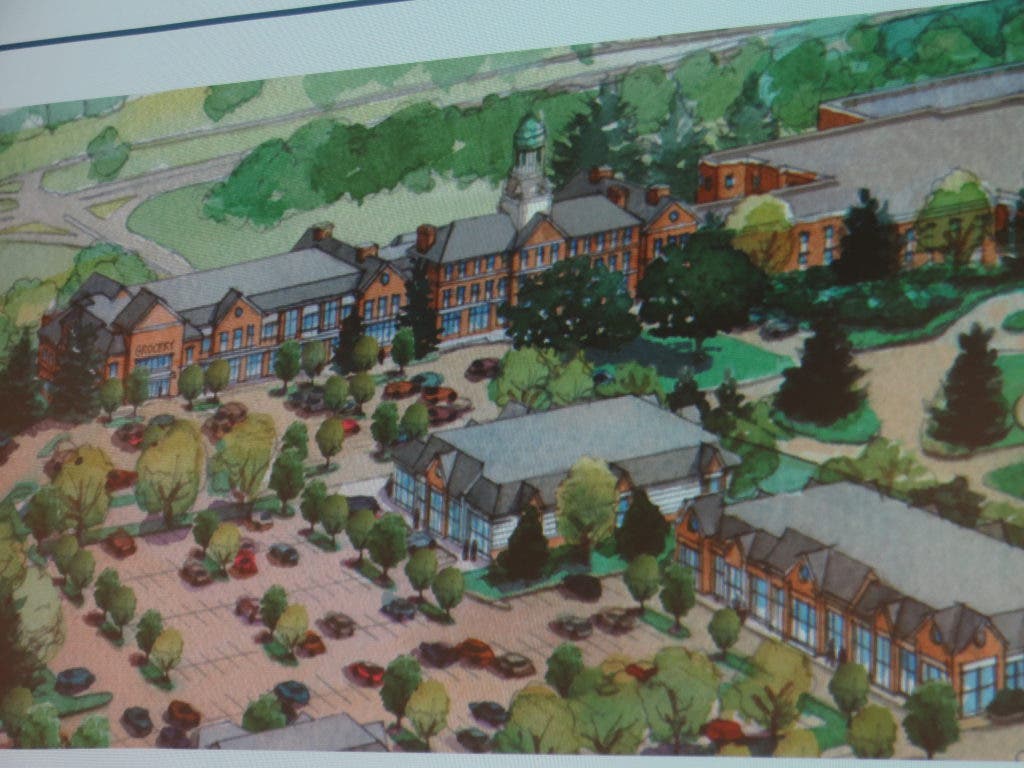


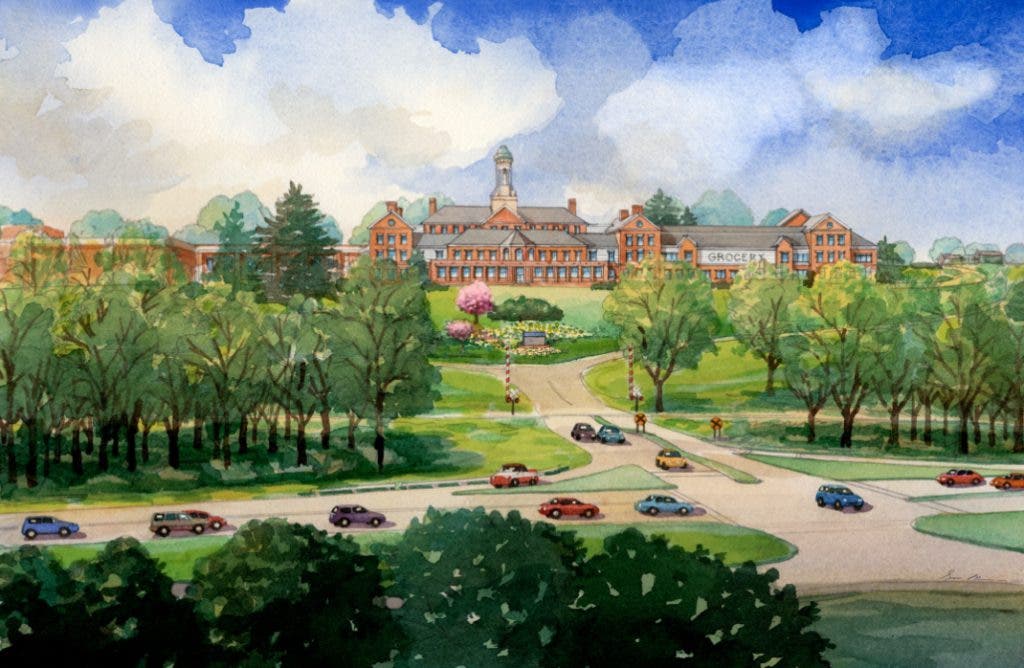
The retail and grocery store proposal for Chappaqua Crossing was criticized again by most of the residents who spoke at a Monday afternoon meeting for the project, which was the second of its kind for a series of related public hearings.
“This is not about a supermarket anymore,” said Lisa Katz, a vocal critic of the plan. "This is about a monstrosity of a strip mall that you are sticking in the middle of a residential area.”
Katz also suggested a different approach: holding a planning charrette similar to a recent one held in Bedford for a proposal in downtown Bedford Village, in which there would be a discussion about what to do with the site.
Find out what's happening in Pleasantville-Briarcliff Manorfor free with the latest updates from Patch.
Several speakers raised objections to the proposal, which includes 120,000 square feet of retail anchored by a large grocery store, including fear of traffic on Route 117 getting worse, negative impacts on local character and do students at nearby Horace Greeley High School, and the general economic viability of the plan.
“We all have cars,” said Roger Lieblich, who questioned why another grocery store is needed. “We can drive to Pleasantville. We can drive to Mount Kisco, to White Plains, all over the place.”
Find out what's happening in Pleasantville-Briarcliff Manorfor free with the latest updates from Patch.
The proposal, from site owner Summit/Greenfield, involves allowing for a supermarket of 36,000 to 66,000 square feet, with the bottom two floor of the historic cupola building and space in an adjacent structure being used for it. Rezoning and changes to the town's master plan, which the town board is considering, is needed for the retail plan. Chappaqua has not had a major grocery store since D'Agostino closed in 2011.
Fear of an additional local business district came up again, with alternatives suggested.
Rob Greenstein, an ardent critic of the proposal, spoke on behalf of the Chappaqua-Millwood Chamber of Commerce, which he is a co-founder of, and proposed an alternative in which work would be done in the existing downtown core of Chappaqua. Noting proposals for existing downtowns in places such as Armonk, Harrison and Norwalk, Greenstein suggested that Summit/Greenfield engage in a land swap with the town, in which they could redevelop the Chappaqua train station's vast parking lot and the current site of town hall and the police station.
“All are great examples of smart and sustainable growth in downtown business districts,” he said about the other communities' plans.
In exchange, town hall and the police station would be moved to Chappaqua Crossing.
Greenstein also raised another one of his arguments against the proposal, saying that the developer made a bad investment and is just trying to recoup it through rezoning.
The traffic concerns ranged from fear of trucks being confined to Route 117, to worries about first responders' ability to answer calls.
“You have to consider the impact of being able to respond as you increase traffic there,” said Liz Haymson, who grew up in Chappaqua and is now a member of the Chappaqua Volunteer Ambulance Corps.
Emily Bloom, whose two sons are both Chappaqua volunteer firefighters, also weighed in, noting that traffic congestion would hamper responses.
“How can you fight a fire if the firefighters can't get from their homes to the fire department?”
Supporters Show Up
Unlike the first meeting, which was held last Tuesday and included virtually all opponents among those commenting, there were some supporters who spoke on the record.
Janet Levy felt that she was speaking for a “silent majority out there.” She argued that the town needs a grocery store and could benefit financially from the development.
“I think that we, that we as a town, are crying for an increase in our tax base.”
Levy also felt that the concerns about a negative impact on the downtown are “completely bogus,” noting that merchants locally already compete with stores nearby.
“Every single store in Chappaqua competes with identical stores in Mount Kisco and in Pleasantville.”
She added that if a store does not come to Chappaqua Crossing then it could move into a nearby community.
Audrey Rogers, who stated that she did not respect Summit/Greenfield because of its earlier plan to build housing on the site—several proposals for condos and townhouses were pitched in recent years, ending with the town board's 2011 rezoning vote in favor of 111 units, less than what was requested—is interested in the idea for fiscal reasons.
“Our tax base is very, very small, our taxes are high.”
Rogers was also skeptical of the notion that the proposal could harm downtown Chappaqua.
“I don't look at this necessarily as a zero-sum game, that if we put shopping there it will decimate downtown. I will go downtown the way I still go downtown for the stores I like.”
Another topic that came up was whether or not a public referendum on the project could be held, a matter first asked at Tuesday's meeting. Responding to the previous question, Town Attorney Clinton Smith stated that one could not be held for rezoning, citing existing law for whether the authority is in place to allow one. Several speakers brought up the topic again, asking whether a vote could be held just for changes to the master plan or whether it could be held as part of the project's environmental review; there were no immediate responses to the follow ups.
Some speakers suggested alternatives such as senior housing or doing more to lease the existing office space.
Developer's Response
Asked to weigh in about the meeting, Summit/Greenfield spokesman Geoff Thompson said: “We've listened to their concerns. They're certainly entitled to express themselves, that's what this process is for.”
Thompson also noted that there has been interest in the site from several grocery stores, including one that is in talks to lease. With regards to a senior housing alternative, Thompson was skeptical, noting that Summit/Greenfield suggested age-restricted housing in a previous version of its condos and townhouses plan but that it was rejected.
Thompson also addressed Greenstein's talk about Summit/Greenfield's investment in the property, which it bought from Reader's Digest in 2004. He said that initially Reader's Digest had a 20-year lease, with a 20-year renewal, and that it was a “very good investment” at the time. However, he argued that the subsequent departure of Reader's Digest – the company left Chappaqua in 2010 after filing for bankruptcy – was not anticipated.
“No one could've envisioned this,” he said.
Hearing Closed, But What's Next?
Turnout waned through the hours in which the meeting was kept open, and the town board heard comments from repeat speakers. It also held an executive session and a regular session for unrelated matters. Ultimately, the board decided to close one of the public hearings, which is for the plan's draft supplemental environmental impact statement (DEIS), although written comment will still be accepted until May 10 at 4:30 p.m. Other public hearings, which are for the proposed rezoning law and master plan changes, are still open but will need to be noticed again, Smith told Patch.
The town board, which had been considering a possible April 30 date for a third meeting, decided not to use it. However ,the planning board will meet on Tuesday, at 3 p.m. at town hall, to discuss giving its advisory input for the proposal.
Going forward, the town will be accepting public comments, and Summit/Greenfield will incorporate them into a final supplemental environmental impact statement (FSEIS). The town board will review the document, and the next step would be to produce a findings statement on the project's environmental issues. The town board would then need to follow a sequence for votes on the various pieces of legislation for the plan, taking votes on the master plan changes, changing zoning text, a preliminary development concept plan for the project and finally a vote to change the zoning map. If the approvals are granted, then the planning board would take up the proposal, in the form of deciding whether to give site plan approval, subdivision of the property and environmental permits, Smith explained.
Get more local news delivered straight to your inbox. Sign up for free Patch newsletters and alerts.