Neighbor News
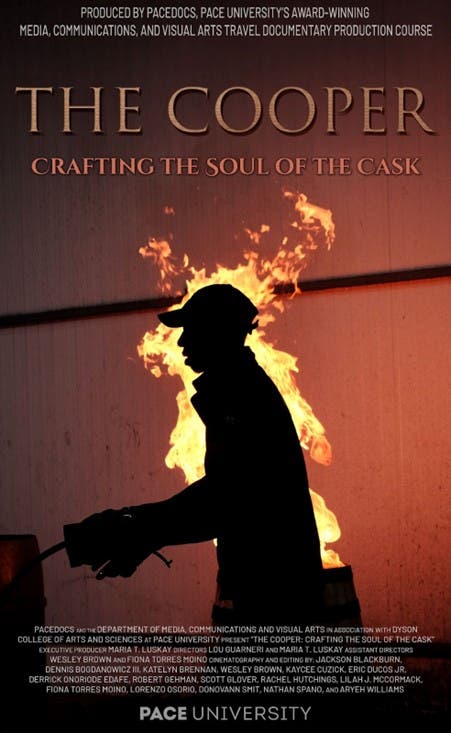
Pace U Premiered ‘The Cooper’ Documentary at Jacob Burns Film Center
The PaceDocs Team focuses film on the craft of barrel making For the first time, documentary premieres in English and Spanish
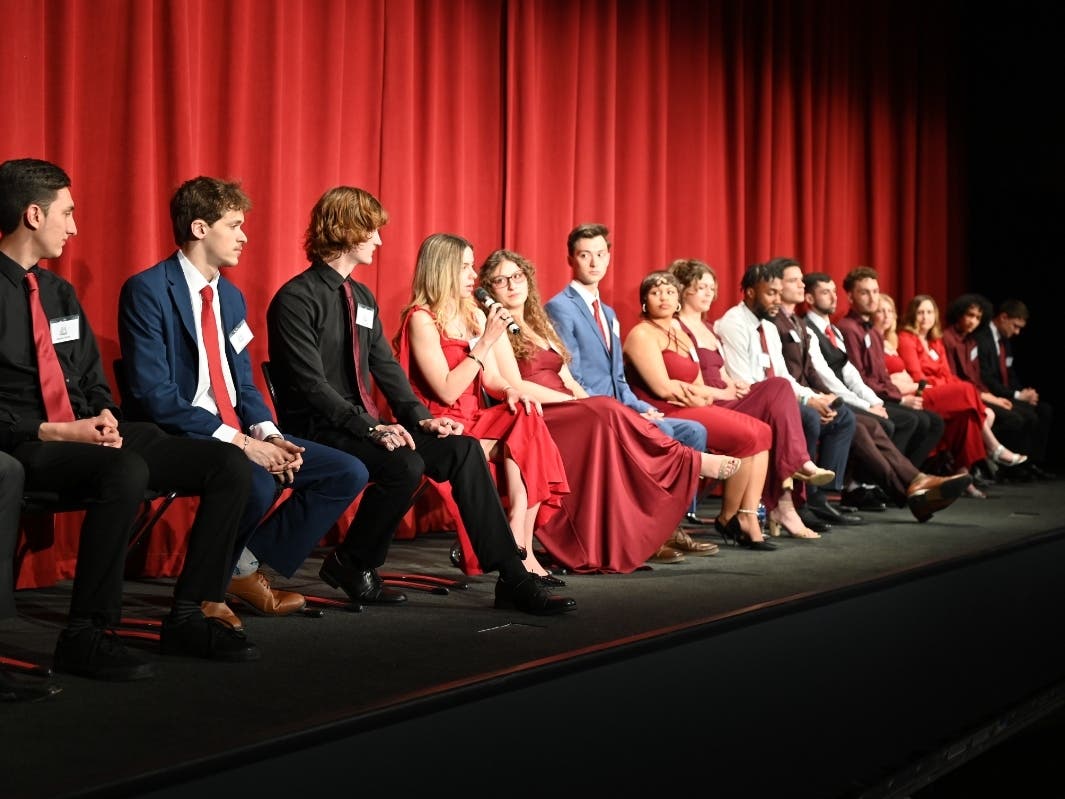
Pace University’s documentary film team – PaceDocs –premiered “The Cooper: Crafting the Soul of the Cask” on Thursday, May 2, 2024 at the Jacob Burns Film Center.
For the first time ever, PaceDocs will be premiering a documentary in both English and in Spanish. The English version premiered at the Jacob Burns Film Center while the Spanish version will debut in Montilla and Cordoba, Spain on May 13.
The documentary was produced by Dyson College of Arts and Sciences Professors Maria Luskay and Lou Guarneri, and Pace University’s documentary film team.
Find out what's happening in Pleasantville-Briarcliff Manorfor free with the latest updates from Patch.
The PaceDocs team collaborated with José Buendía Picó, a well-known Spanish musician and composer, to provide the music to an audiovisual story. Pico has won 14 composition awards.
“The Cooper” is an exploration of the art of cask making, also known as cooperage. Its rich history that can be traced back to ancient civilizations, with evidence of wooden containers used for storing and transporting liquids found in archaeological sites dating as far back as 2690 BCE in Egypt. The type of cask and the type of wood used in winemaking can significantly influence the taste, aroma, and characteristics of wine in Spain, as in other winemaking regions around the world.
Find out what's happening in Pleasantville-Briarcliff Manorfor free with the latest updates from Patch.
The documentary was filmed in the Andalusian region of Spain, specifically Montilla-Mariles over the course of several weeks.
“The PaceDocs team, under the leadership of Professor Maria Luskay, has once again produced a professional, fascinating and timely film,” said Marvin Krislov, president of Pace University. “ ‘The Cooper’ is another great example of the hands-on experience that uniquely captures the tradition and rich history of cask making. I marvel at the consistent excellence and talent in this program and am impressed by this group of filmmakers.”
The documentary is the focus of the popular class, “Producing the Documentary”, which is part of the Dyson College of Arts and Sciences at Pace University’s highly regarded film program that requires students complete a full-length environmentally themed documentary within 14 weeks. During the process, students learn teamwork, problem-solving, research, and organization, along with technical skills such as lighting, sound, camera work, interviewing, and other real-life lessons necessary to complete a film.
“Sharing this immersive experience with our students is incredibly rewarding and educational for all that are involved,” said Professor Luskay, a faculty member with the department of media, communications, and visual arts. “In addition to filming on-location in Spain and learning about difficult cultures, our team was tasked with producing, filming, and editing a professional quality documentary on the tightest of timelines. The lessons and the memories will no doubt last a lifetime and serve them well in their professional pursuits.”
A blend of graduate and undergraduate students, they were moved by the experience of working on and producing a film of professional quality.
“I wore many hats on the documentary, but one of them was story producer,” said Lilah McCormack, a digital journalism major from Dexter, Maine. “I worked a lot in the editing room, making sure the editing was aligning with the story we wanted to tell. I was scheduling folks to be in the editing room and I did some graphic design with making the poster. I also made the trailer that debuted on Youtube.”
McCormack said there were challenges that had to be met as well. “The biggest challenge I faced was managing my time. It was a big undertaking, but I expected it. There was also the short time frame we had to edit and finalize the whole documentary. It was run and gun from the time we got back from Spain, but we did it.”
Nathan Spano, a digital cinema and filmmaking major from Delran, New Jersey, agreed there were challenges. “Post-production was our biggest challenge,” he said. “There was a time crunch and we had very specific deadlines. We had tech check and then notes to run through.”
“While we were filming, setting up interviews was hard because you had to be in and out and make sure audio quality was right and everything was set right with the cameras. It was a such a learning experience for me and I think it is a great opportunity for students in general.”
For Eric Ducos, a film and screen studies major from Woodside, Queens, the weather was a bit challenging. “It was raining the whole week and that is unusual for Montilla,” he said. “It is usually dry and hot and the sun is always out. We had to do a lot of adapting around those circumstances. We had to move a lot around and move interviews indoors.”
Fiona Torres Moino, a film and screen studies major from Buenos Aires, had a much-needed skill on set. “I am a native Spanish speaker and most of our subjects spoke only Spanish,” she said. “In the hotel and in post-production, I needed to do a lot of translation. One of the biggest challenges was the Spanish accent was very strong. Even though I am a native Spanish speaker, it took me a while to get used to the different dialect and words they use. It was a big challenge, but it worked.”
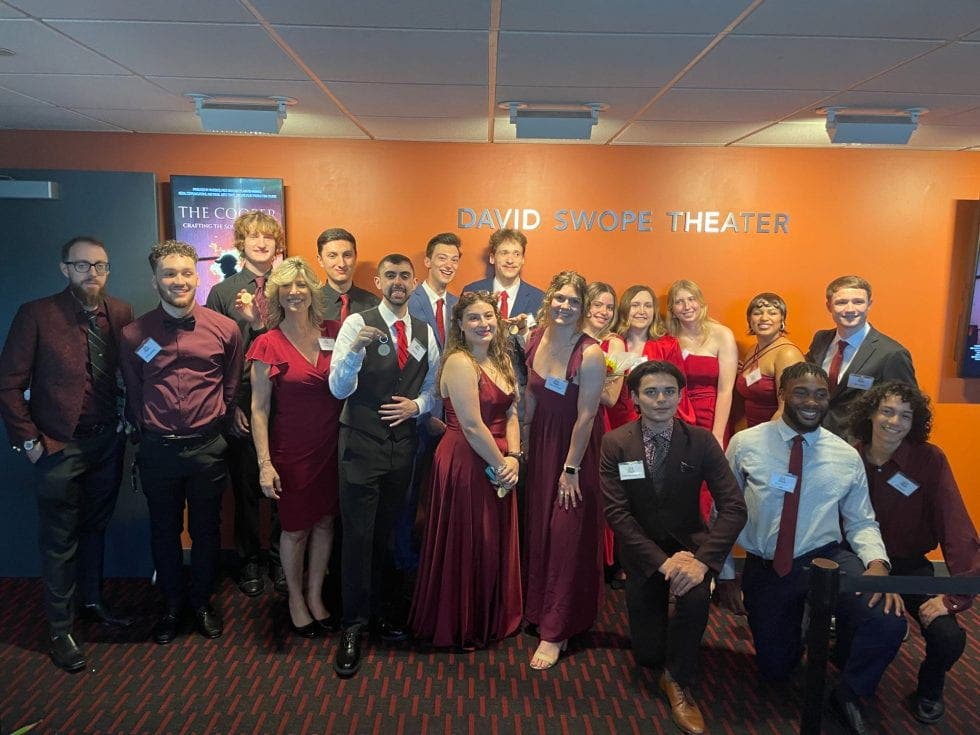
“The Cooper” continues a proud tradition of producing high quality, meaningful, and award-winning films. In recent years, Pace filmmakers have produced documentaries around the globe focusing on a number of topics, including the farm-to-table food movement in France (2023); how oysters depend on the ebb and flow of tides (2022); the importance of bees as pollinators in our food supply (2021); the impact of earthquakes in Hawaii (2019); the endurance of the people of Puerto Rico in the aftermath of Hurricane Maria (2018); Cuba at a cultural crossroads (2016); reviving Curacao’s coral reefs (2015); as well as many other poignant films.
“Dyson College’s student filmmakers have produced another moving documentary that delves into the important and fascinating history of cask making,” said Tresmaine R. Grimes, dean, Dyson College of Arts and Sciences and School of Education, and interim dean for the Sands College of Performing Arts. “The students learn and perfect their craft while educating us all. I am so moved by the talents of this team and the compelling film they have made. Congratulations to them and Professors Luskay and Guarneri for another impressive PaceDocs production.”