Arts & Entertainment
Patch Picks: Getting a Read on Washington and Lincoln
It's a good time to curl up with a president.


Abraham Lincoln’s birthday is February 12 and we celebrate Washington’s birthday on the third Monday of this month. So, we thought that we would take a cue from Lincoln who said, “The things I want to know are in books; my best friend is the man who'll get me a book I ain't read” by picking a few special volumes about the Father of our Country and the Sage of Springfield.
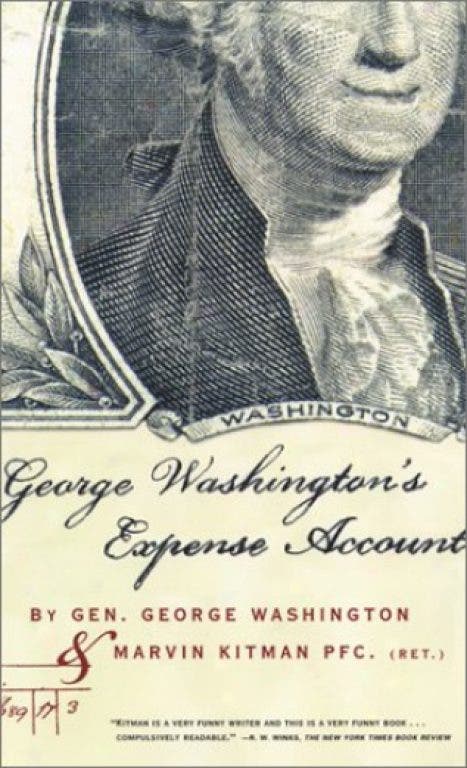
George Washington’s Expense Account by General George Washington and Marvin Kitman Pfc. Ret. (Grove Press 2001) The General drew no salary as commander-in-chief of the Continental Army, but accepted payment for his expenses. But boy, could he rack up expenses. Kitman, using the original documents covering Washington’s eight years of service, makes readers laugh as they learn. Not only was Washington the Father of our country but perhaps, the “modern” expense-account as well.
Washington: The Indispensable Man (Abridged) by Thomas Flexner (Back Bay Books 1994). This is a concise single-volume abridgement of Flexner’s highly regarded 4-volume biography of GW. The Editors at Washington’s Mount Vernon Estate & Gardens Bookshop place this high on their list of “10 Best Books” about Washington.
Find out what's happening in Pleasantville-Briarcliff Manorfor free with the latest updates from Patch.
If you are a devotee of Glenn Beck, then you will know about this book which he refers to often. The Real George Washington (American Classic Series) by Jay A. Parry, is published by the National Center for Constitutional Studies. Its mission, in both narrative form and through copious use of Washington’s own words, is to answer the question: “Why, after two centuries, does George Washington remain one of the most beloved figures in our history?” And trust us it’s got nothing to do with cherry trees or wooden teeth.
Washington: A Life by Ron Chernow (Penguin 2010). Chernow won the National Book Award for The House of Morgan and his biography of John D. Rockefeller, Sr., Titan was a National Book Critics Circle Award finalist. The author had access to 60 newly-edited volumes of Washington’s letters and diaries that most previous biographers did not have. Pleasantville resident Janet Maslin wrote in the New York Times, “This new portrait offers a fresh sense of what a groundbreaking role Washington played, not only in physically embodying his new nation’s leadership but also in interpreting how its newly articulated constitutional principles would be applied.”
Find out what's happening in Pleasantville-Briarcliff Manorfor free with the latest updates from Patch.
George Washington's Leadership Lessons: What the Father of Our Country Can Teach Us About Effective Leadership and Character by James Rees and Stephen Spignesi (John Wiley & Sons 2007). Rees, the Executive Director of Mount Vernon, Washington’s home, distills Washington's leadership skills into fifteen lessons that can be applied in the modern world. Rees includes the Rules of Civility that helped Washington develop the qualities of a great leader and a chapter on his entrepreneurial vision.
David Herbert Donald is a two-time winner of The Pulitzer Prize in History. Lincoln (Touchstone/Simon & Schuster 2005) will, according to David W. Blight writing in the LA Times “augment and replace the previous modern standards ...” Lincoln scholar Harold Holzer, writing in the Chicago Tribune exclaimed “Lincoln immediately takes its place amongst the best of its genre, and it is unlikely that it will be surpassed in elegance, incisiveness and originality in this (21st) Century...” Arthur Schlesinger Jr. anointed it as “The Lincoln biography for this generation.”
Team of Rivals: The Political Genius of Abraham Lincoln by Doris Kearns Goodwin (Touchstone/Simon & Schuster 1995). Pulitzer prize winner Goodwin draws deft portraits of this Edwin M. Stanton, Salmon P. Chase, William H. Seward, Edward Bates and Lincoln, four of whom sought the Republican nomination for President. This recipient of the 2006 Lincoln Prize for best non-fiction historical work of the year on the American Civil War weaves the narrative of these men who began at odds with each other but became powerful and effective allies in running the United States during its darkest years.
Slavery and the American Presidency was an issue wrought with controversy and contradiction from the outset of the founding of the Nation. Eric Foner in The Fiery Trial: Abraham Lincoln and American Slavery (W. W. Norton & Company 2010) has according to David Brion Davis “written the definitive account of this crucial subject, illuminating in a highly original and profound way the interactions of race, slavery, public opinion, politics and Lincoln's own character that led to the wholly improbable uncompensated emancipation of some four million slaves.” Foner received the 2011 Lincoln Prize for best non-fiction historical work of the year on the American Civil War earlier this month.
Lincoln at Gettysburg: The Words That Remade America (Simon & Schuster Lincoln Library 1992) by Garry Wills received the Pulitzer Prize and the National Book Critics Circle Award. This 272 word speech, which virtually every American school child tries to commit to memory, gave according to the author’s premise “a new birth of freedom” to a nation that had been bloodied and shattered. "Garry Wills' glowing reconstruction of Lincoln's words and the circumstances gives us a real understanding of what we rote-memorized as school children. This is what history is all about." —Studs Terkel
Blood on the Moon: The Assassination of Abraham Lincoln by Edward Steers, Jr. (University of Kentucky Press 2001). John Wilkes Booth received the help of many including Dr. Samuel Alexander Mudd and the Confederate leadership in Richmond amongt others. Steers explores why they were so willing to help pull the trigger, and corrects the many misconceptions surrounding this signal event in U.S. History.
According to Blue & Gray Magazine, this work “Immediately takes its place as the standard by which all other books dealing with Lincoln’s assassination will be judged.”