Health & Fitness
Iraq Vet's Legacy: University's Unique Service Dog-Centered Health Care Curriculum
The program, created with help from an Iraq war vet suffering from PTSD, launched 4 months after he committed suicide.


PLEASANTVILLE, NY – Inspired by the memory and advocacy work of an Iraq War veteran and author and his service dog, Pace University has launched the first college curriculum in the USA on service and therapy dogs in health care. Luis Carlos Montalván was a highly decorated former U.S. Army Captain. Tuesday, his golden retriever, was trained by the Educated Canines Assisting with Disabilities program.
A wounded warrior following his combat service in Iraq, Montalván suffered from the debilitating effects of Post-Traumatic Stress Disorder, Traumatic Brain Injury, and physical disabilities. His book about the great bond and profound changes having a service dog brought to his life, Until Tuesday, made the New York Times bestseller list in 2011.
He and Tuesday traveled the world as tireless advocates for those with disabilities, especially those scarred by the effects of war.
Find out what's happening in Pleasantville-Briarcliff Manorfor free with the latest updates from Patch.
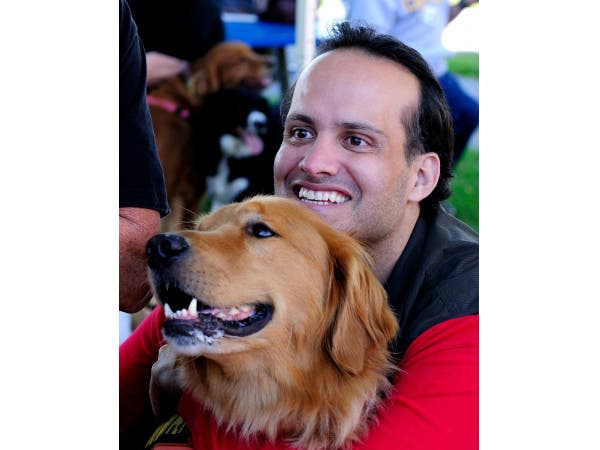
Montalván worked intensively with Pace faculty member Joanne K. Singleton, an RN and PhD, and her team at Pace’s College of Health Professions as they prepared for the launch, in which he planned to participate. Unexpectedly, Montalván took his own life in December 2016.
The tragedy reinforced the need to continue his work and address the 20-22 veteran suicides per day as reported by Military Affairs, Singleton said.
Find out what's happening in Pleasantville-Briarcliff Manorfor free with the latest updates from Patch.
Working with Montalván and Tuesday to develop the curriculum were Singleton and Pace professor Lucille Ferrara, EdD, RN, and Lu Picard, co-founder and director of programs for ECAD, which had trained Tuesday at its Dobbs Ferry, NY center.
“Over 56 million people in the United States have visible and invisible disabilities,” said Picard. “Many who are not partnered with a service dog could greatly benefit. Service dogs can help people with many different disabilities, such as a loss of a limb, gait and balance disorders, autism, or post-traumatic stress disorder. The goal of being partnered with a service dog is to help a person with disabilities to thrive.”
This curriculum is the first and only in the country to educate future health care professionals, including nurses, nurse practitioners, and physician assistants, about the care of patients with disabilities who are teamed with or may benefit from being teamed with a service dog, or who may benefit from participation in the range of animal assisted therapies, Pace officials said.
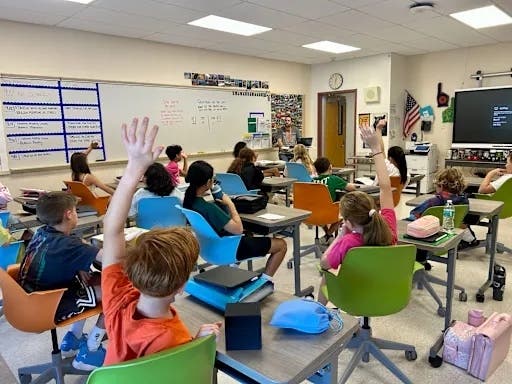
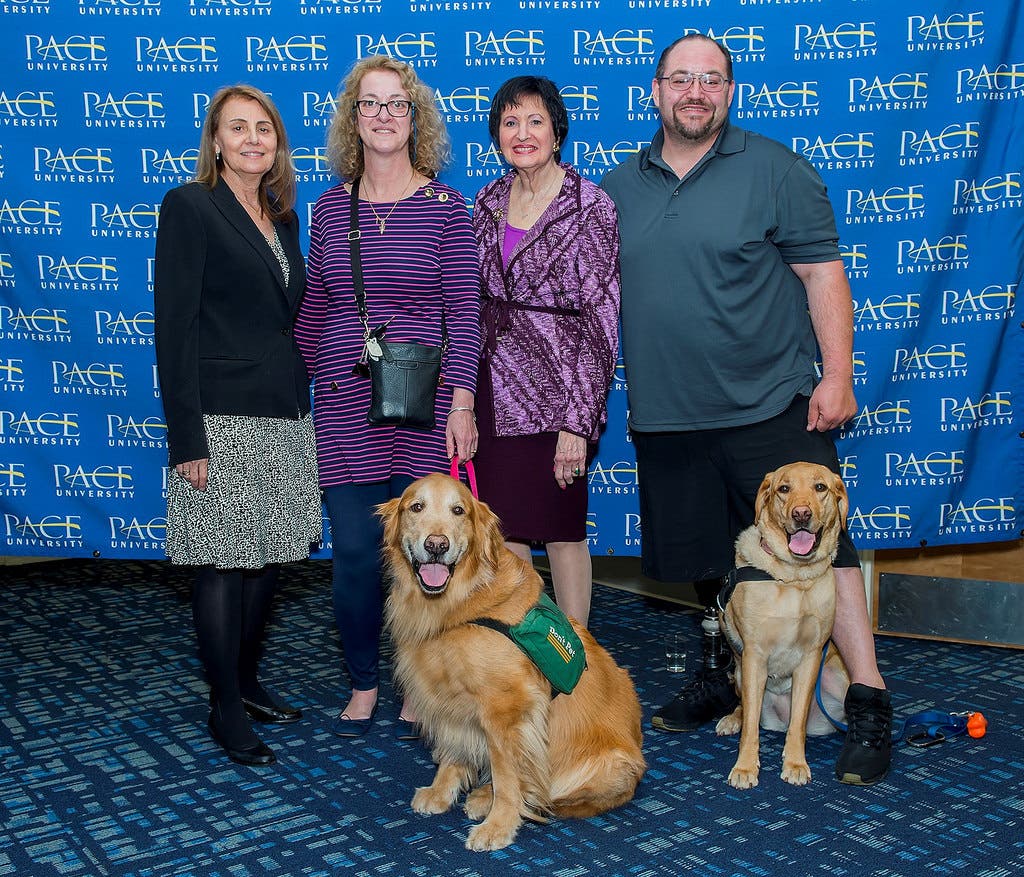
Service and therapy dogs were part of the faculty at the Pace launch at its Pleasantville, NY campus.
Students learned first-hand how to include service and therapy dogs in comprehensive care treatment plans.
“Cultural competence is a pillar of our programs,” said Ferrara. “Educating our students about patients with disabilities is essential. How service and therapy dogs can be key helpers in a therapeutic care plan must be part of the conversation and part of the curriculum.”
The new university curriculum can serve as a model for other colleges and health care professionals.
“The importance and impact of this curriculum extends beyond Pace, as access to service dogs and animal assisted therapies for individuals with disabilities are paramount to health and must be within the scope of practice of health care providers,” said College of Health Professions Dean Harriet R. Feldman. “We are grateful for funding from the Hugoton Foundation to make this curriculum a reality for our students.”
The Pace curriculum will enhance understanding aimed at supporting health outcomes of individuals with visible and invisible disabilities, including equal participation in society.
“Luis was deeply committed to the development of this curriculum and, taking another step in his advocacy work with Tuesday, bringing this awareness and knowledge to health care professionals at the point of care,” said Singleton. “He was intimately aware of the benefits of service dogs as well as participating in animal assisted therapies. Luis’ disabilities and death are a tragedy of war. He remains a hero to me, and all those who he helped and touched through his advocacy work with Tuesday. Our curriculum, which will impact practitioners and patients alike for years to come, is part of his legacy.”
PHOTOS:
Service dogs at Pace University/ Pace
Luis Carlos Montalvan and Tuesday/ Patch file
Get more local news delivered straight to your inbox. Sign up for free Patch newsletters and alerts.