Community Corner
A Critical Time For Long Island’s Only Water Supply
Of all the contaminants threatening our only source of water, saltwater intrusion could render it undrinkable for centuries.

Many Long Islanders are unaware of the most serious threats to the future of our drinking water. Of course, the threat of toxic plumes, nitrogen runoff from chemical fertilizers and other toxics that leach into our aquifers is certainly cause for concern. But if saltwater intrudes into our aquifers, our only source of water could be undrinkable for centuries.
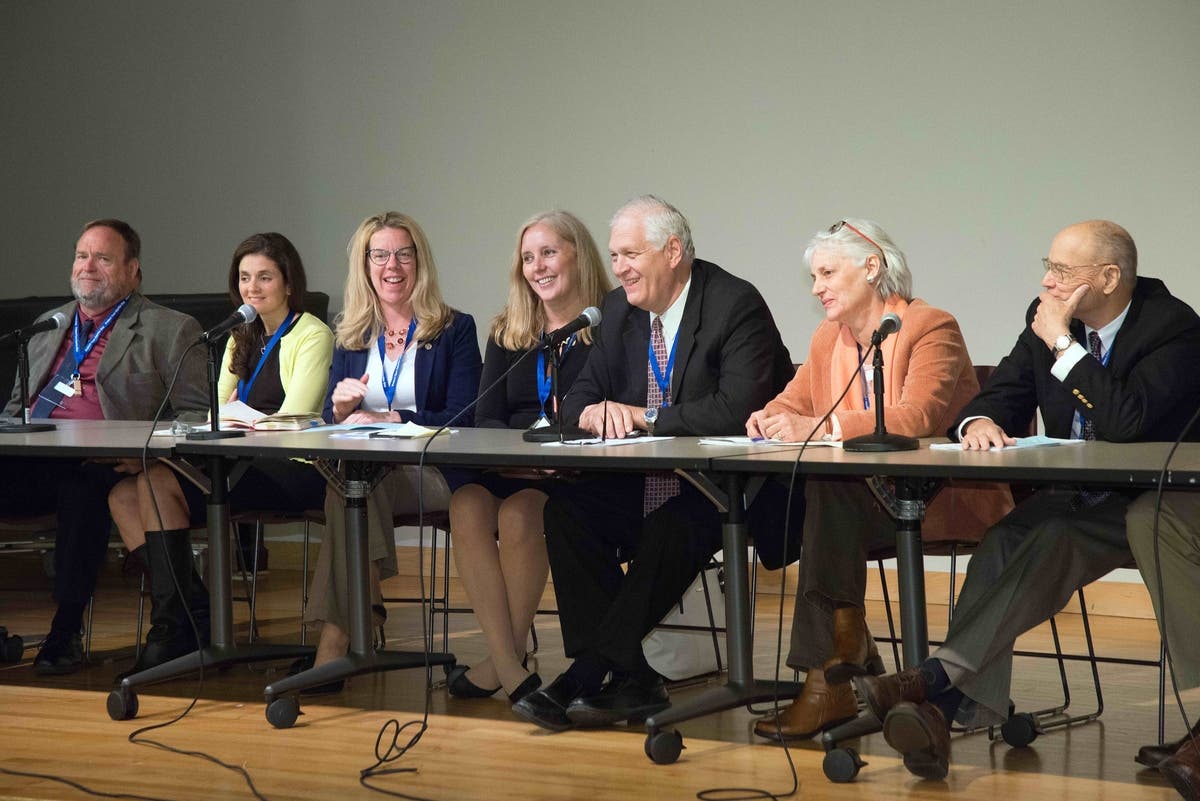
Nassau County Legislator Delia DeRiggi-Whitton attended the 2017 Groundwater Science Summit held on May 5 at the South Huntington Public Library. She also participated in a panel session where audience members asked questions of her, other elected officials and water- and geology-related professionals.
Just a few of the groundwater management needs that were discussed at the Summit are: regular monitoring of quality and usage; reporting on conditions and problems; evaluation and use of data; analysis of stressed areas; greater use of computer-aided tools such as GIS and mapping and modeling; and, long range planning and oversight.
Find out what's happening in Port Washingtonfor free with the latest updates from Patch.
Last year, Governor Cuomo announced the funding for a $6 million dollar regional groundwater sustainability study, which will provide the Department of Environmental Conservation and others with better tools and understanding of groundwater science, especially regarding water quantity and saltwater intrusion. This is a great start, but it is only the tip of the iceberg.
Toxic plumes from the old Grumman factories in Bethpage and Brookhaven Labs are shifting closer to drinking water sources. Remediation has begun, but this problem will continue if policy is not made into law. Saltwater is already beginning to intrude into aquifers, particularly in coastal communities. NYC is applying for a permit to possibly re-open wells in Queens that tap into the Lloyd aquifer, the only fresh water source for millions of people in Western Nassau. If the projected 30+ million gallons a day are pumped from this aquifer, saltwater intrusion and toxic plume migration is very likely.
Find out what's happening in Port Washingtonfor free with the latest updates from Patch.
During the panel discussion, Legislator DeRiggi-Whitton was asked if constituents could effectively persuade government to change policy. Her reply was, “Absolutely. Just one example is that, after many letters from residents, the Nassau County Legislature banned the use of snowmelt pellets made from fracking wastewater. And, New York City adopted our legislation verbatim. I believe the public is the strongest tool to elicit change. Elected officials respond to their constituents, especially if they receive a large number of letters on the same issue.”
A groundswell of public advocacy and writing or calling elected officials at local, state and federal levels to urge them to create policy that protects Long Island’s sole source of water for generations to come is the most important thing residents can do.
Water conservation is another critical component that is easy for residents to start doing today. Visit water district websites or epa.gov/watersense for tips. New York City has reduced consumption by billions of gallons a year Long Island should be able to do the same.
The Nassau County Legislature, located at 1550 Franklin Avenue in Mineola, is hosting a meeting on Wednesday, June 21 from 6:00 – 10:00 p.m. where the Department of Environmental Protection will review its Environmental Impact Study that assesses possible threats to our drinking water caused by reactivation of Queens wells. The public is encouraged to attend this session to show support for protecting Western Nassau’s sole source of drinking water.
Visit waterforlongisland.org for information on water studies and other ongoing efforts to protect Long Island's sole source of fresh water.
(Pictured in photo) County Legislator Delia DeRiggi-Whitton (4th from left) joined scientists, environmental professionals and other elected officials for a panel discussion during the 2017 Groundwater Science Summit.